The Gospel by John the apostle
Each chapter includes the following:
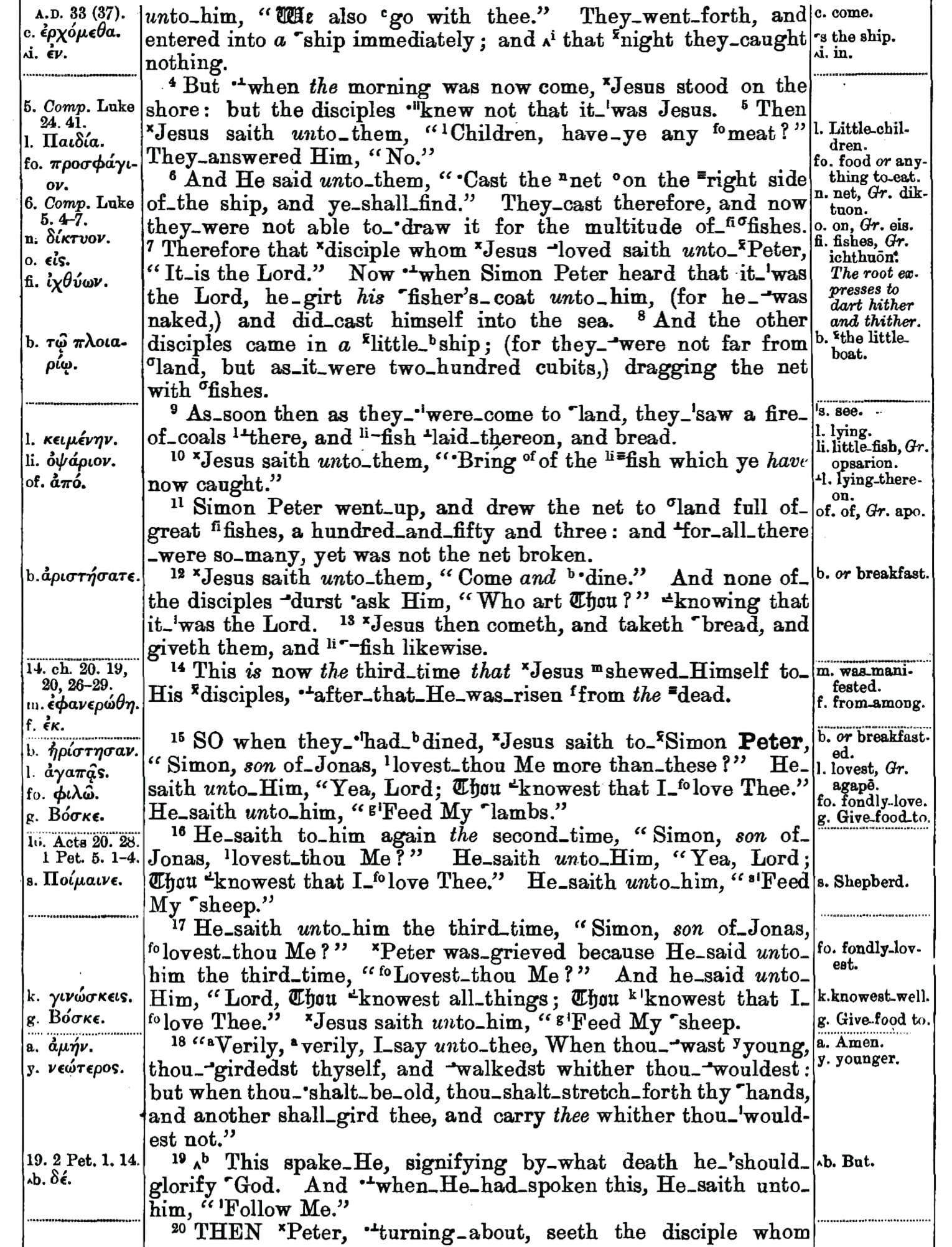
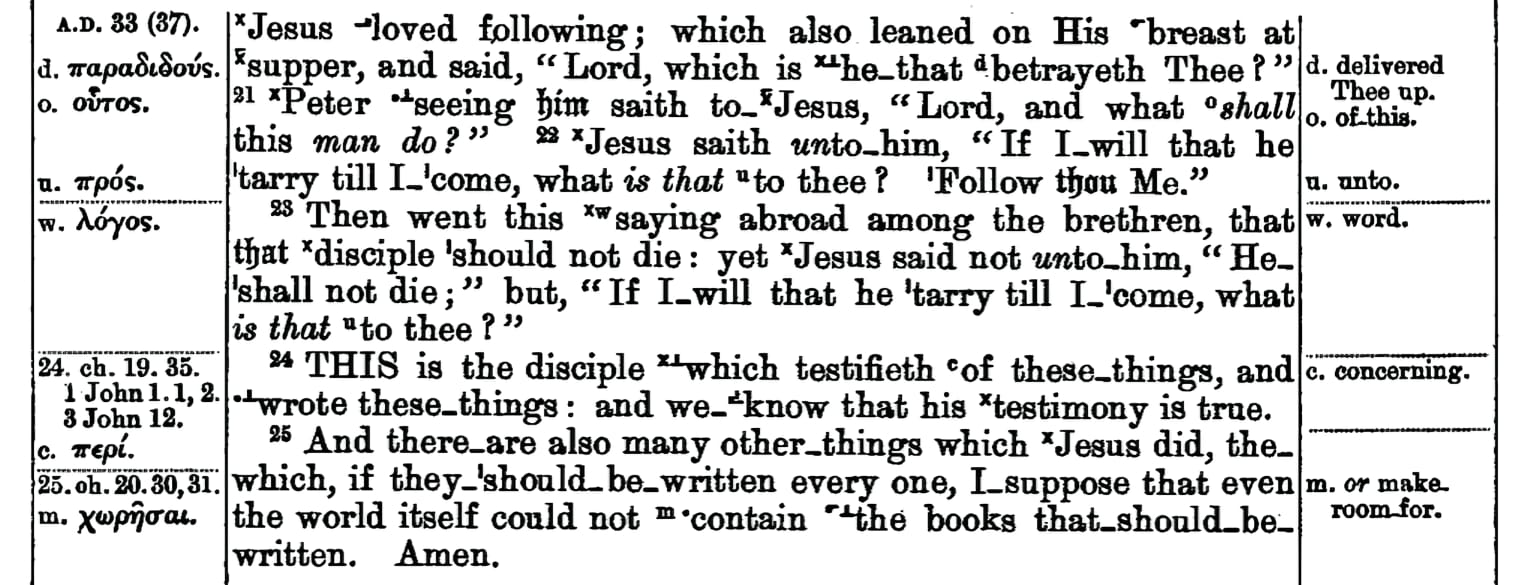
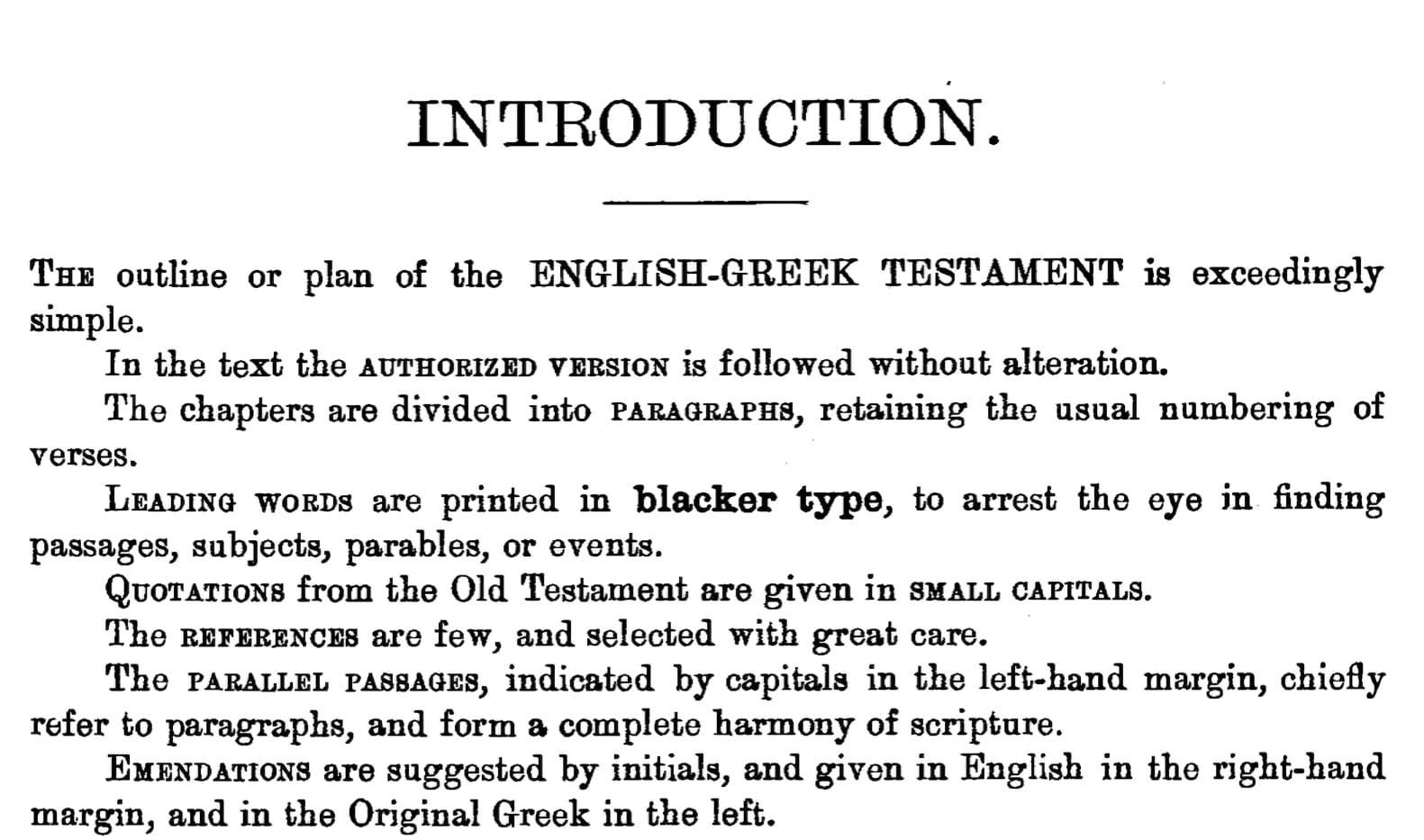
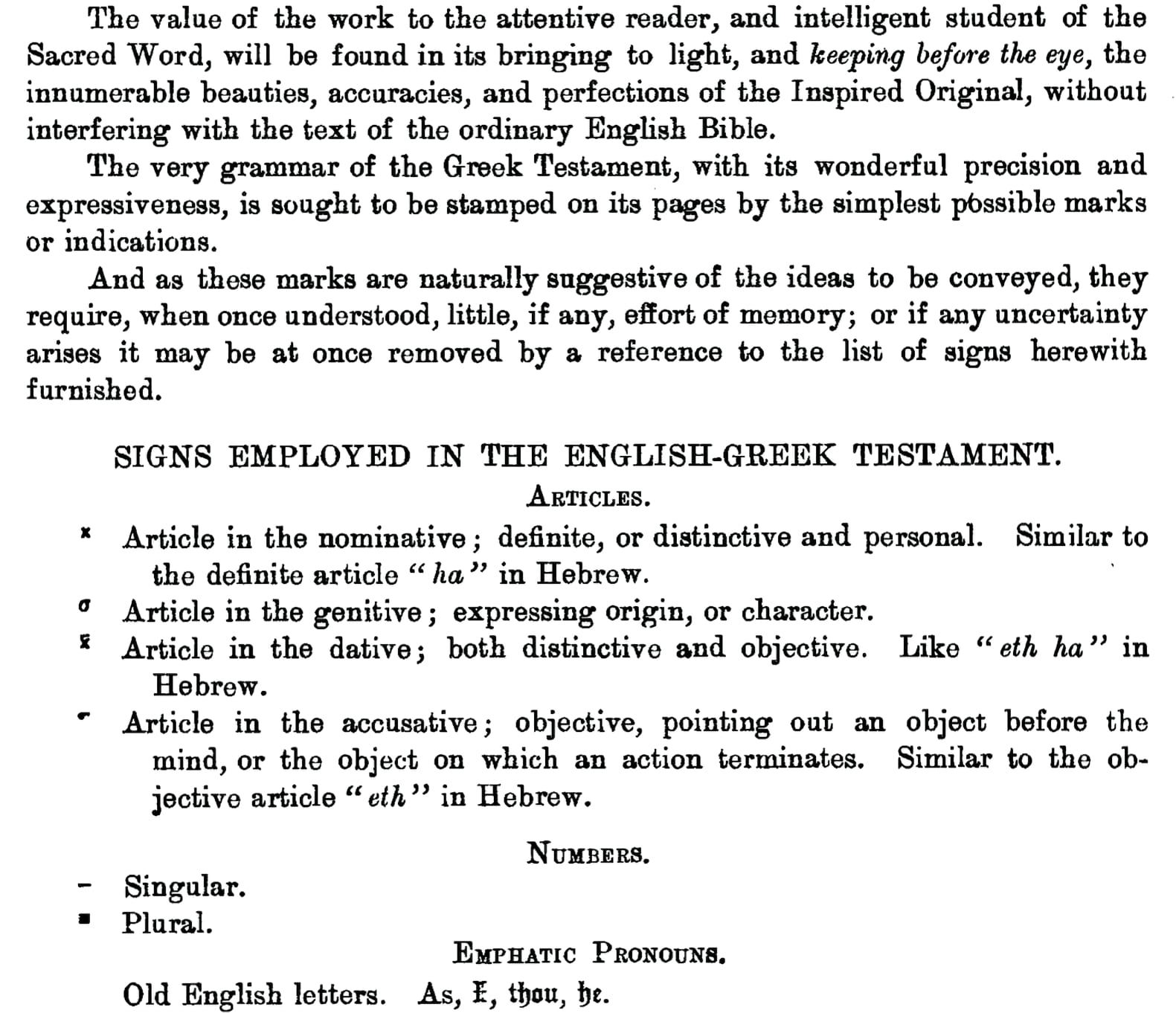
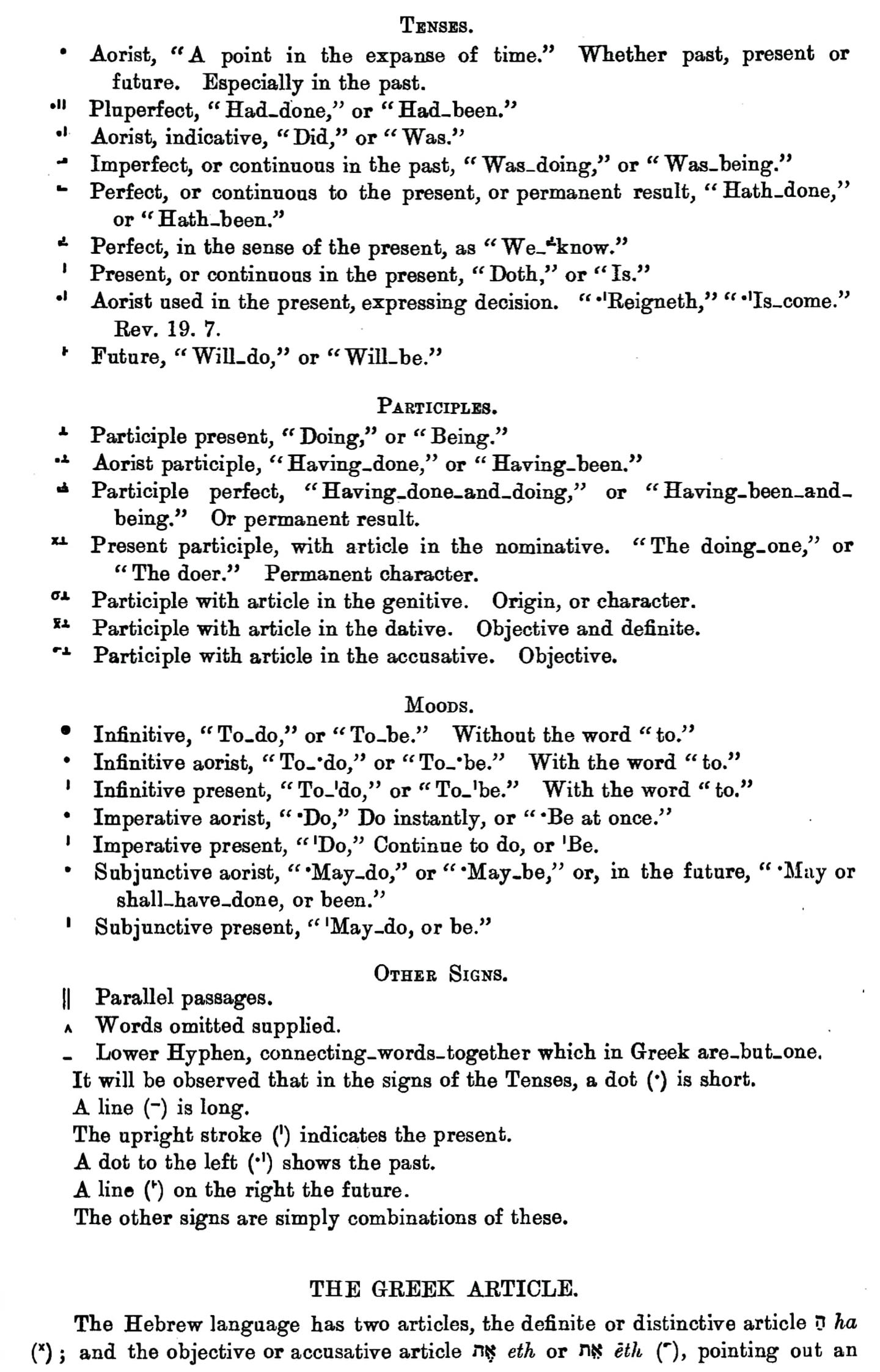
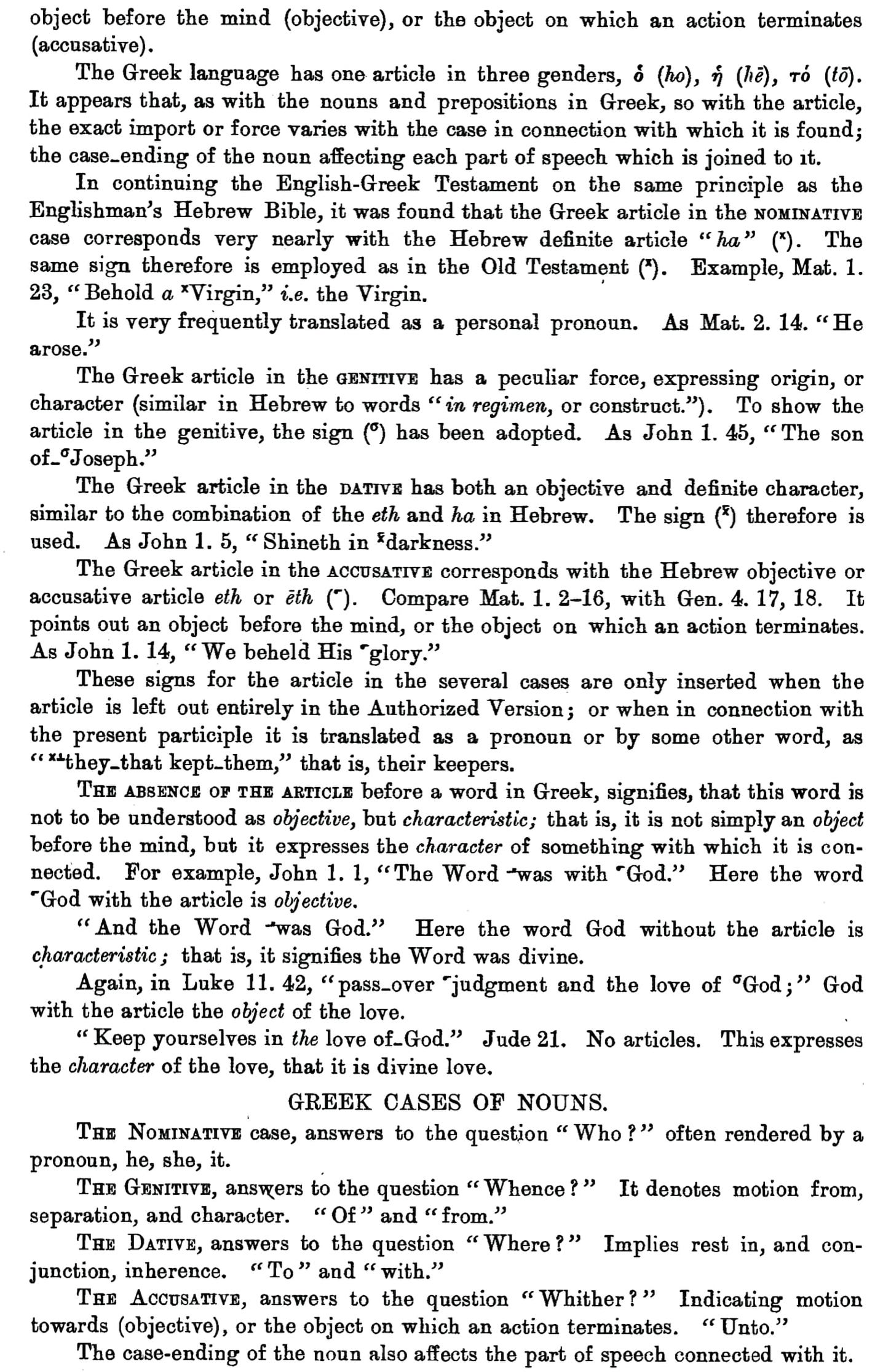
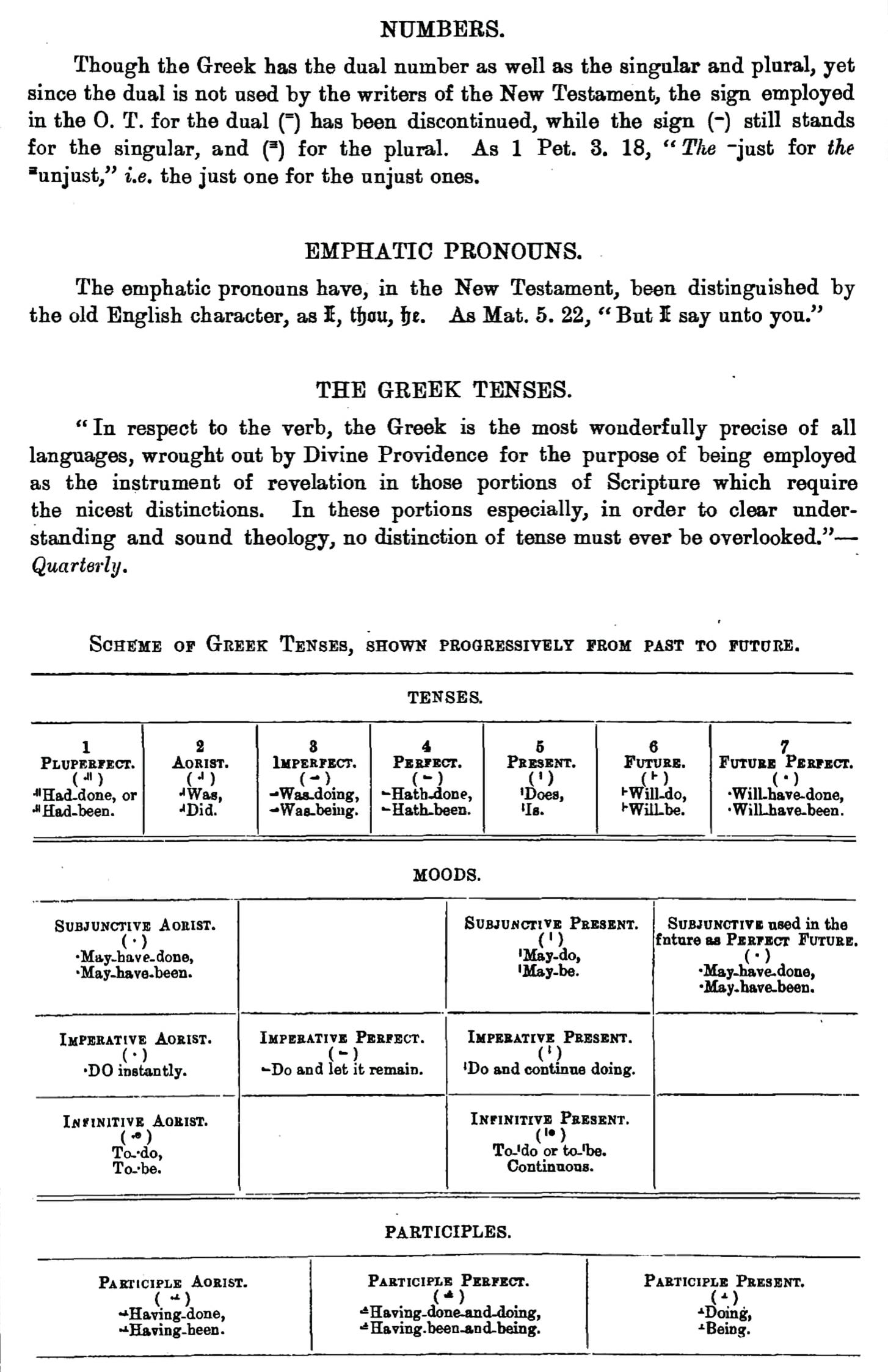
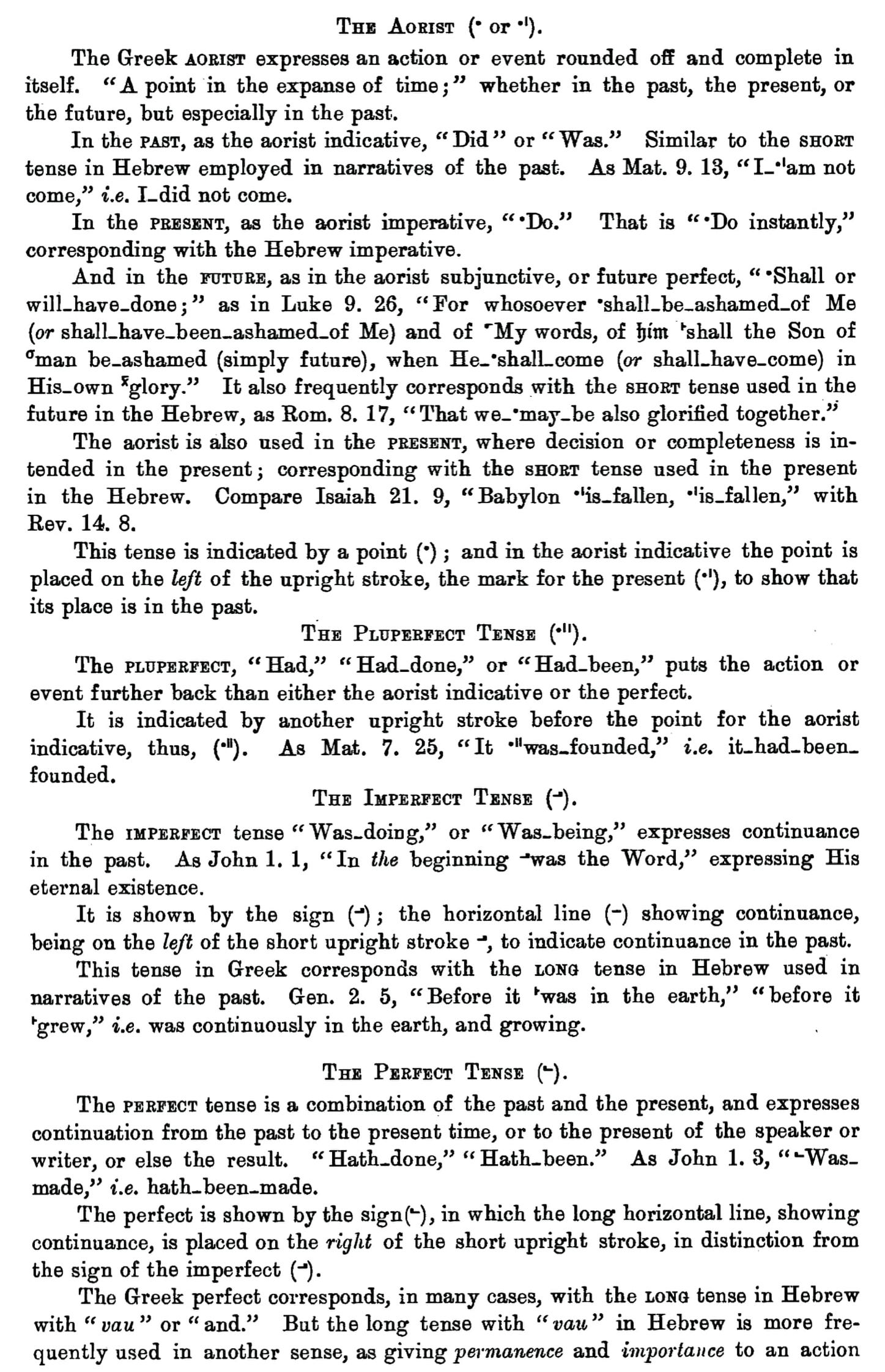
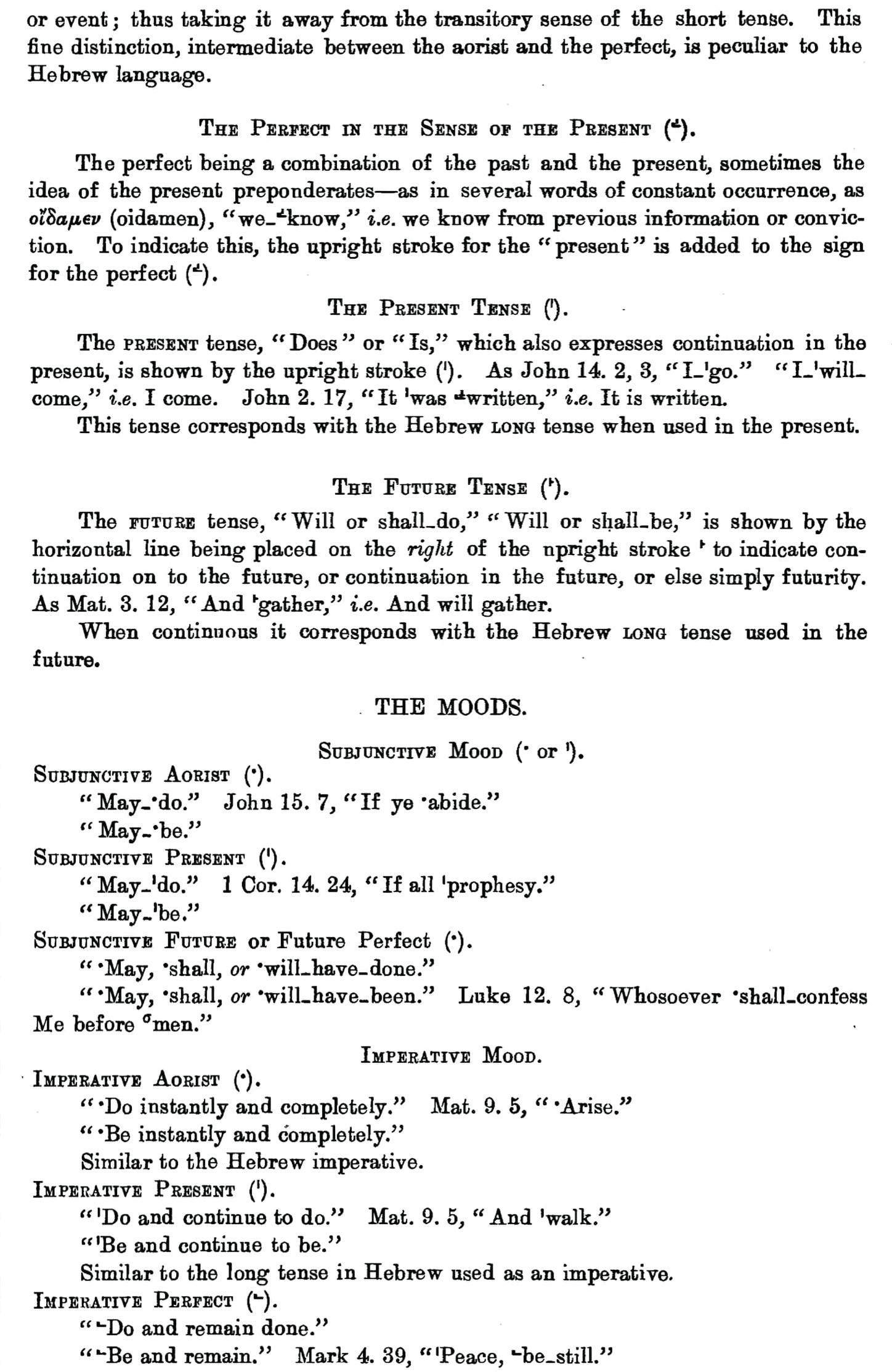
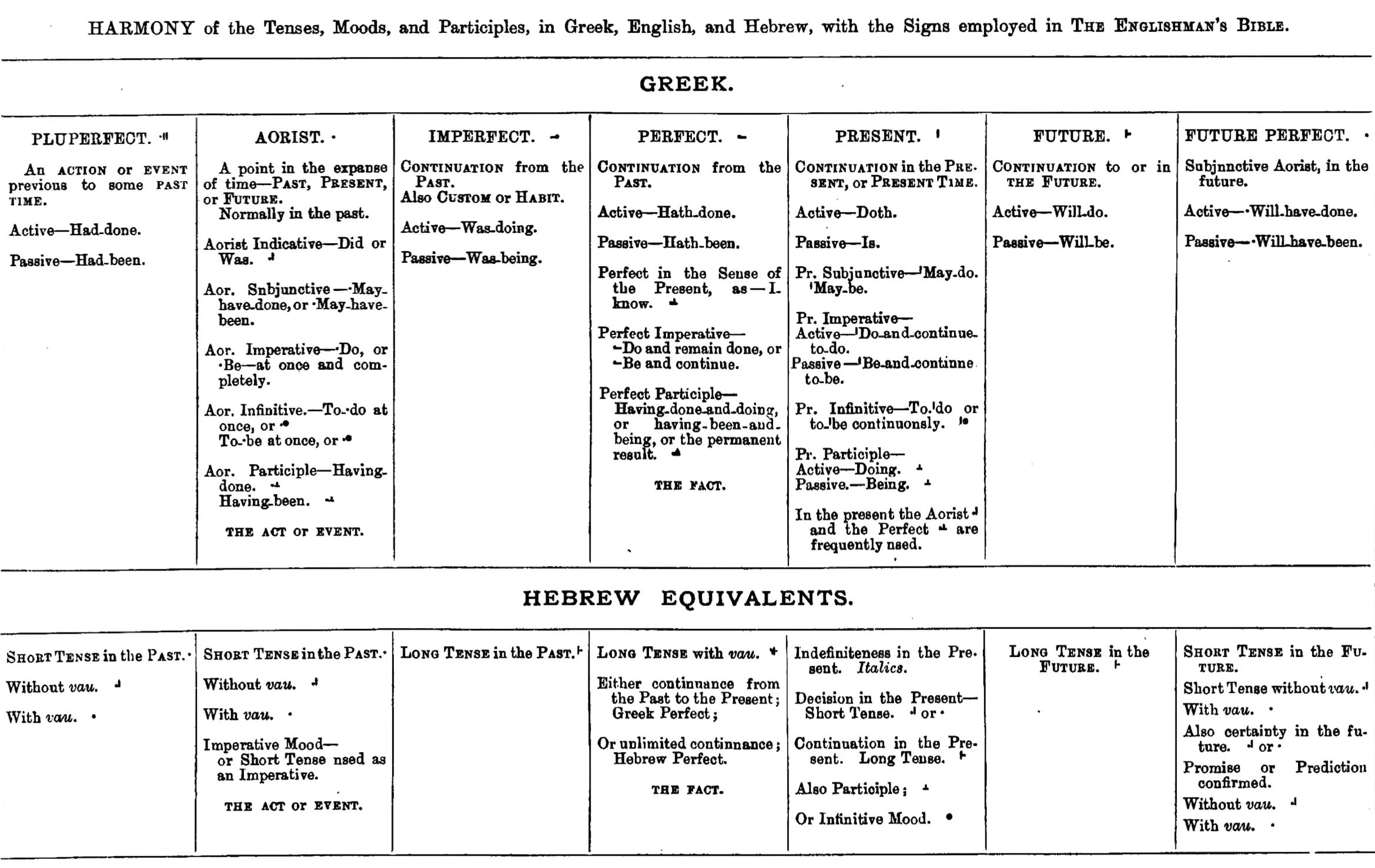
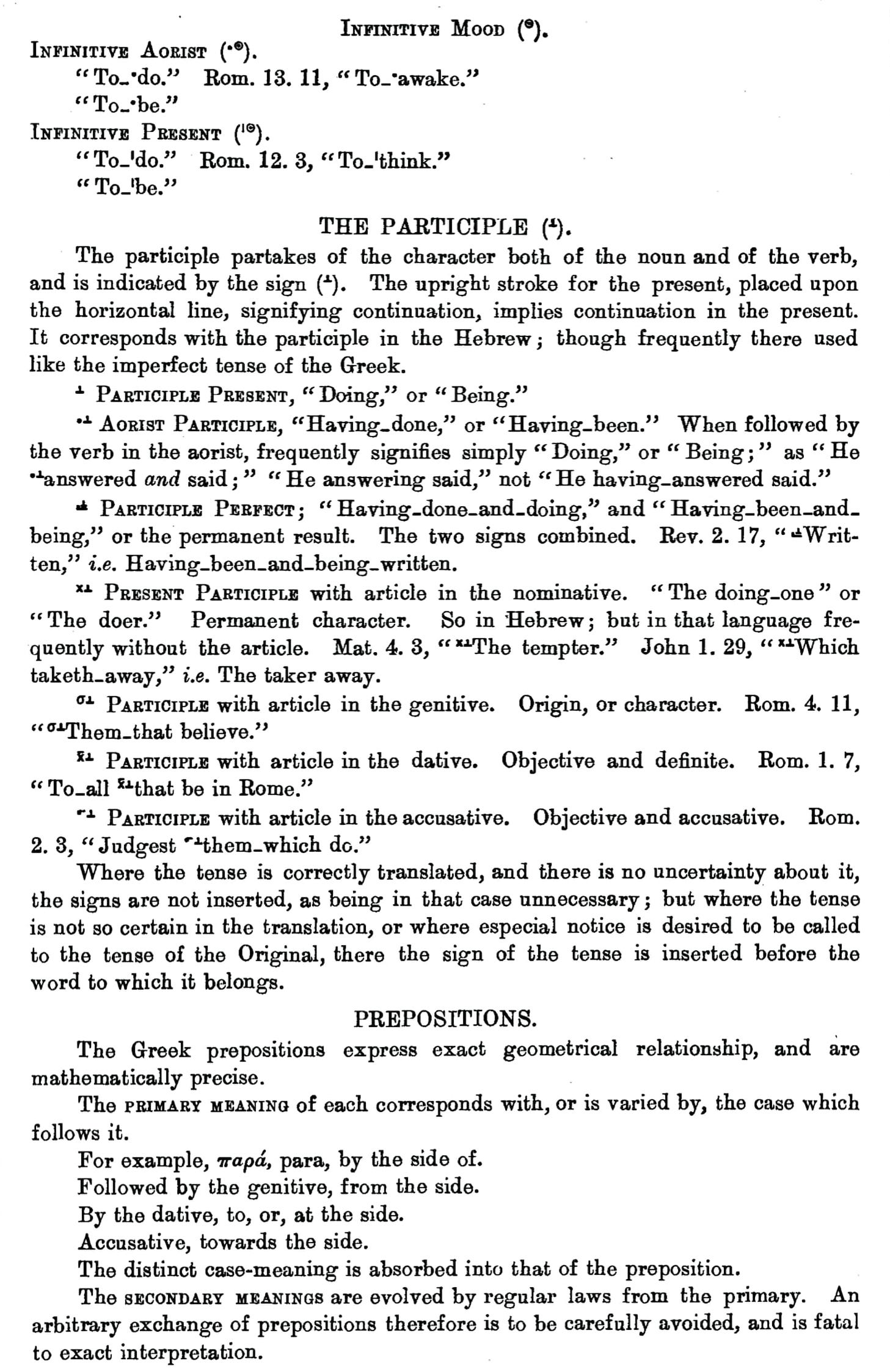
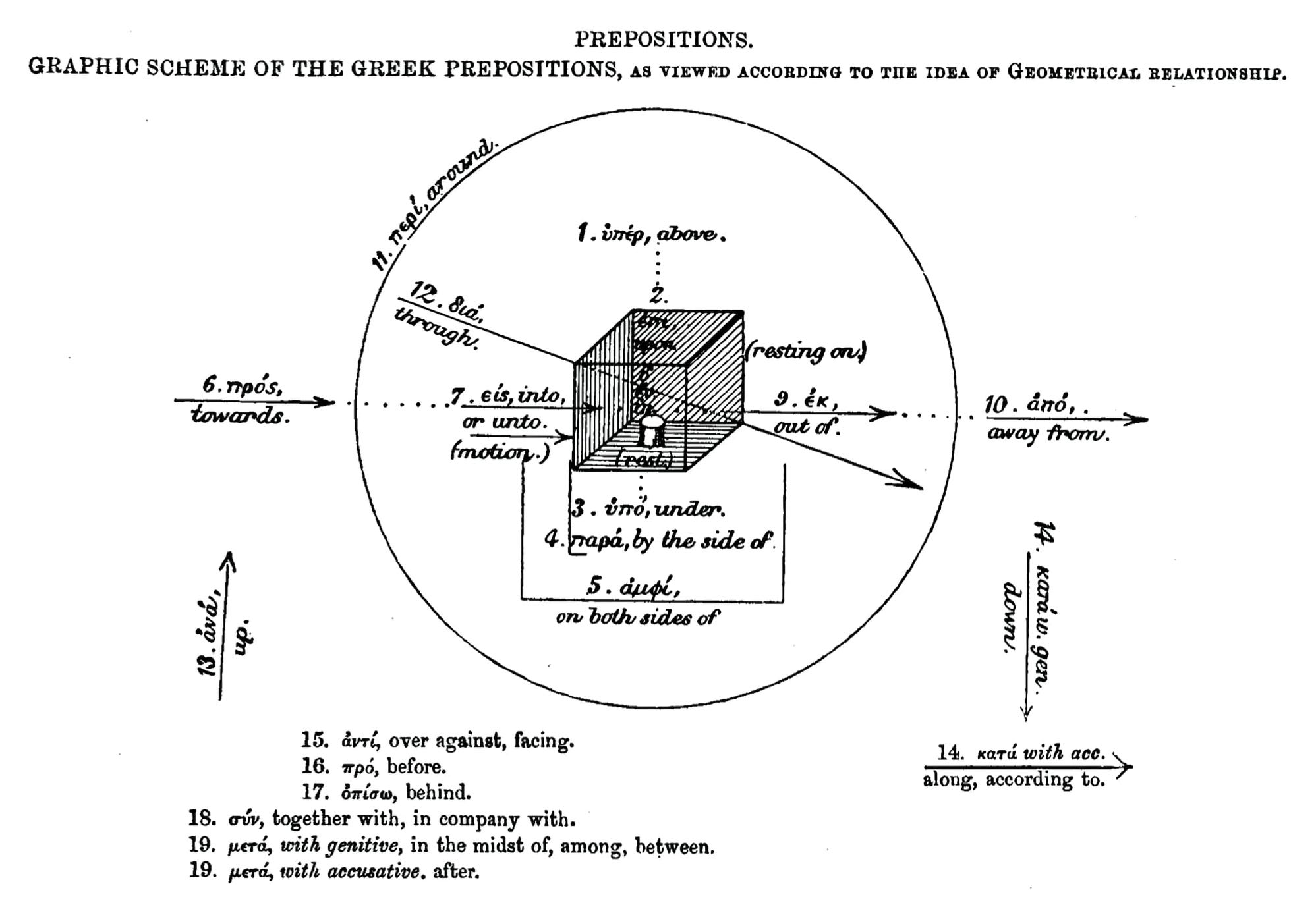
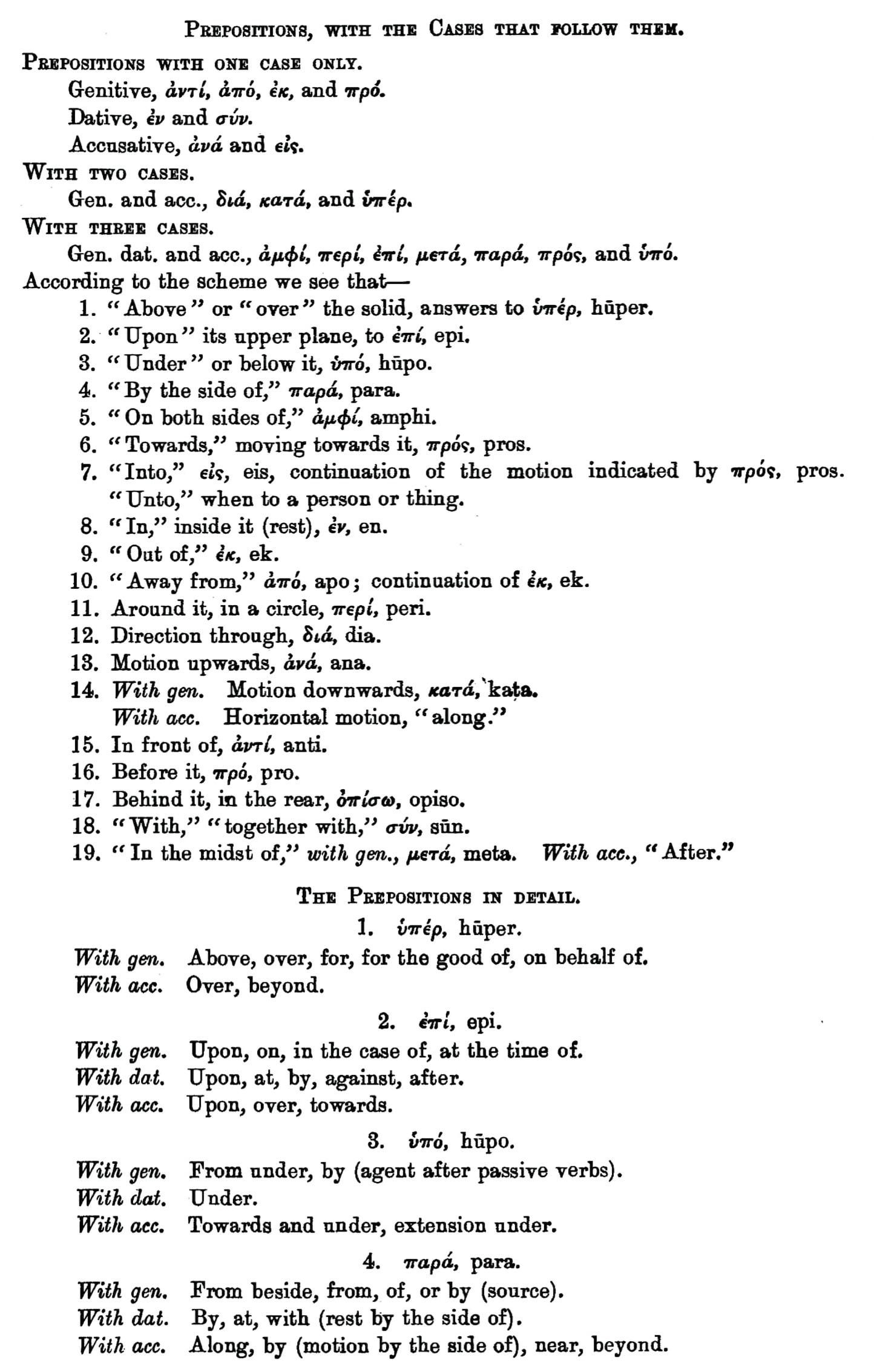
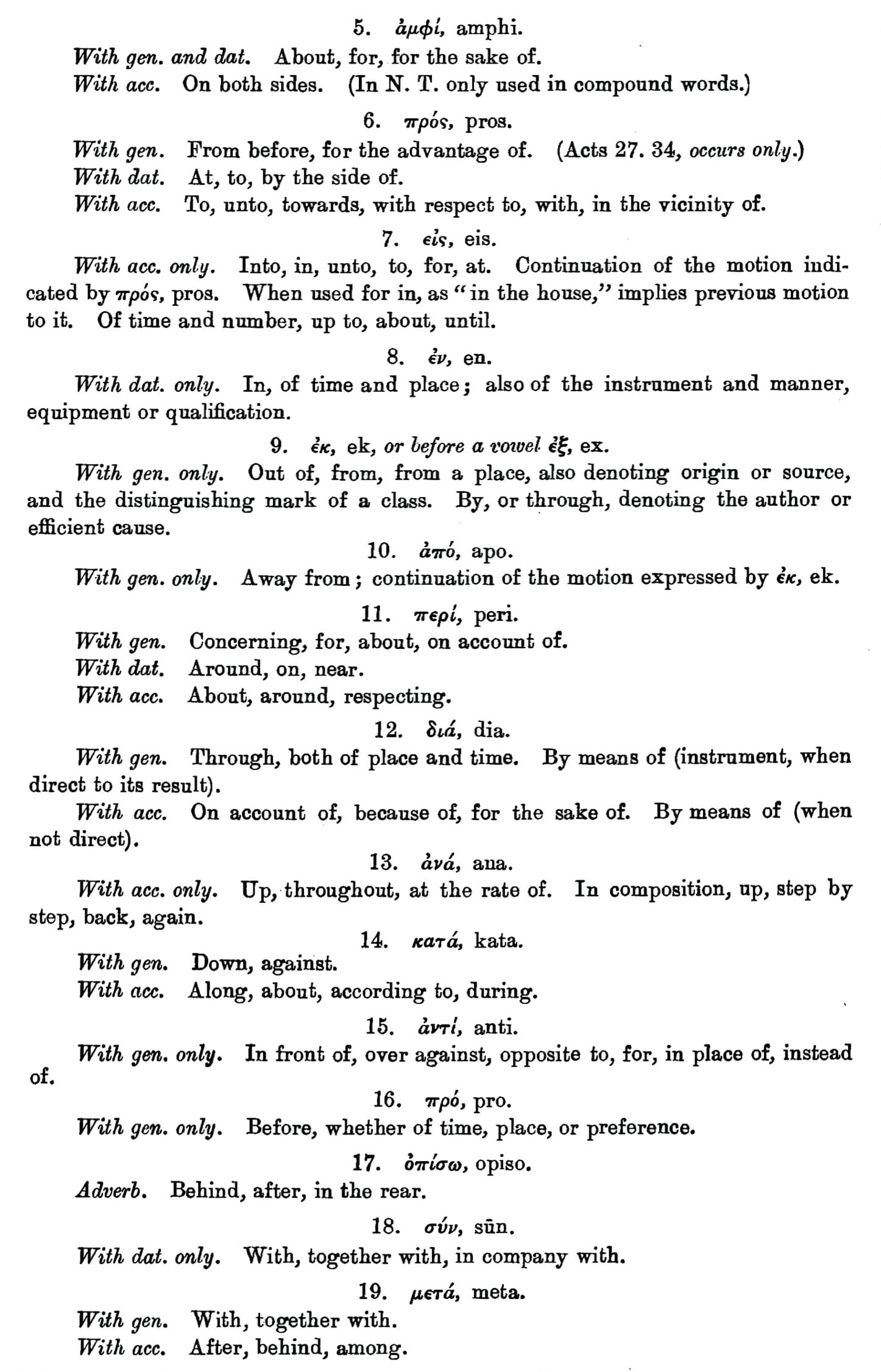
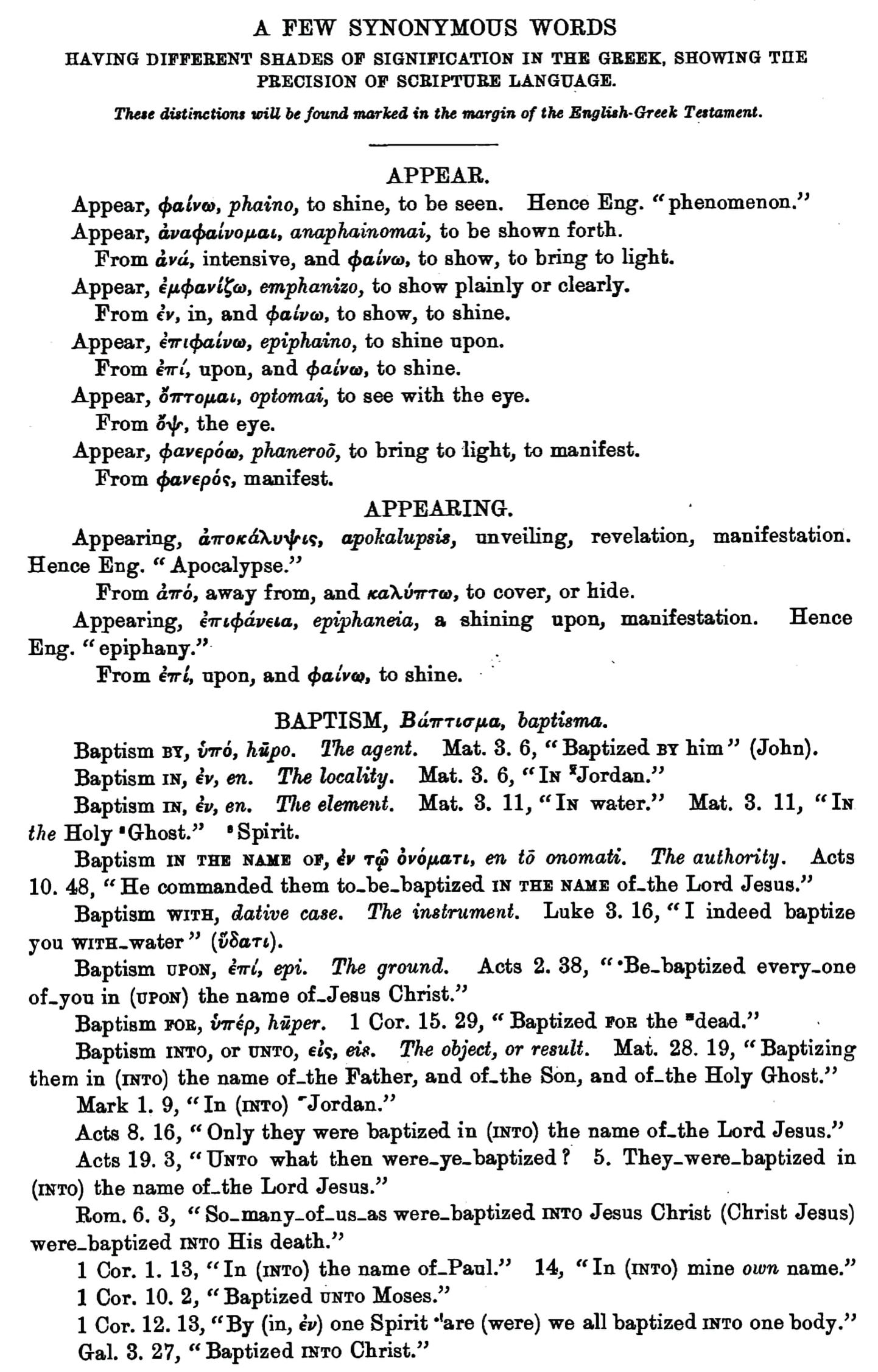
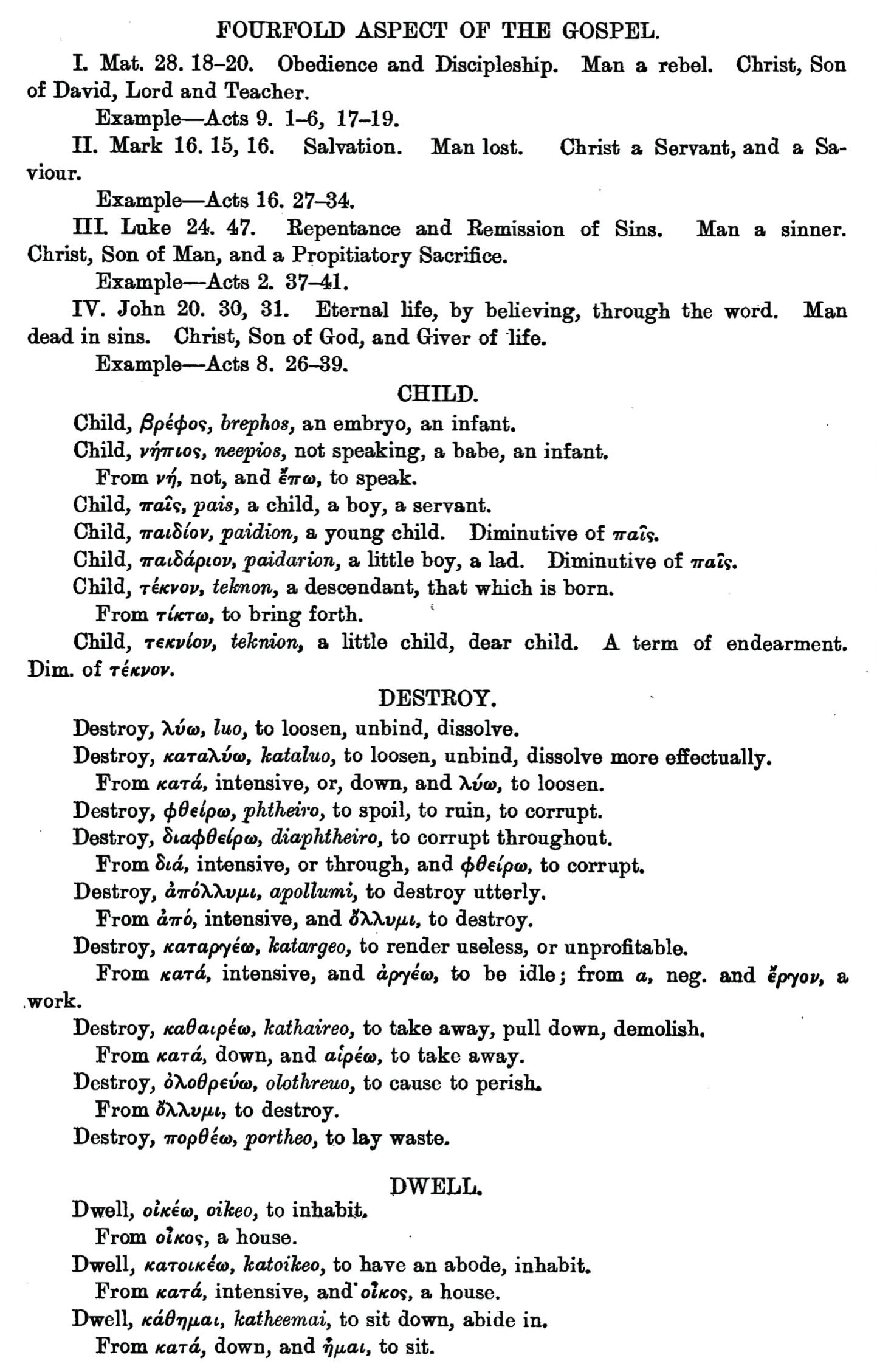
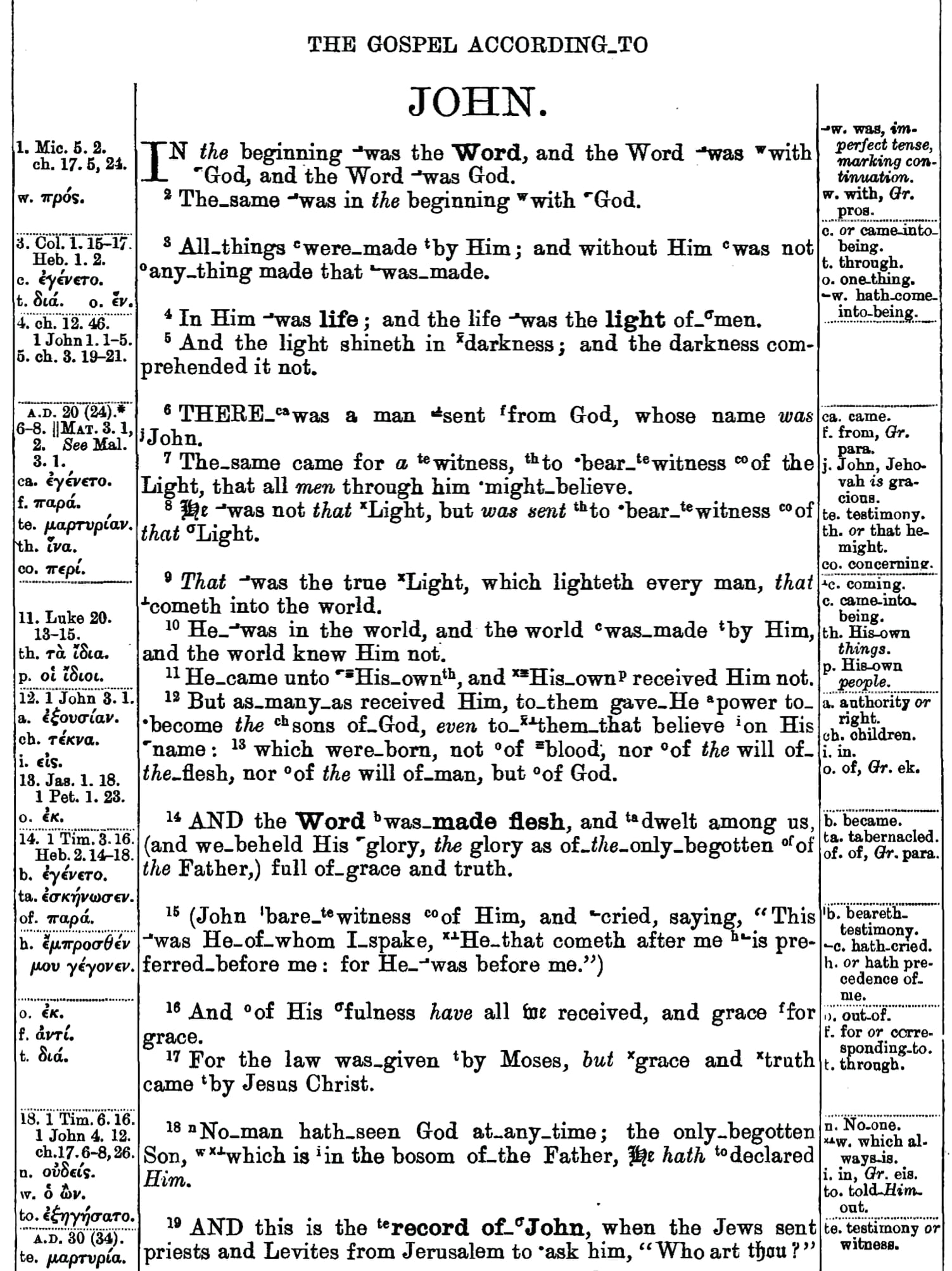
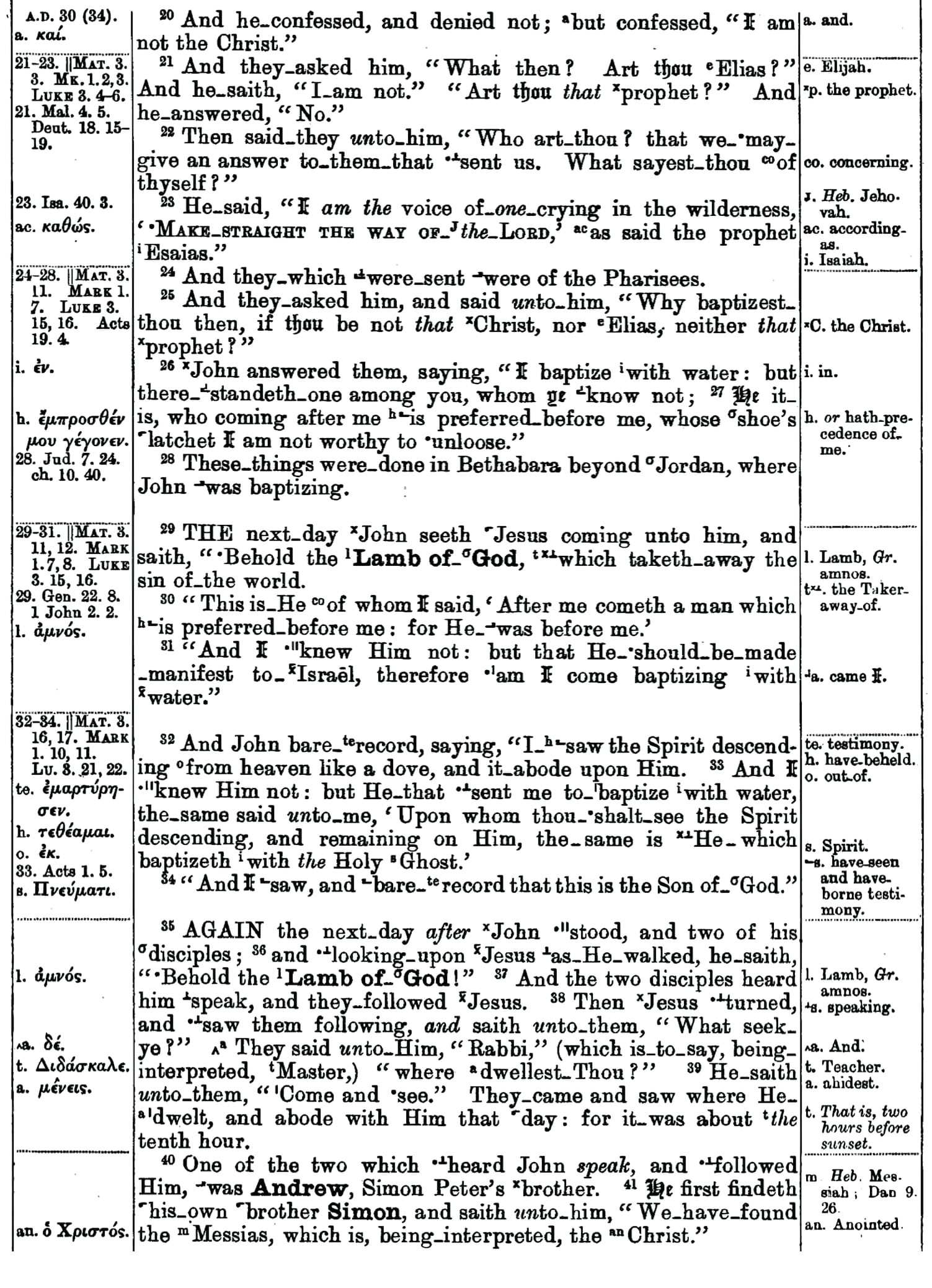
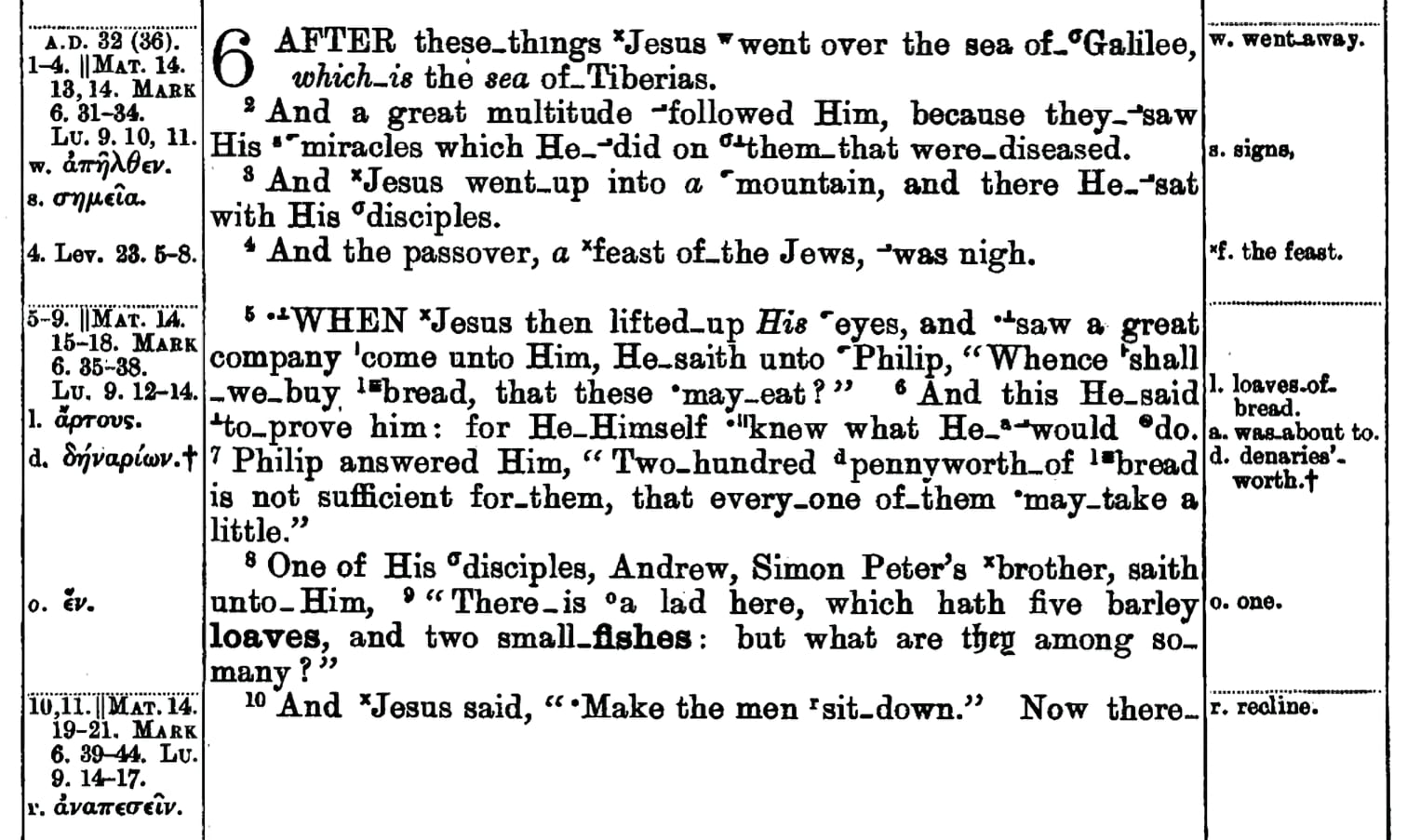
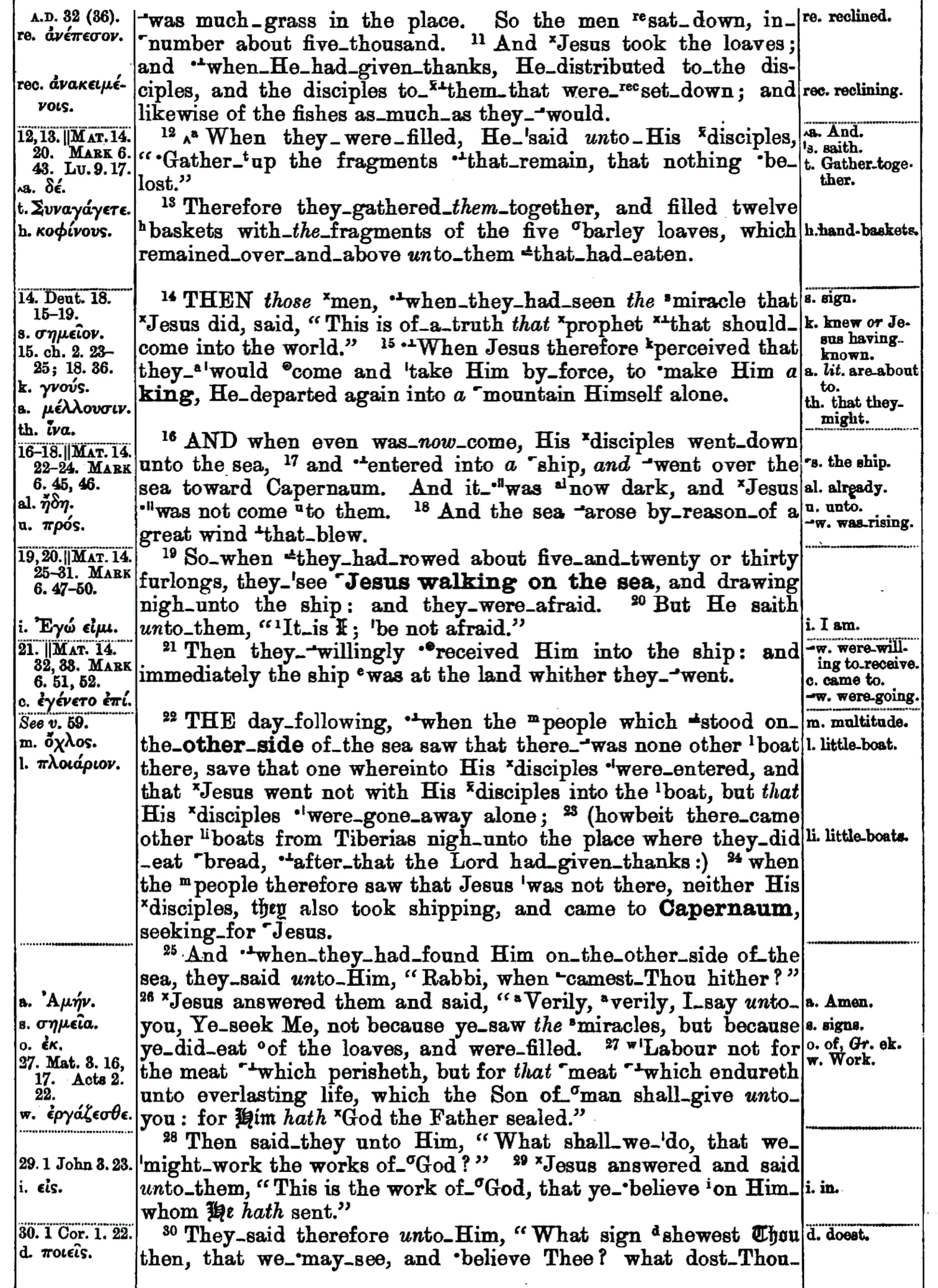
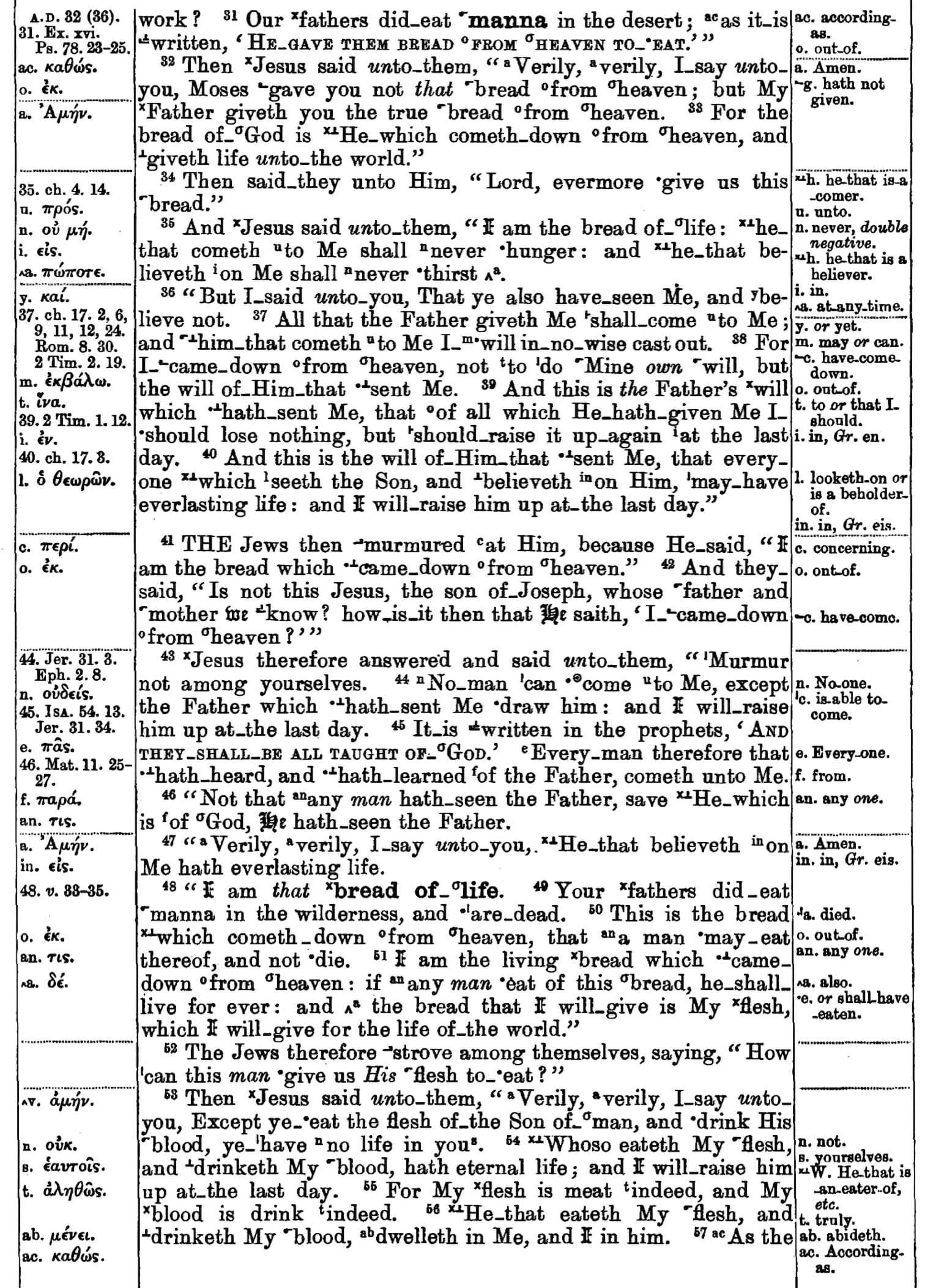
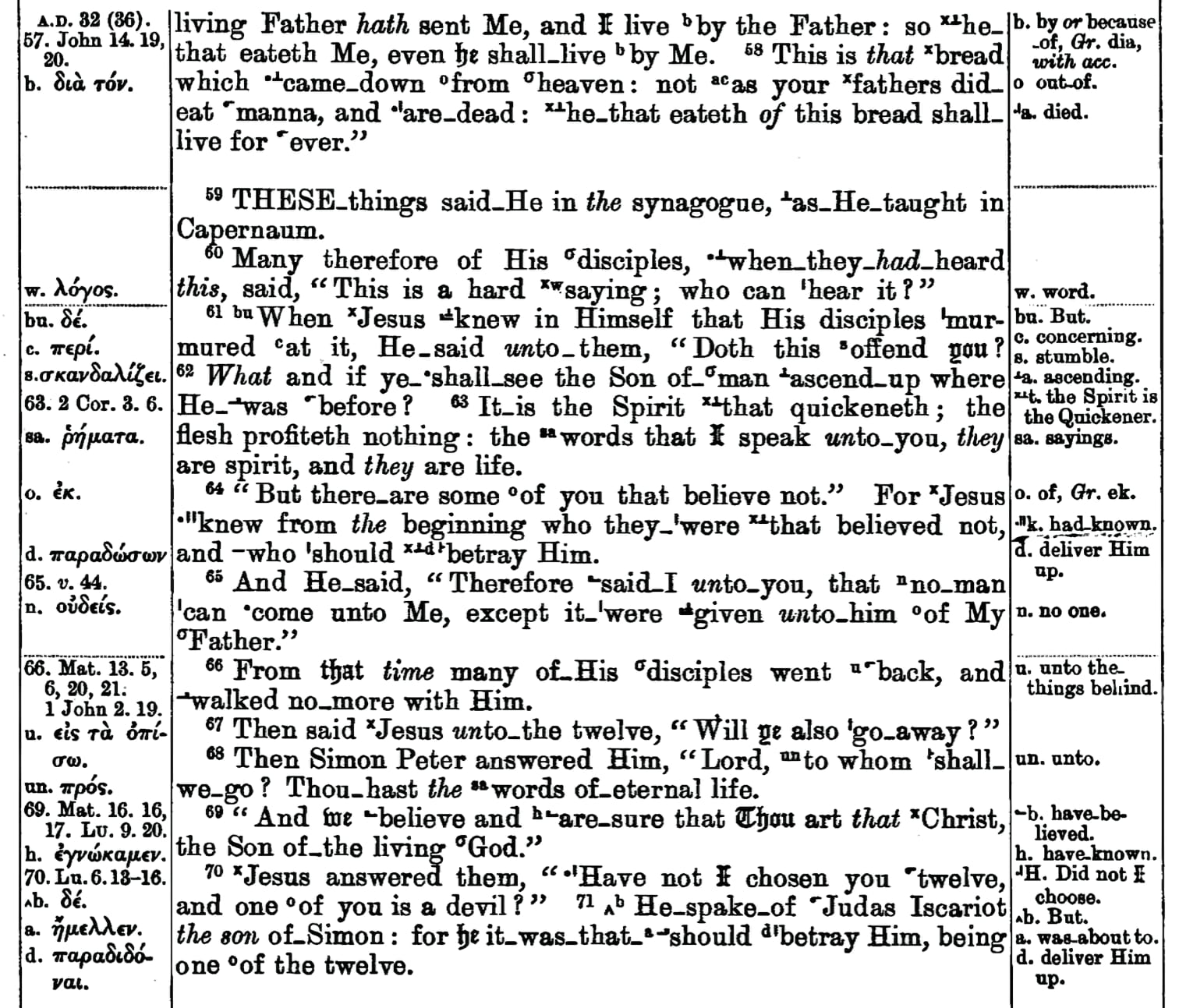
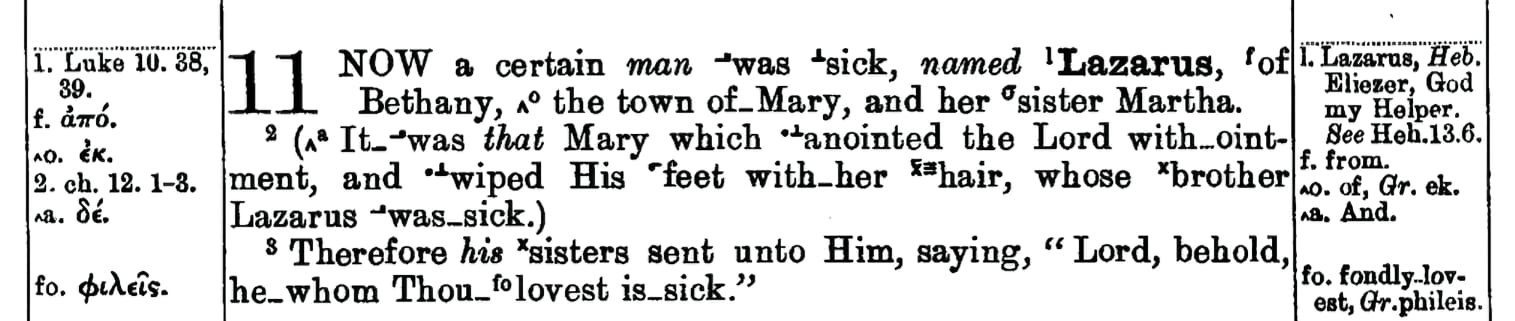
- KJV text (Newberry English-Greek testament)
- Text reading by Alexander Scourby. Known for his deep, resonant voice and clear pronunciation
- Considering those not so familiar with the Holy Bible, a carefully selected HD movie is provided which uses present day language.


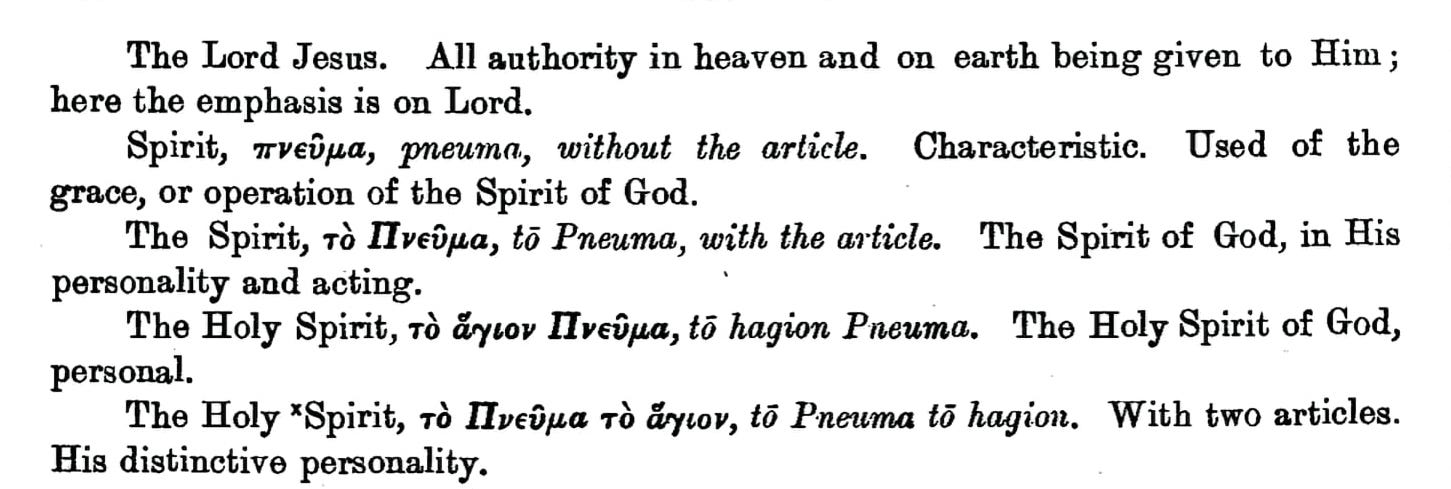
Introduction to the Gospel by John
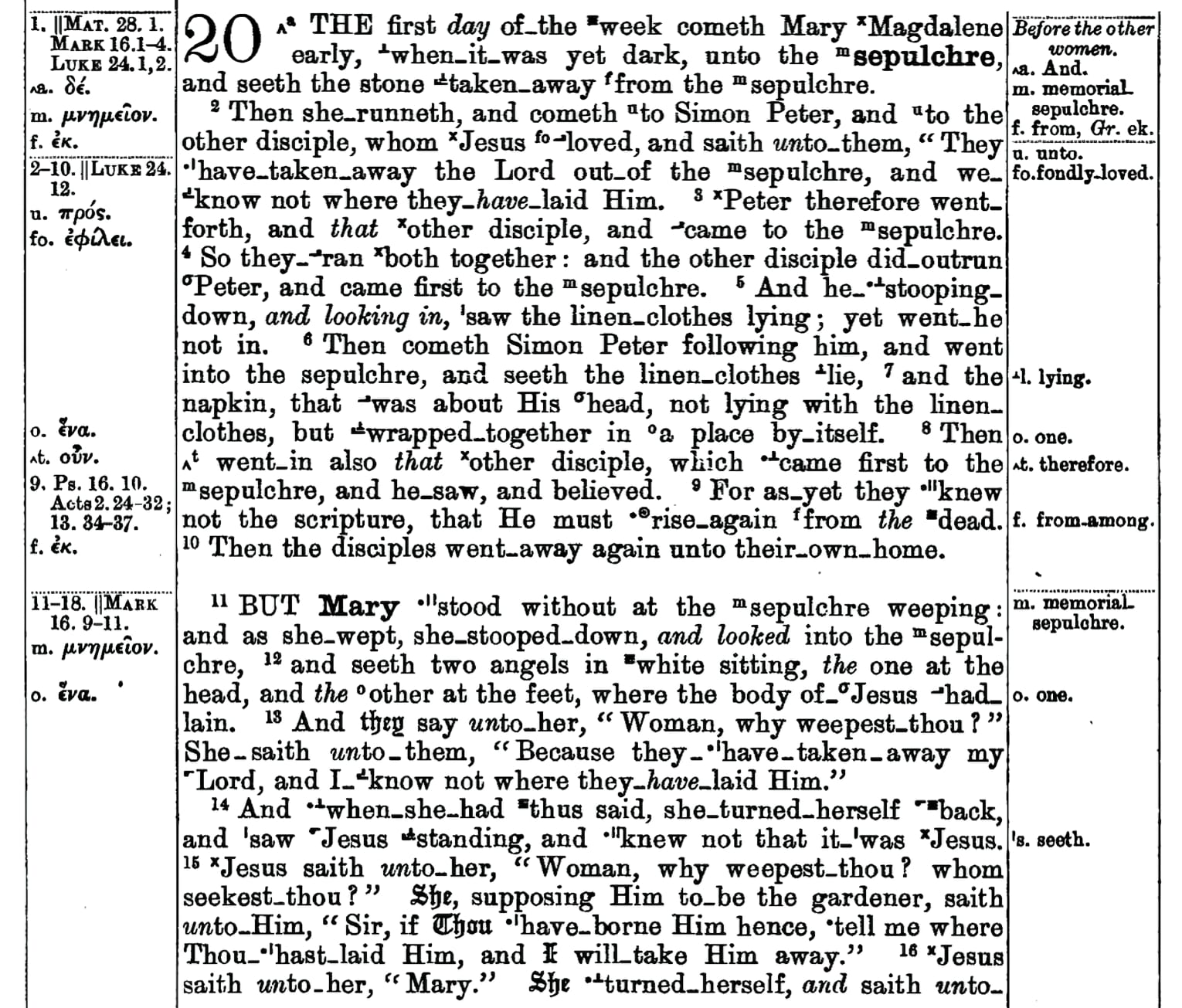
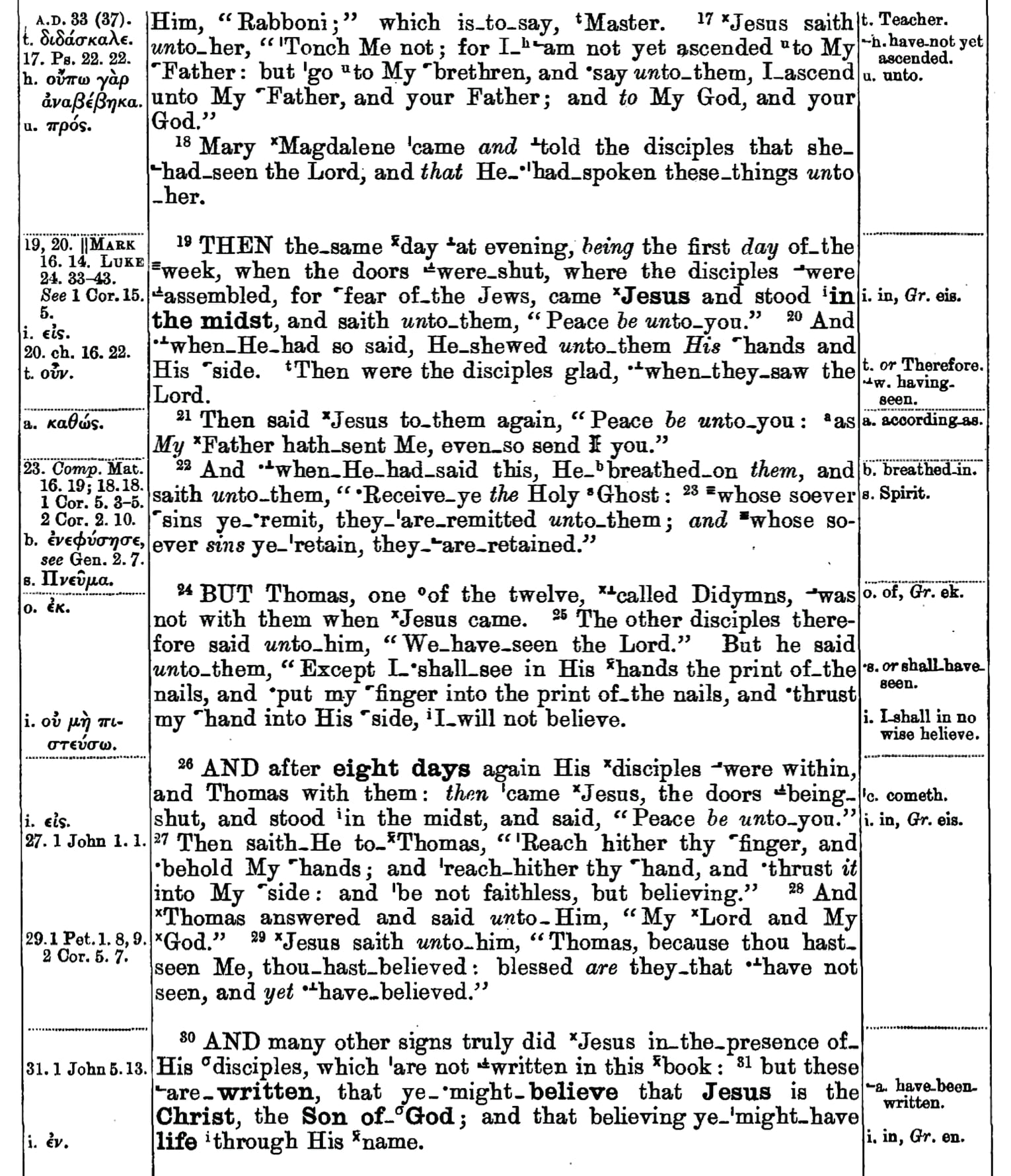
“And many other signs truly did Jesus in the presence of his disciples, which are not written in this book. But these are written, that ye might believe that Jesus is the Christ, the Son of God; and that believing ye might have life through his name.”
The Holy Bible is known as the Word of God and also the Holy Scriptures. It is the set of books inspired by God. The Gospel of John is one of these books. "All scripture is given by inspiration of God, and is profitable for doctrine, for reproof, for correction, for instruction in righteousness." 2 Tim 3:16.
Reading this portion of the Holy Bible is of great benefit. Regarding the Holy Scriptures, King David declared: "More to be desired are they than gold, yea, than much fine gold: sweeter also than honey and the honeycomb. Moreover by them is thy servant warned: in keeping of them there is great reward." Psalm 19: 10 -11.
The Holy Bible has two main parts: the Old Testament and the New Testament. Because the first part is called ‘old’, it doesn’t mean it has no value for us today. On the contrary: "For whatsoever things were written aforetime were written for our learning, that through patience and through comfort of the scriptures we might have hope." Romans 15: 4.
The first four books of the New Testament are: Matthew, Mark, Luke and John. Each presents the Lord Jesus from a different point of view, while still recording His life, death and resurrection. The Holy Spirit uses John to highlight the Lord Jesus Christ as God made flesh. The genealogy of the Lord Jesus is excluded because God has no beginning or end. He is eternal.
In John chapter 1 and verse 1, the Lord Jesus is called "The Word".
“In the beginning was the Word, and the Word was with God, and the Word was God.”
Compare this with John 1:14 and it is soon understood that God (The Word) became flesh and dwelt among us.
“And the Word became flesh, and dwelt among us (and we beheld his glory, glory as of the only begotten from the Father), full of grace and truth.”
Also as God in human form, the Lord Jesus made the person of God known among men: John 1:18.
“No man hath seen God at any time; the only begotten Son, which is in the bosom of the Father, he hath declared him.”
The purpose of this book.
The apostle John reveals his purpose in writing this book: "Many other signs therefore did Jesus in the presence of the disciples, which are not written in this book, but these are written, that ye may believe that Jesus is the Christ, the Son of God; and that believing ye may have life in his name." John 20: 30-31.
The signs.
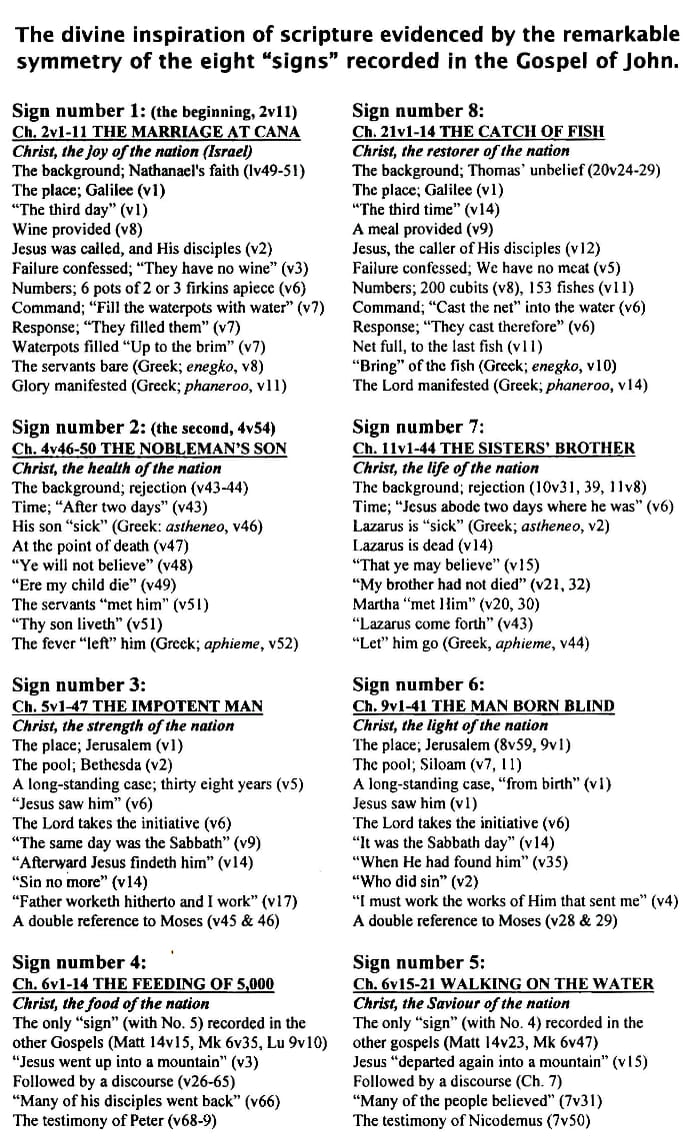
We may note an impressive structure to this Gospel account. Eight 'signs', among many, are chosen to prove that Jesus is the Christ, the Son of God.
The First sign - Changing water into wine.
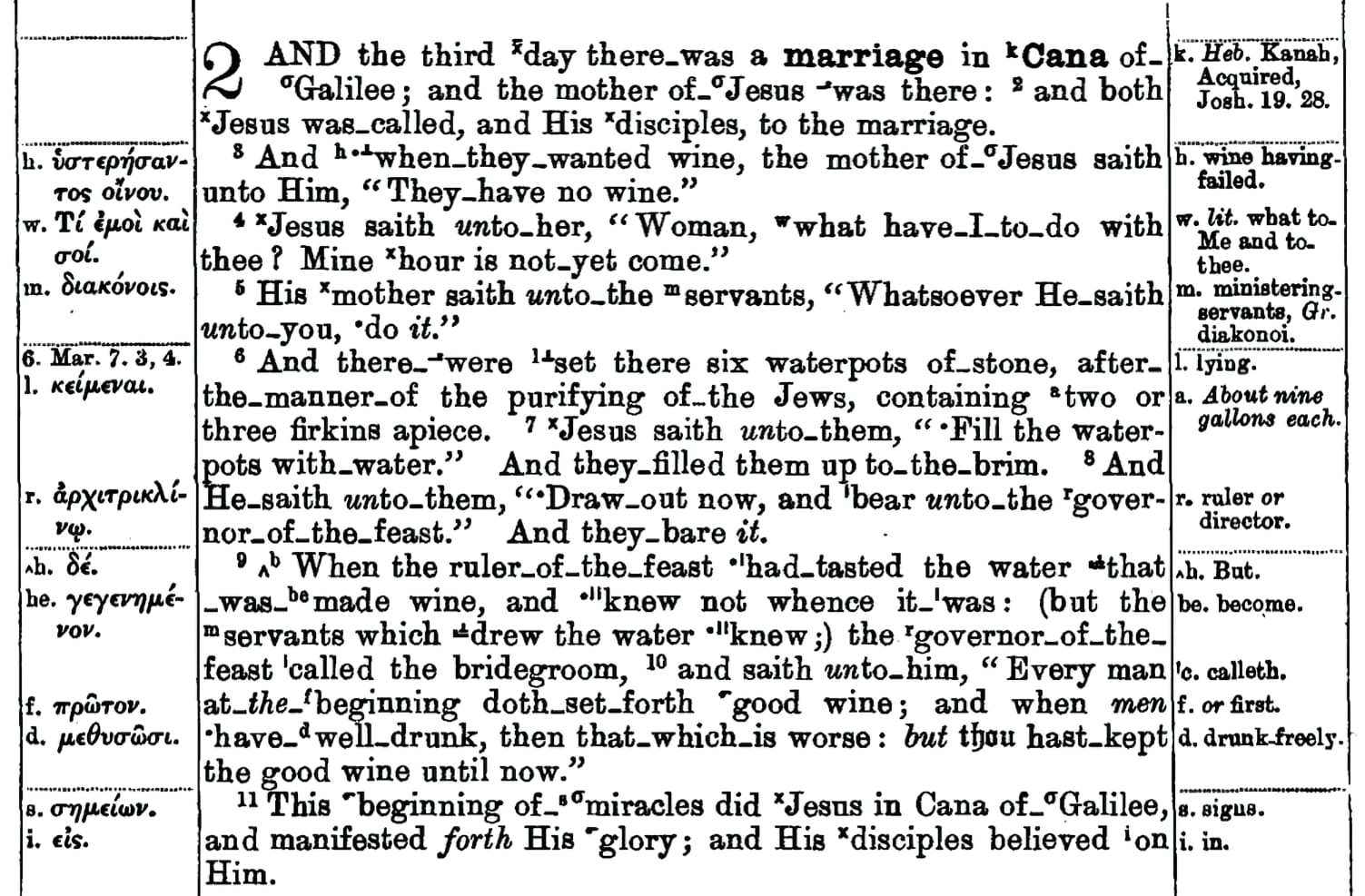
The first sign was given at a wedding reception in Cana of Galilee. The Lord Jesus, by His word, changed water into wine. This action is obviously far beyond the capacity of any mere human. Note: the servants knew they had filled the water pots with water. The man responsible for the reception proved the wine that was changed from water and declared it to be the best. Furthermore, Scripture records that “This beginning of his signs did Jesus in Cana of Galilee, and manifested his glory; and his disciples believed on him.” John 2:11.
The Second sign - Healing of a Nobelman's son.
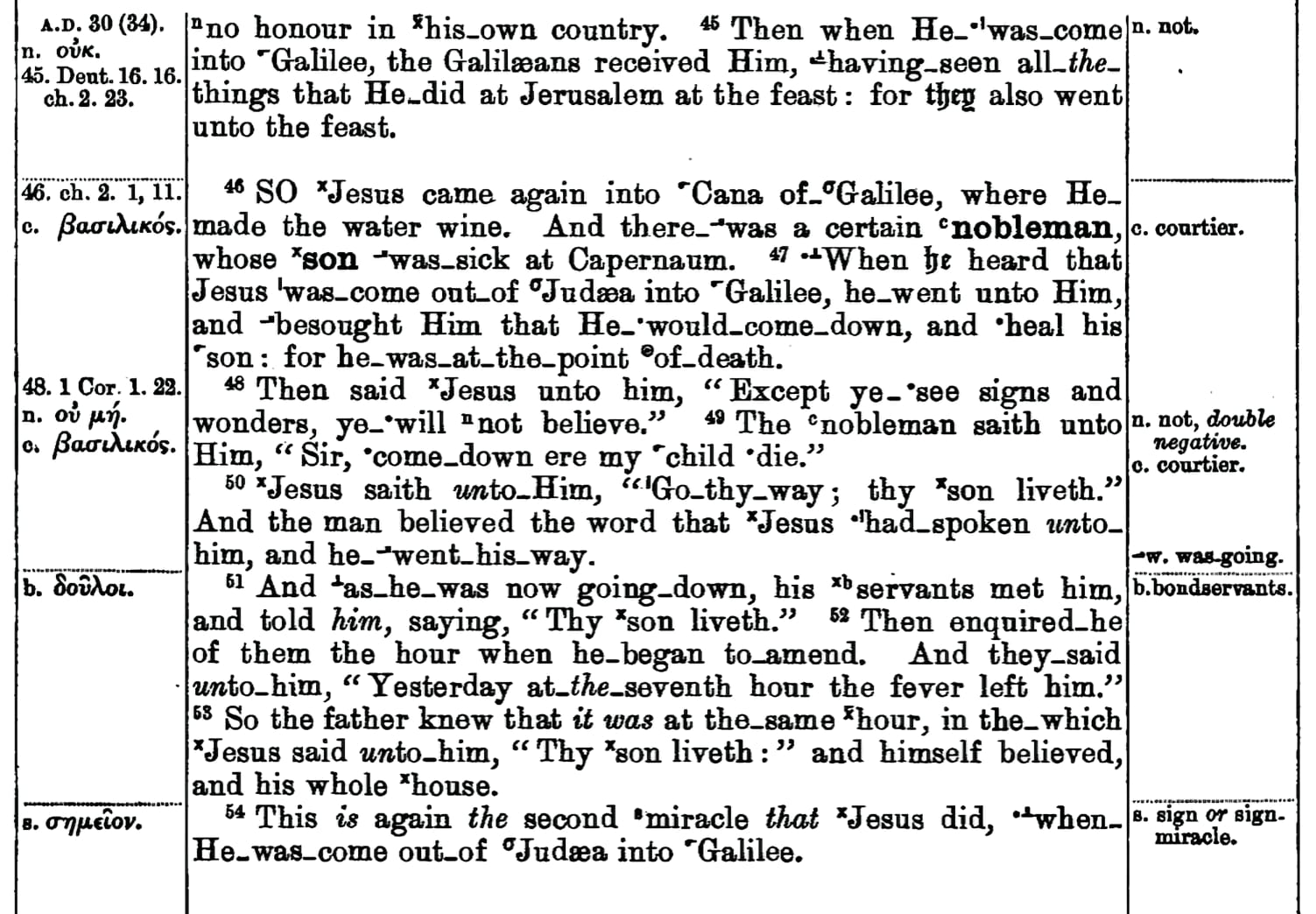
The second sign involved the healing of a nobleman's son in Capernaum. This city was a long way from Cana in Galilee. No one told the Lord Jesus which house it was or who the sick son was among everyone in the house. Although distant, the Lord Jesus already knew. One of the essential aspects of God's character is to know all things (omniscience). Psalm 139 states that God knows everything about us. Even what we are going to say before the words come upon our tongues. Scripture once again records that "this was the second sign that Jesus did, having come out of Judaea into Galilee."
The Third sign - Healing a man who was ill for thirty eight Years.
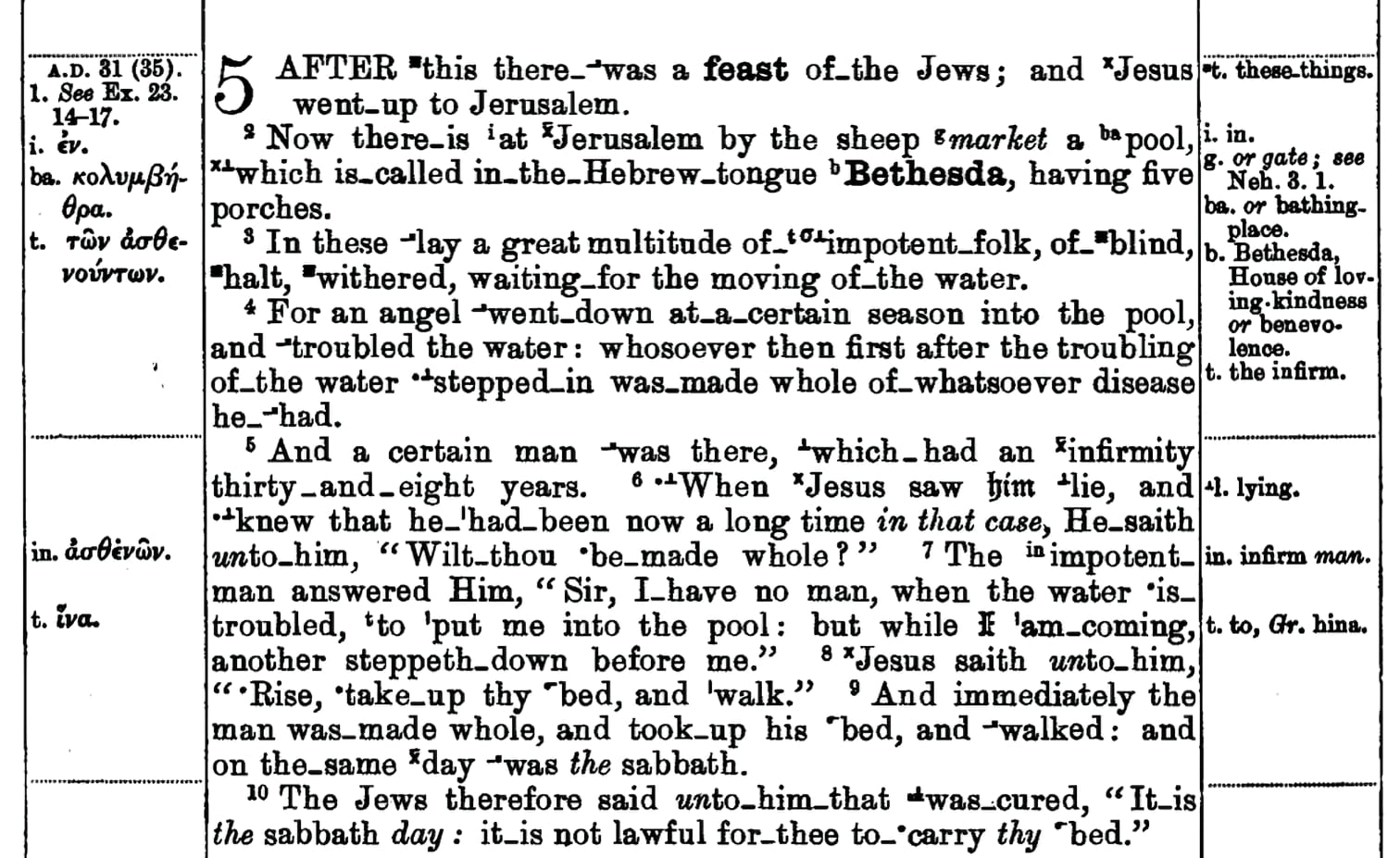
In this third sign we see that health was immediately restored to a man who had been lying and sick for thirty-eight years. This infirm person needed to obey the word of the Lord Jesus instead of looking at the churning water in the pool. In the book of the prophet Isaiah 45:22, God speaks saying: “Look unto me, and be ye saved, all the ends of the earth: for I am God, and there is none else.” God does not impose himself. He lovingly draws our attention to Himself, before acting. The Lord spoke to the man and asked the question: “Wouldest thou be made whole?”
This is Deity conversing with needful humanity - what overwhelming condescension! The Lord gave the command: “Arise, take up thy bed, and walk.” Immediately the man was healed. So simple yet so powerful.
The Fourth sign - Five loaves and two fish feed five thousand men.
The fourth sign is once again in Galilee and is described in such a way as to emphasise the Lord’s foreknowledge and infinite resources in Himself. Here was One, who knew what to do, and had the power to do it. Before Andrew spoke of the lad with his small loaves and fishes, He knew about them. To have such knowledge, and wield such power as to know with absolute certainty what one will do, is the prerogative of Deity. The original food supply was the lad's; the hands that distributed it were the disciples'; the power and grace were the Lord’s, and His alone. So manifest was this to the men that partook of the food, that they connected it with heaven, and declared that He must be the Prophet that should come into the world.
The Fifth sign - Walking on the water in a storm.
Bringing us now into His fifth sign, The Lord Jesus showed Himself to be complete Master over the elements. Both wind and sea can display a force in the grip of which man is but a toy and a plaything, but over these He is supreme Lord. The display of His ability to walk upon the water amidst the storm were for the eyes of His disciples only. No mere man in his own capacity could do that.
An earthly kingdom with plenty of food would easily appeal to the multitude that were fed. However, the disciples knew Him as the Master of both wind and wave, and the powers they represent. Revealing Himself thus to the disciples, their fears were dispelled, and when they willingly received Him into the ship, they found themselves conducted at once to their destination.
The Sixth sign - Giving sight to a man born blind.
After leaving the temple, the Lord Jesus encountered a blind man who was to bear a dramatic witness to the leaders of Israel, and in his own person become another sign - the sixth, that here amongst them was indeed the Christ, the Son of God. The purpose of this sign was that the works of God should be made manifest in the blind man. Before the Lord healed the man He testified that His day of activity on earth as God manifest in flesh, was rapidly drawing to its close. The clay and the spittle did not effect the opening of the eyes; it was the power of Christ. The blind man went and washed in the pool of Siloam and came seeing. The healing of the man born blind is a type and an illustration of how Christ, the Light, communicates light and how he who follows the Light walks no more in darkness, but has the light of life. (John 8:12.) The rest of the chapter shows that the blind man received the eyes of his heart opened as well as his physical eyes. Once his spiritual eyes were opened his measure of light increased.
The Seventh sign - The resurrection of Lazarus.
The resurrection of Lazarus proves the Lord Jesus to be the Son Of God, Who can raise the dead. This seventh sign is considered to be the greatest of all. Death was not the real end of this incident, but the manifestation of the glory of God and the glorifying of the Son of God. From the days of Moses at the burning bush, God had called Himself "I AM." Now we see the Lord Jesus, the Word, having become flesh and He is "I AM," but He fills it out in detail. Here we hear Him declare: "I AM the resurrection and the life." Bringing life back into a dead body and resurrection are wholly His work. The Lord uttered but three words and the mighty sign came to pass. Death and corruption disappeared and Lazarus, still bound in grave-clothes, came out of the tomb! The life-giving work remains altogether in the hands of the Son of God. In this great sign that John puts on record, the glory of God had been manifested, since the giving of life is His glorious prerogative.
The Eighth sign - The great catch of fish.
The main drift of this Gospel account has been the revelation of the Father in the Person of the Son, and the certifying to us that Jesus is indeed the Son of God. Here we find Peter reverting to his fishing and taking six of the other disciples with him. After a night of fishing they had caught nothing. The Lord calls from the shore and thus shews Himself. He is observed as Lord over the fish and also over His own. He directed the disciples in casting the net at the right side of the ship. There was an overwhelming catch of great fish. The disciple who Jesus loved knew it was the risen Lord, not so much by the sight of the eyes, but by His actions, which were unique. He provided for the need of His disciples, in graciously preparing a breakfast for them. This eighth sign is most heart warming to note the risen Lord of glory controlling nature to encourage His disciples and in lovingly caring for them.
The beautiful symmetry of these eight signs.
For the careful reader, there is an undeniable similarity, an impressively beautiful balance of symmetry between the eight signs registered in this Gospel account. The first sign with the eighth, the second with the seventh, the third with the sixth and the fourth with the fifth. For example, in the first sign the place was Galilee. In the eighth sign the place was also Galilee. In the 1st, wine was provided. In the 8th a meal was provided. In the 1st a command was given: “Fill the waterpots. In the 8th a command was also given: “Cast the net.” The two lists below lay the symmetrical signs side by side.
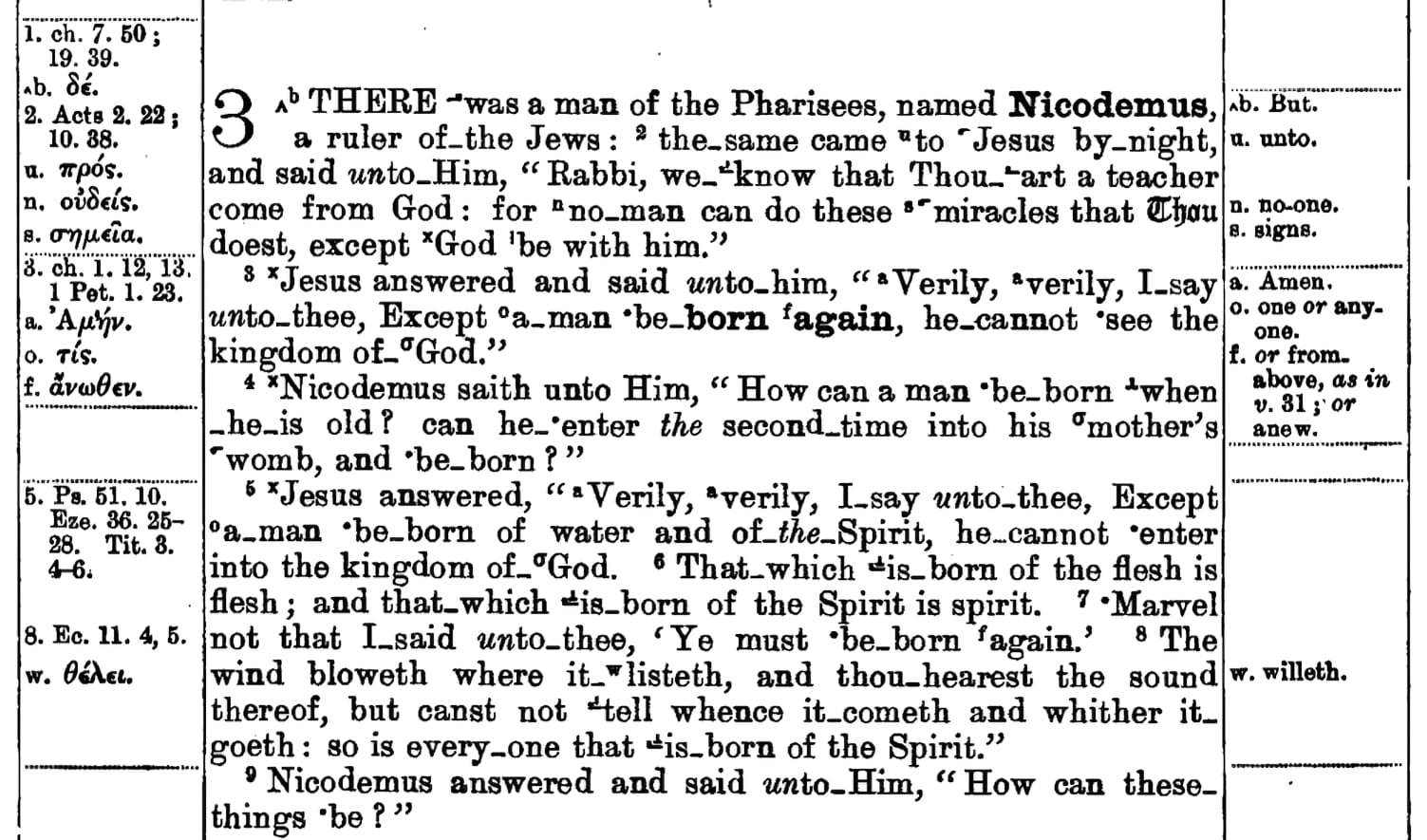
Nicodemus was a person who observed the signs that the Lord Jesus Christ did. We read about his encounter with the Lord in John chapter 3. He recognised the characteristics of God in the Lord Jesus and said to the Lord: "... no man can do these signs that thou doest, except God be with him. ." John 3: 2.
Born from above.
The Lord Jesus led Nicodemus to consider his spiritual need. He said: "Ye must be born again." John 3: 7. The Lord Jesus explained that this birth is spiritual and not natural. He said: “The wind blows where it will, and thou hearest its voice, but knowest not whence it comes and where it goes: thus is every one that is born of the Spirit. ” John 3: 8.
The expression "born again" can also be translated as “born from above". This is how the same original (Greek) word is translated in John 3: 31 "He who comes from above is above all." as well as in John 19:11. "You would have no power against me if it were not given to you from above."
The apostle John helps us a lot when he explains: “But as many as received him, to them gave he power to become the sons of God, even to them that believe on his name. Which were born, not of blood, nor of the will of the flesh, nor of the will of man, but of God. ” John 1: 12-13. It is obvious that in this spiritual sense, not all human beings are children of God. The requirement is "to believe on His name", "to receive Him", and therefore to be born of God, to be born from above, to be born again.
The basis of this spiritual birth is the death of the Lord Jesus on the cross. Still talking to Nicodemus, the Lord Jesus made mention of Moses: “And as Moses lifted up the serpent in the wilderness, even so must the Son of man be lifted up. That whosoever believeth in him should not perish, but have eternal life. ” John 3: 14-15.
This story is recorded in the old testament in Numbers 21:4-9. When anyone from amongst the people of Israel were bitten by a fiery serpent (poisonous snake), God's promise was that looking at the bronze serpent which Moses had raised on a pole, that person would live. Likewise, fulfilling the figure of Numbers 21, the Lord Jesus was raised on a cross. And today, when a sinner turns to the Lord Jesus from his sins, believing that on the cross He took his place, he receives eternal life from God. He receives the Lord Jesus as his Savior. He becomes a son of God. This is clearly confirmed by
John 1: 12. “As many as received him, to them gave he power to become the sons of God, even to them that believe on his name.”
and John 3:16. “For God so loved the world, that he gave his only begotten Son, that whosoever believeth in him should not perish, but have everlasting life.”
What does it involve to follow the Lord Jesus Christ?
The Lord Jesus said:
"I am not come to call the righteous, but sinners to repentance." Matthew 9: 13.
“If any man will come after me, let him deny himself, and take up his cross, and follow me. For whosoever will save his life shall lose it: and whosoever will lose his life for my sake shall find it.” Matthew 16: 24-25.
The Gospel is not that Christ lived and died but that He died and lives.
“Moreover, brethren, I declare unto you the Gospel which I preached unto you, which also ye have received, and wherein ye stand. By which also ye are saved, if ye keep in memory what I preached unto you, unless ye have believed in vain. For I delivered unto you first of all that which I also received, how that Christ died for our sins according to the scriptures. And that he was buried, and that he rose again the third day according to the scriptures.”
- KJV Bible reading John chapter 1
- HD movie John chapter 1
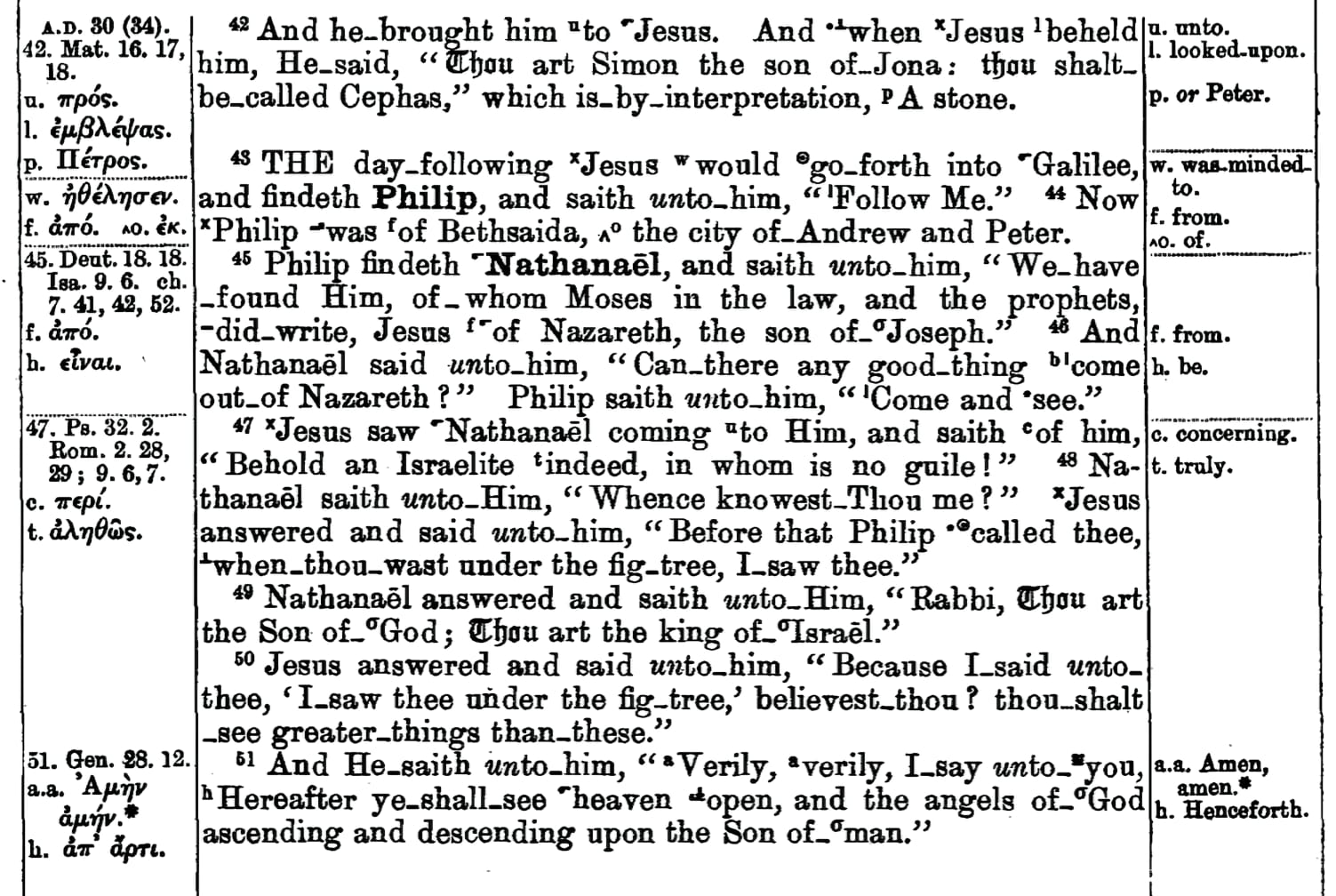
- KJV Bible reading John chapter 2
- HD movie John chapter 2
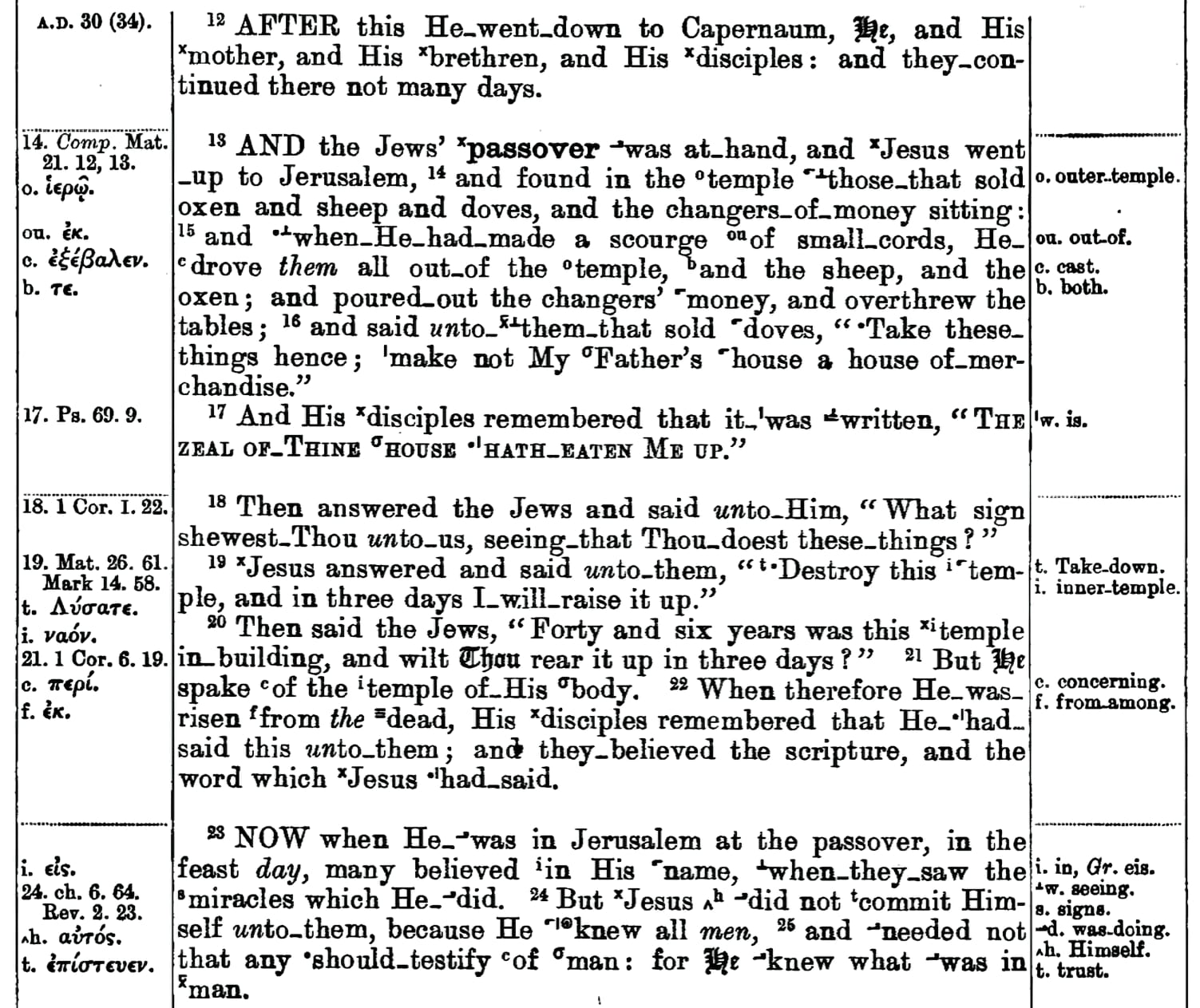
- KJV Bible reading John chapter 3
- HD movie John chapter 3
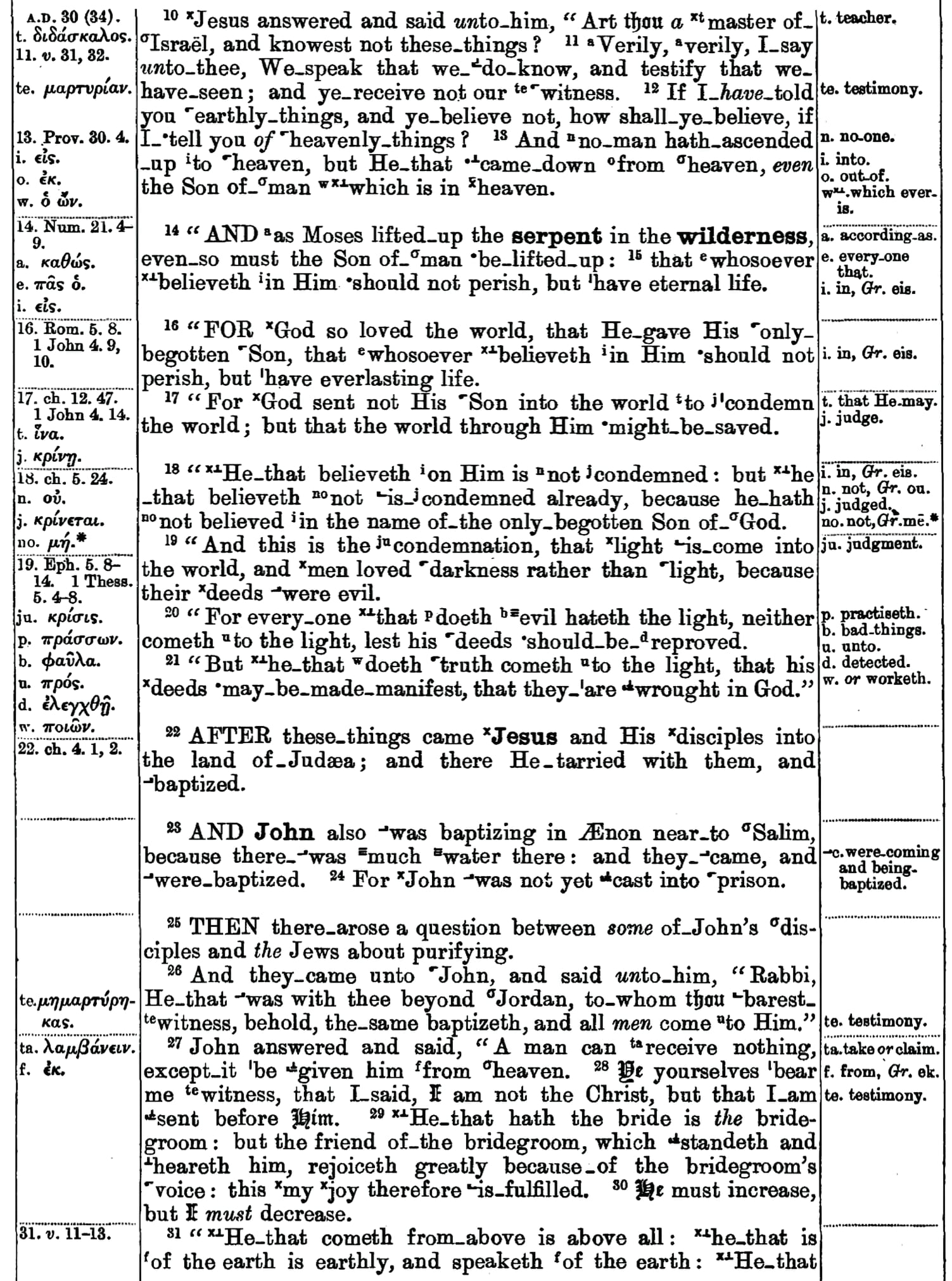
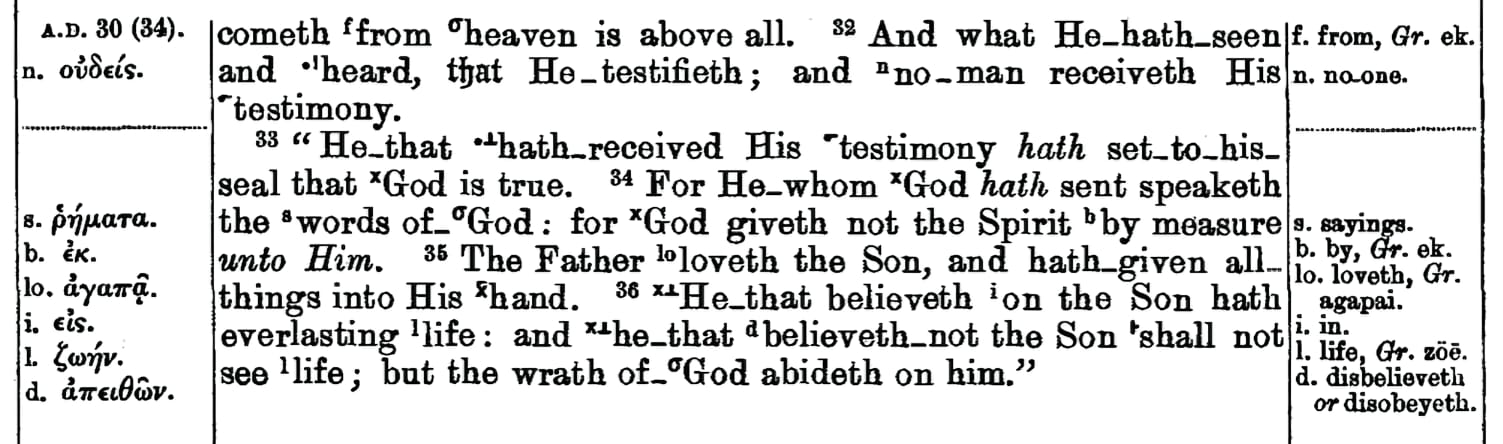
- KJV Bible reading John chapter 4
- HD movie John chapter 4
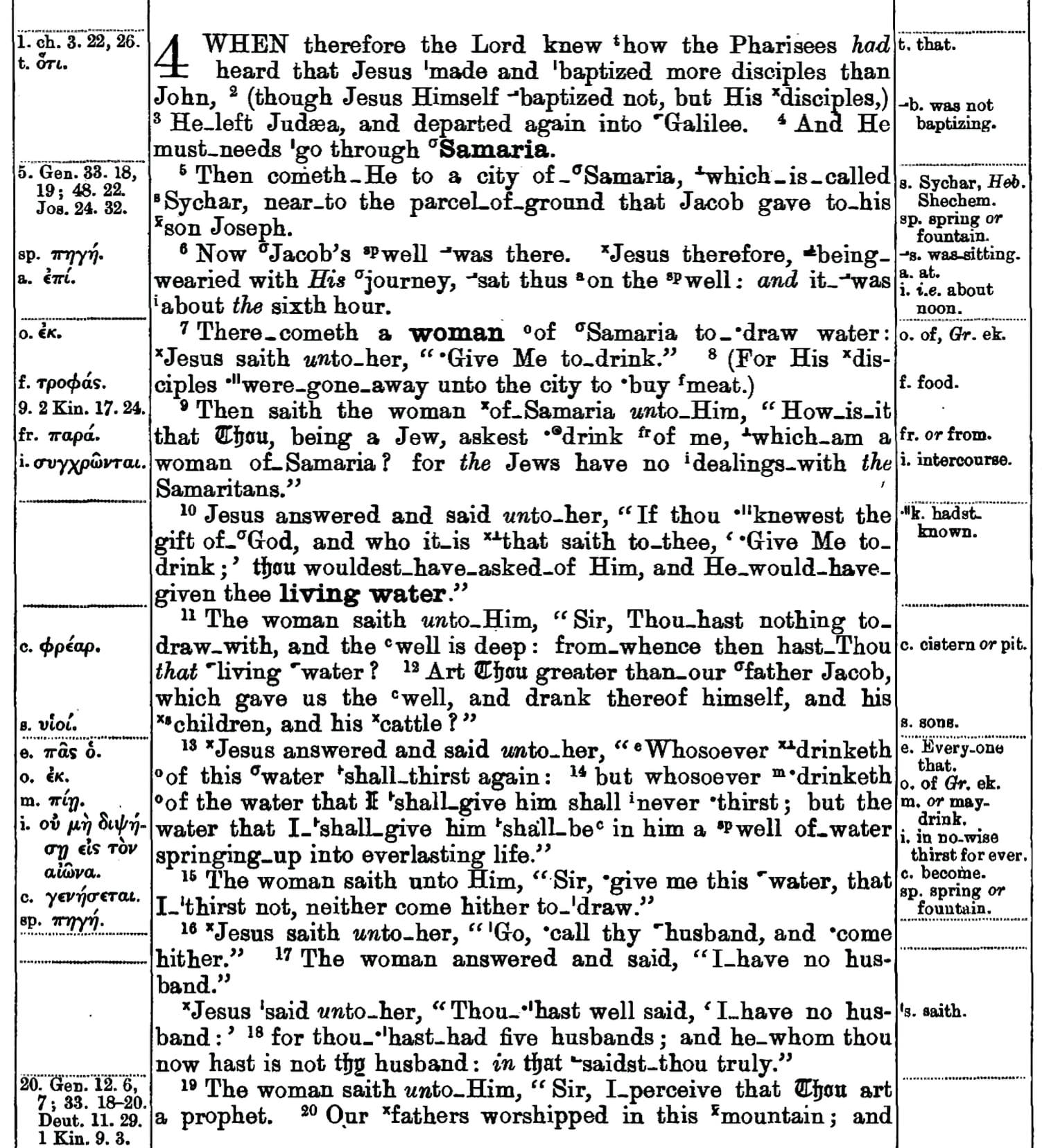
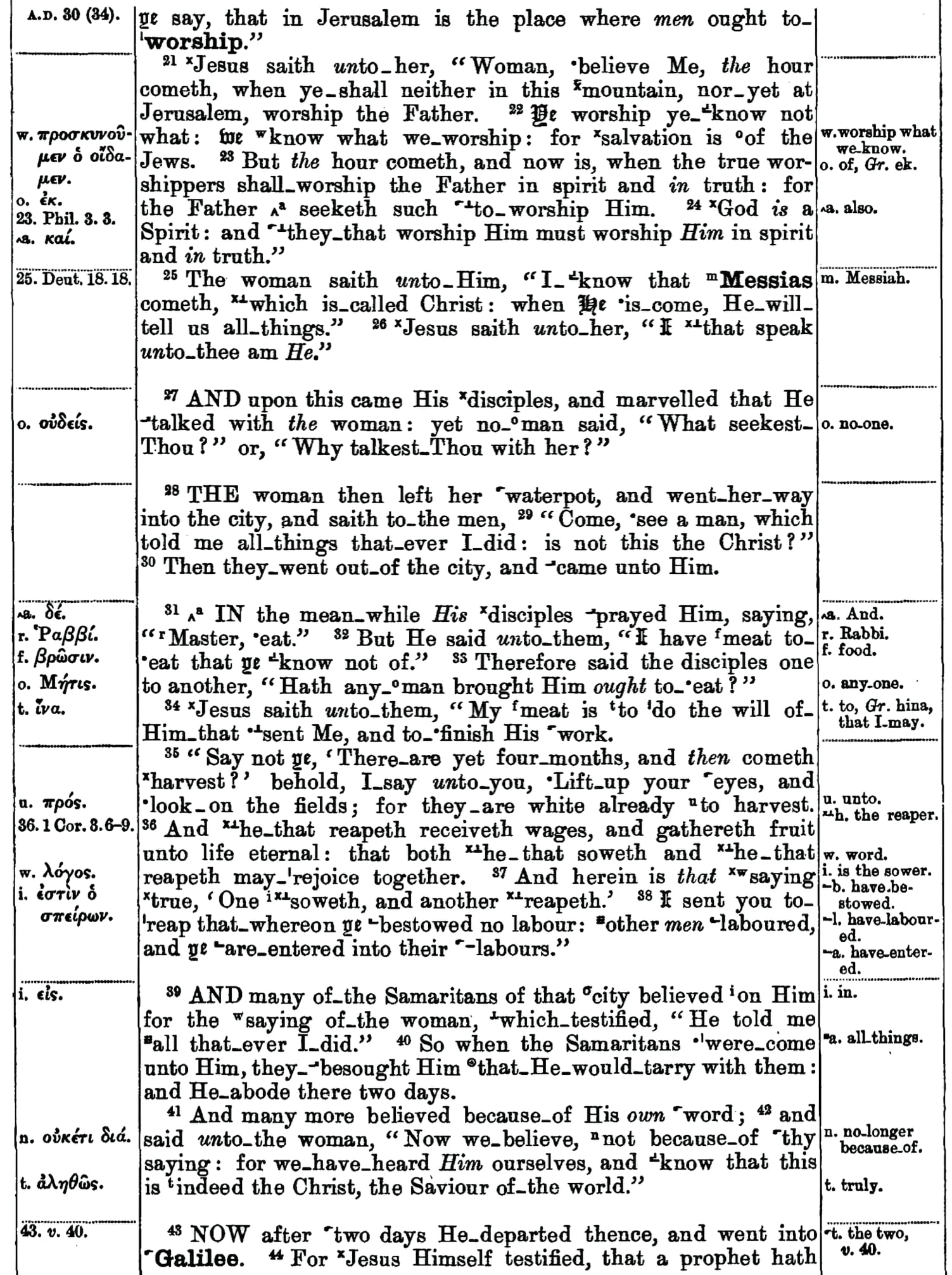
- KJV Bible reading John chapter 5
- HD movie John chapter 5
- KJV Bible reading John chapter 6
- HD movie John chapter 6
- KJV Bible reading John chapter 7
- HD movie John chapter 7
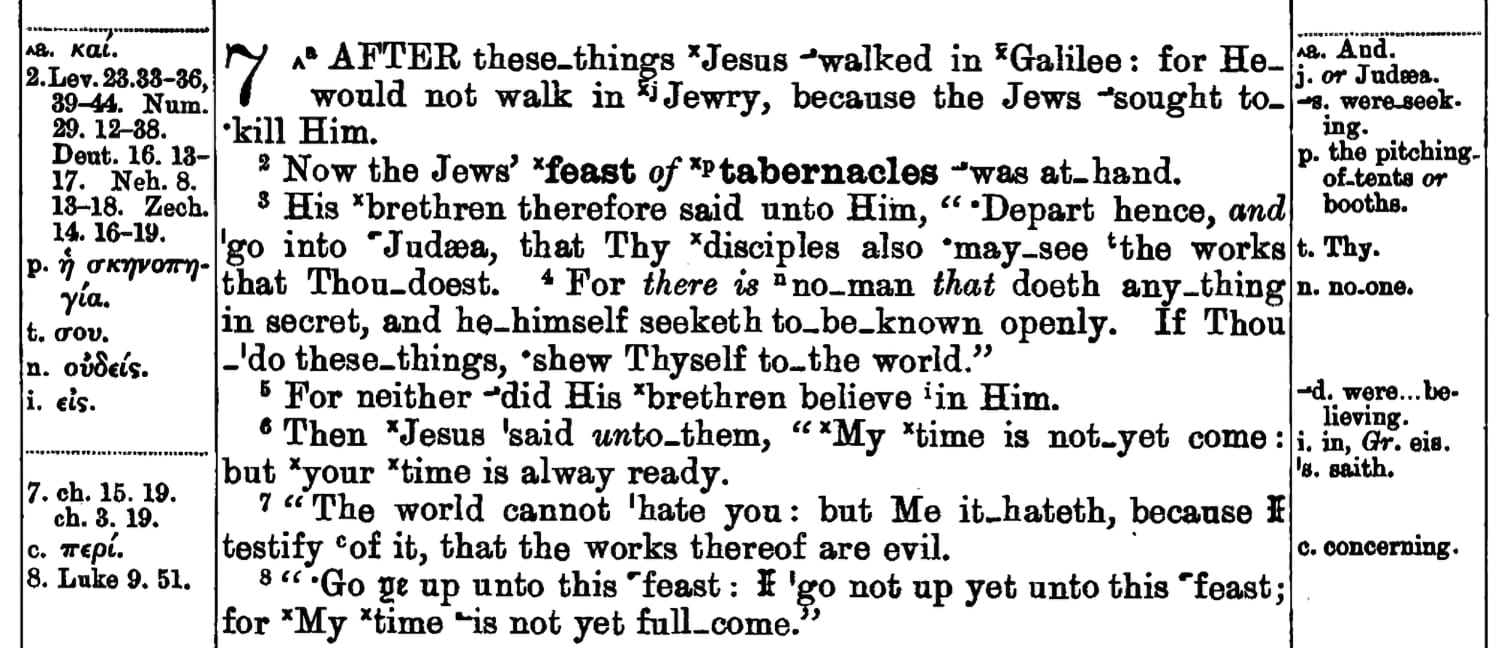
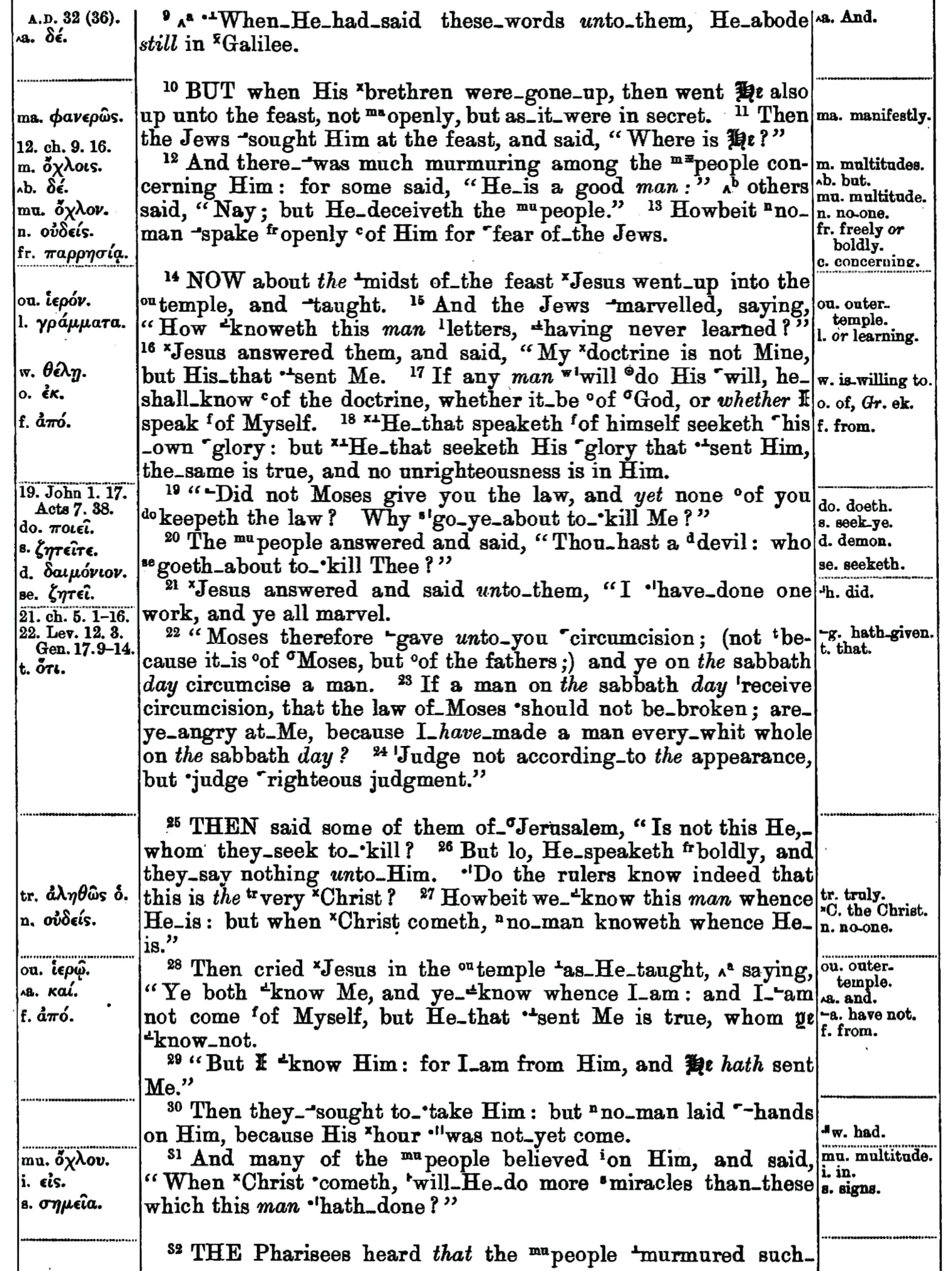
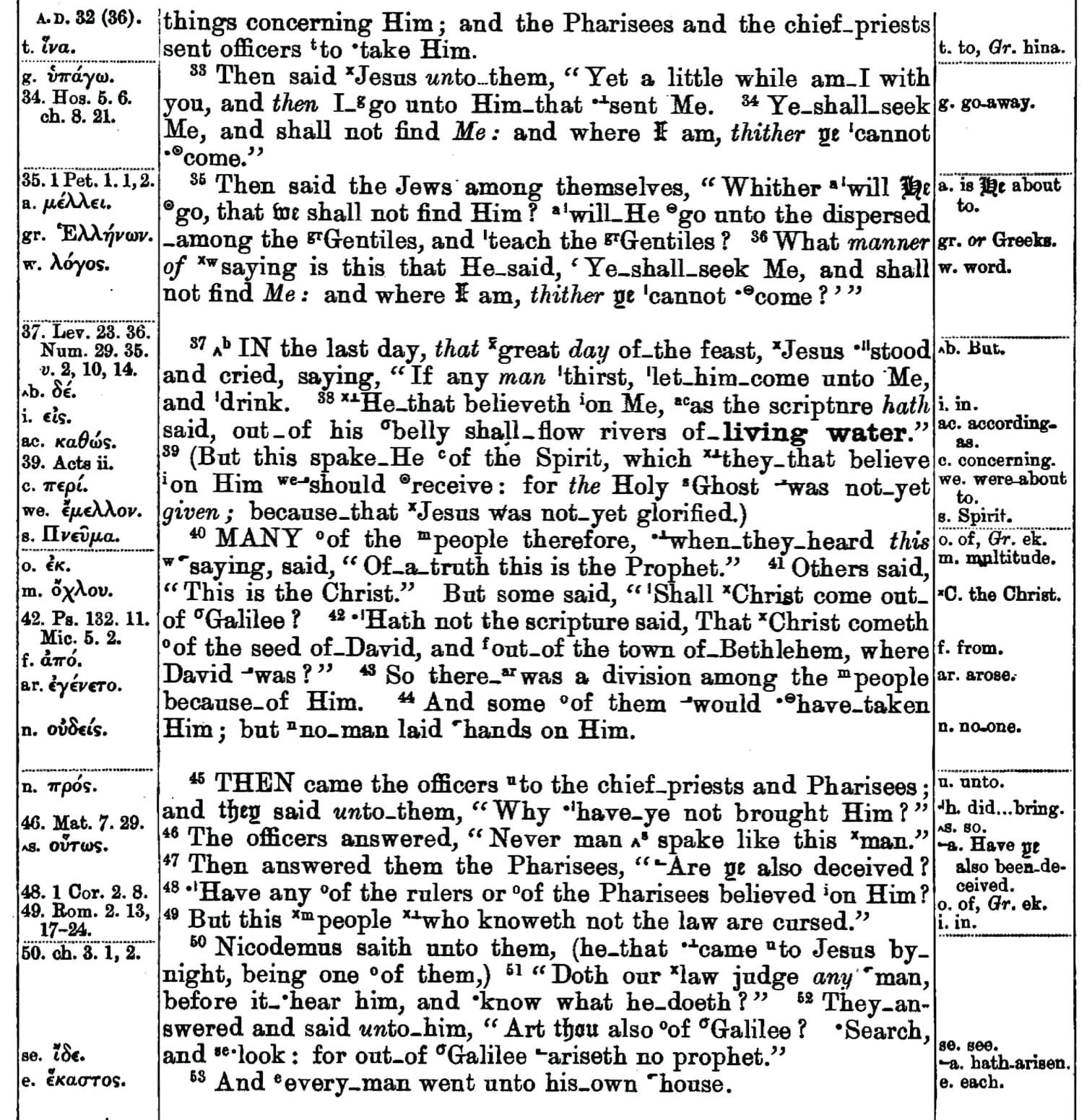
- KJV Bible reading John chapter 8
- HD movie John chapter 8
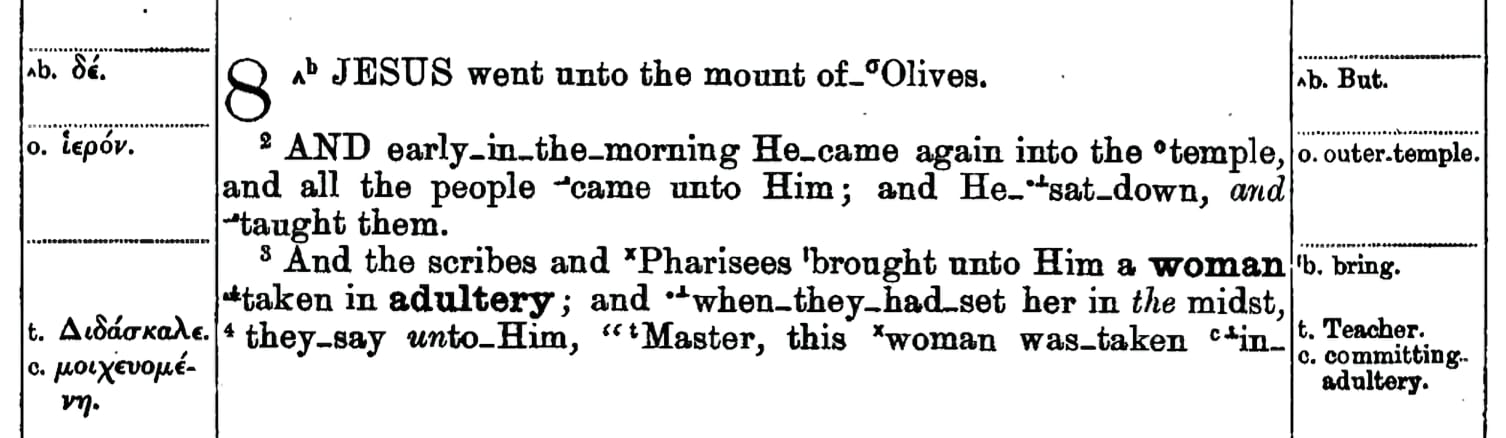
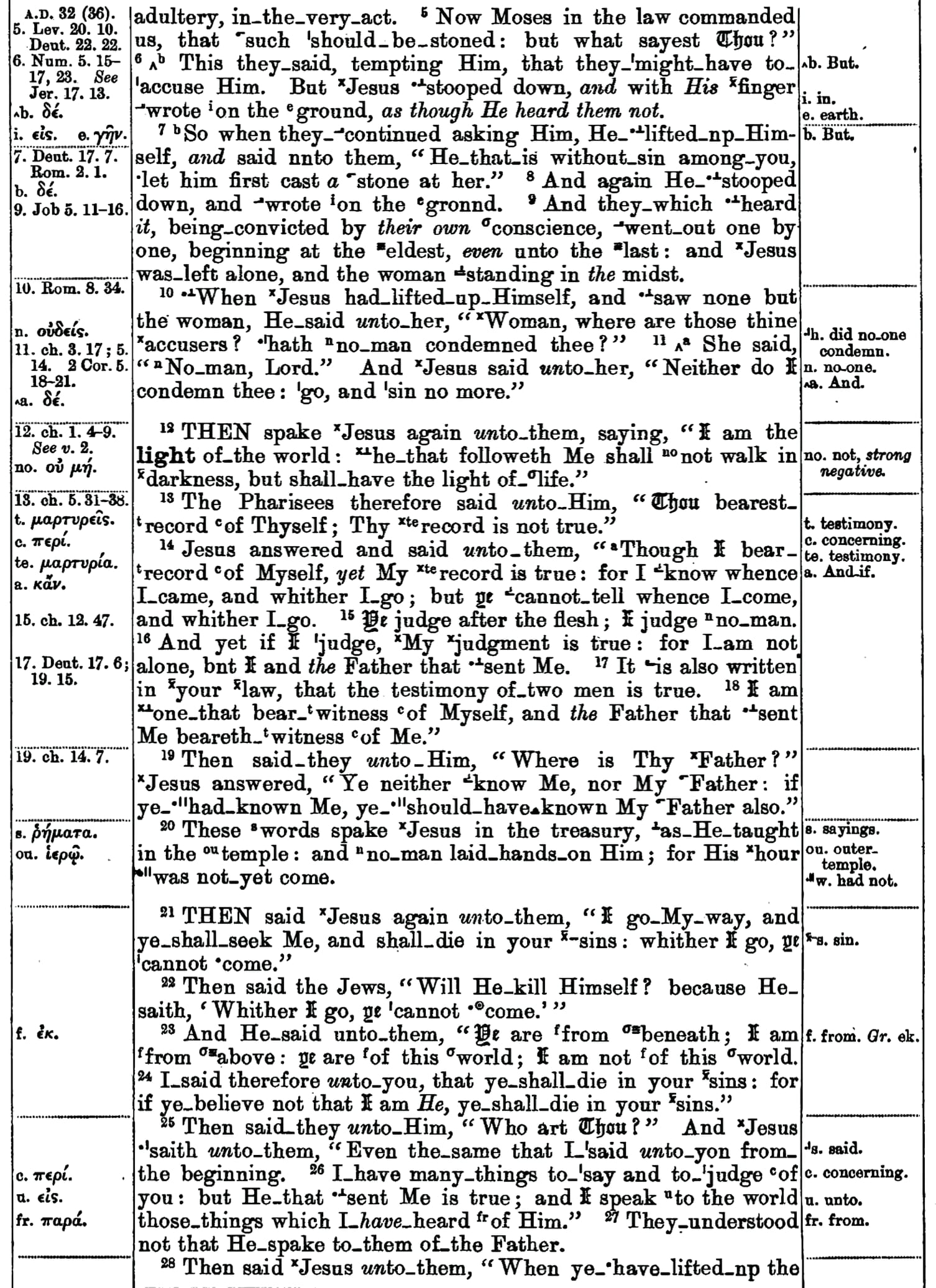
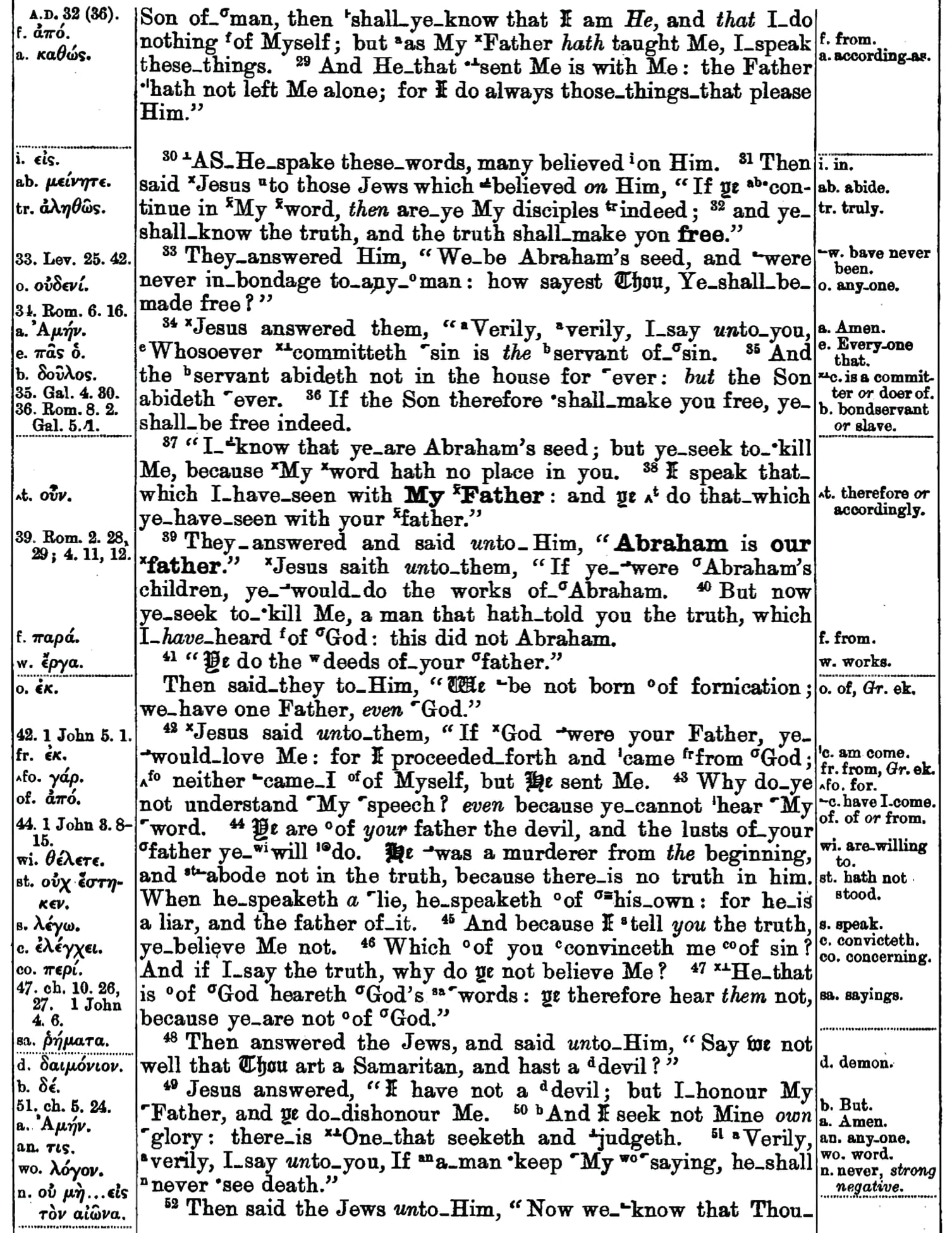
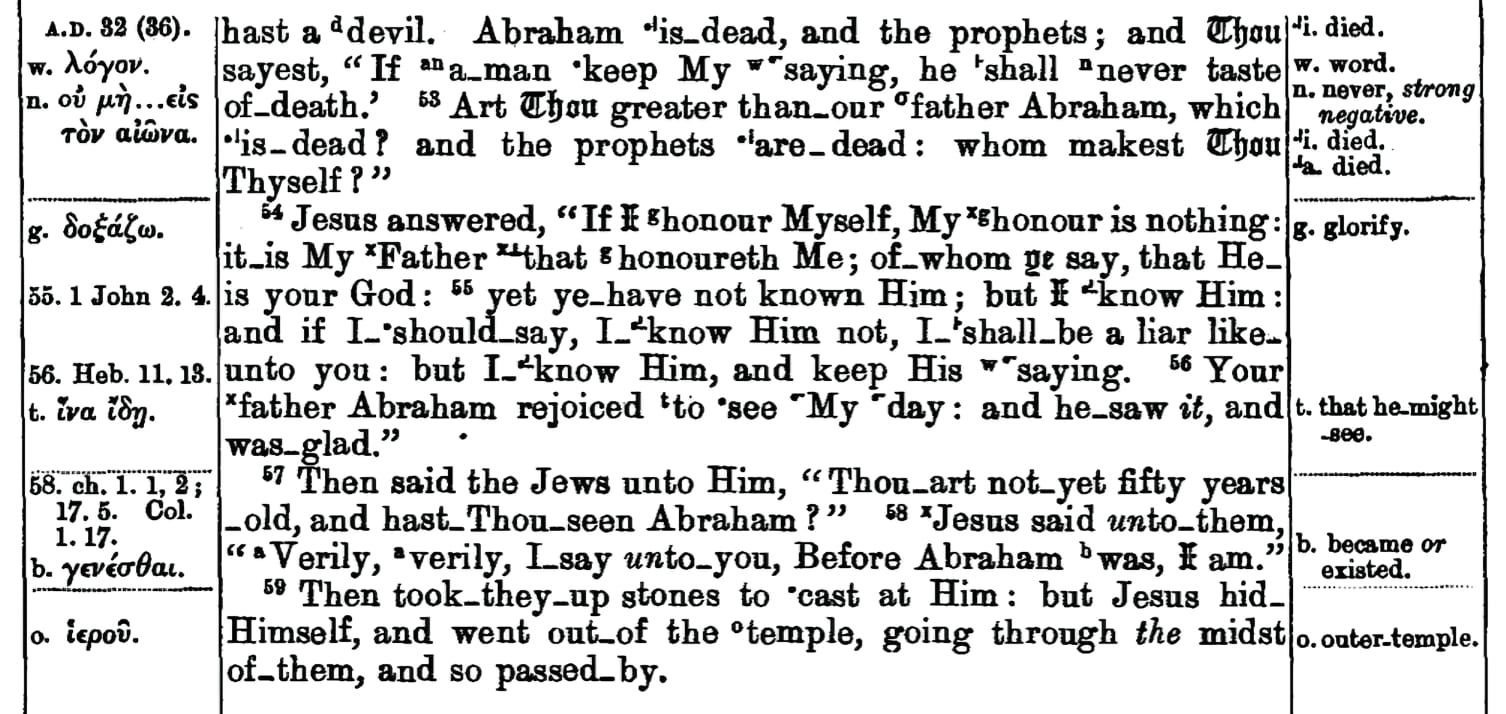
- KJV Bible reading John chapter 9
- HD movie John chapter 9
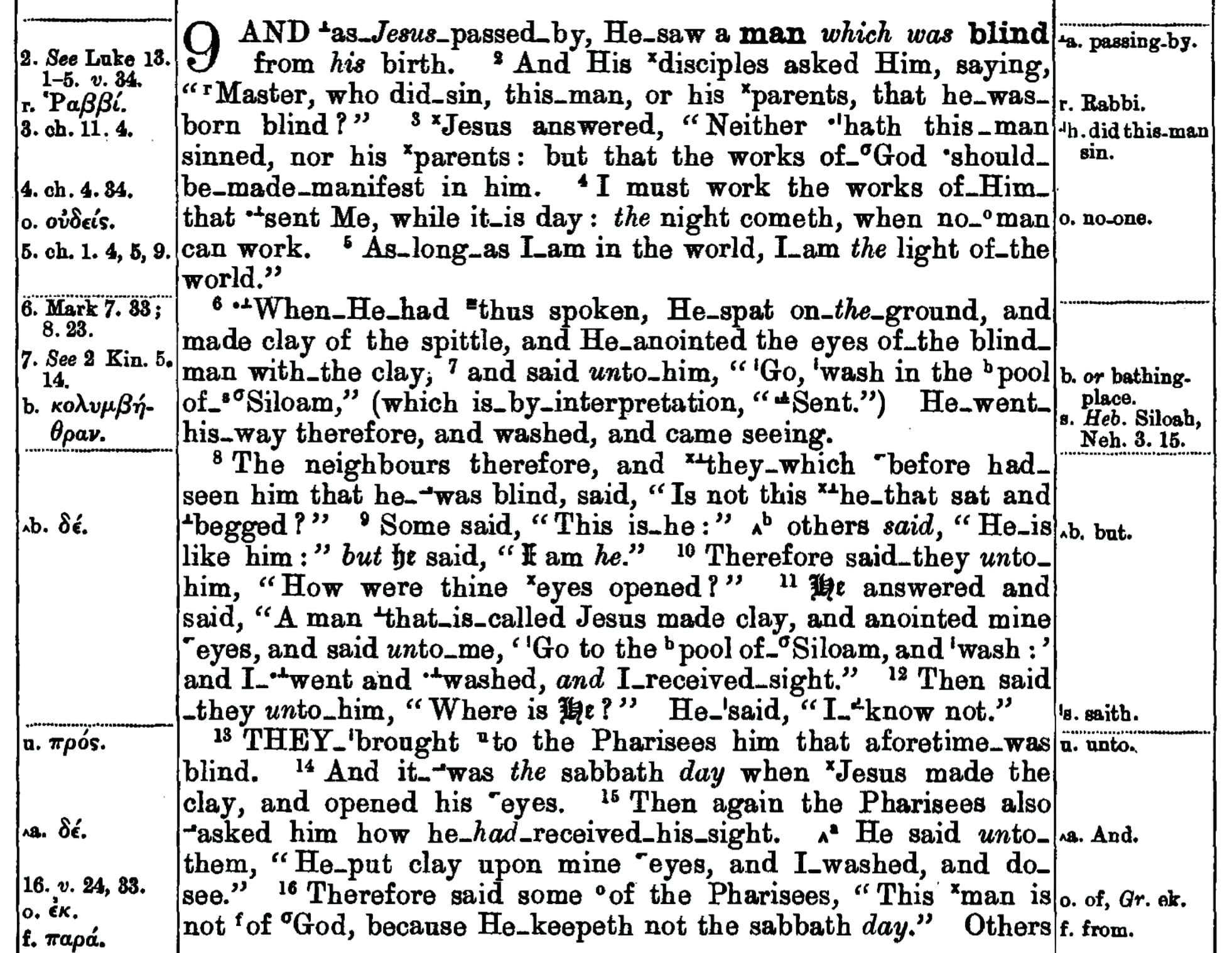
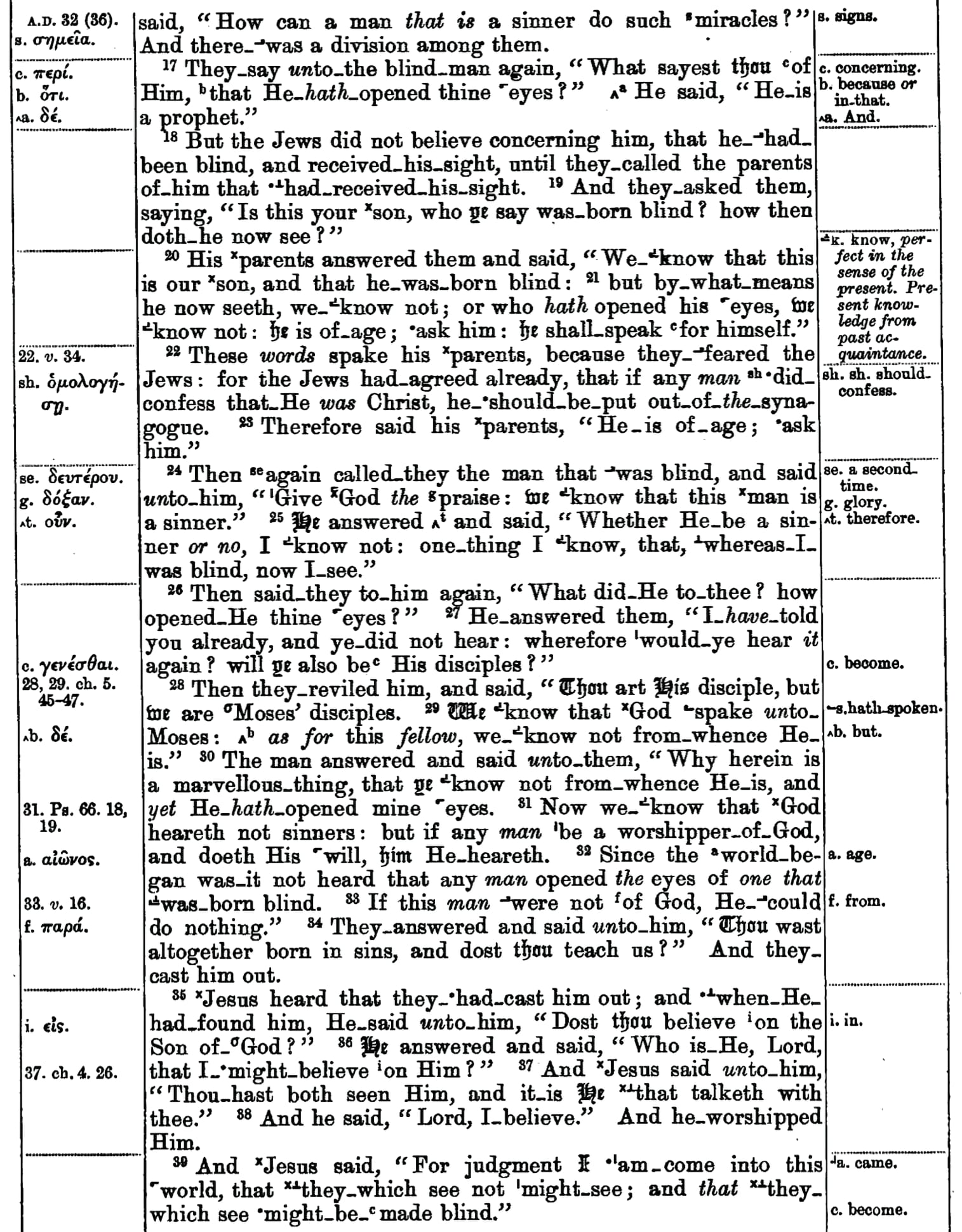

- KJV Bible reading John chapter 10
- HD movie John chapter 10
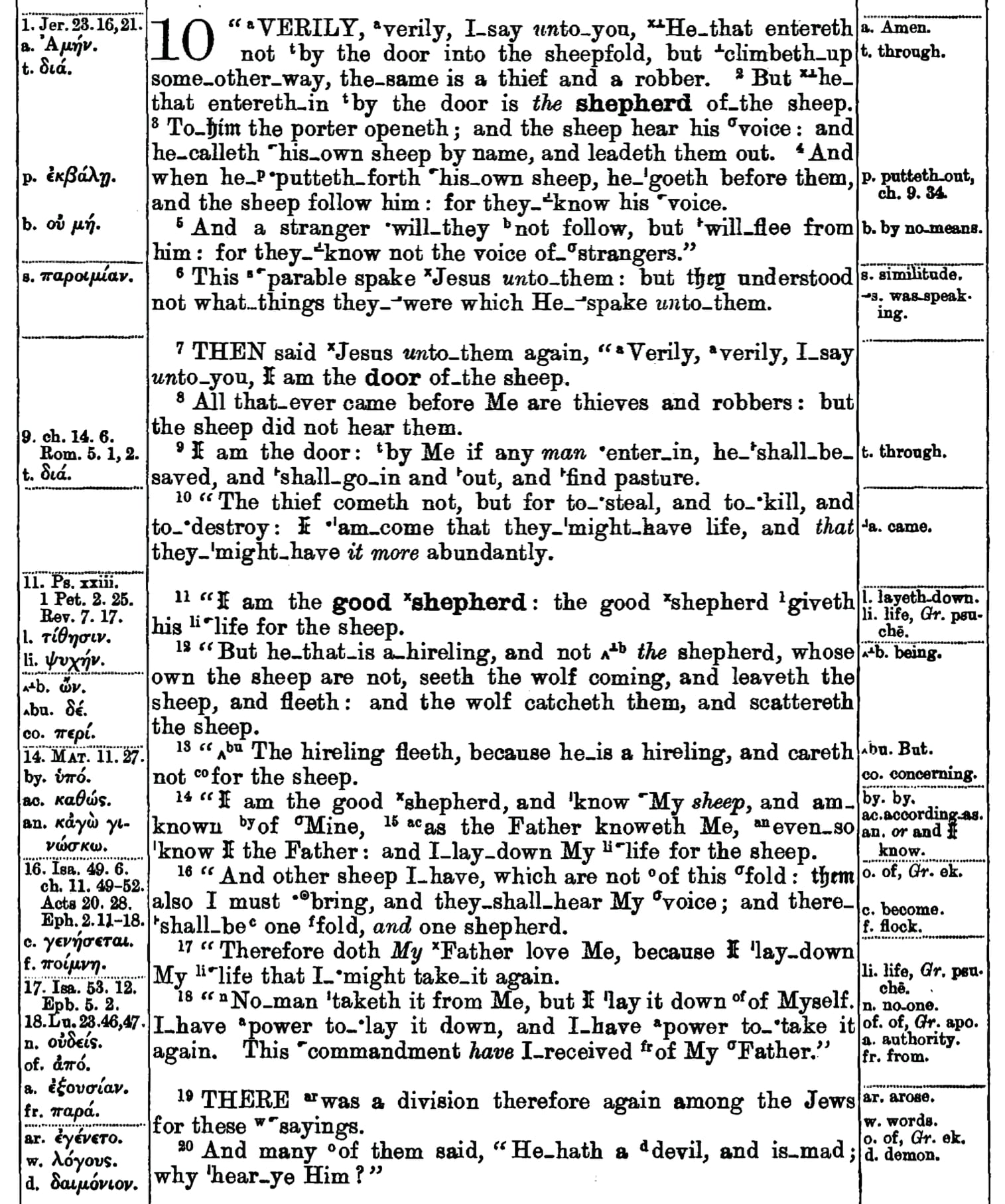
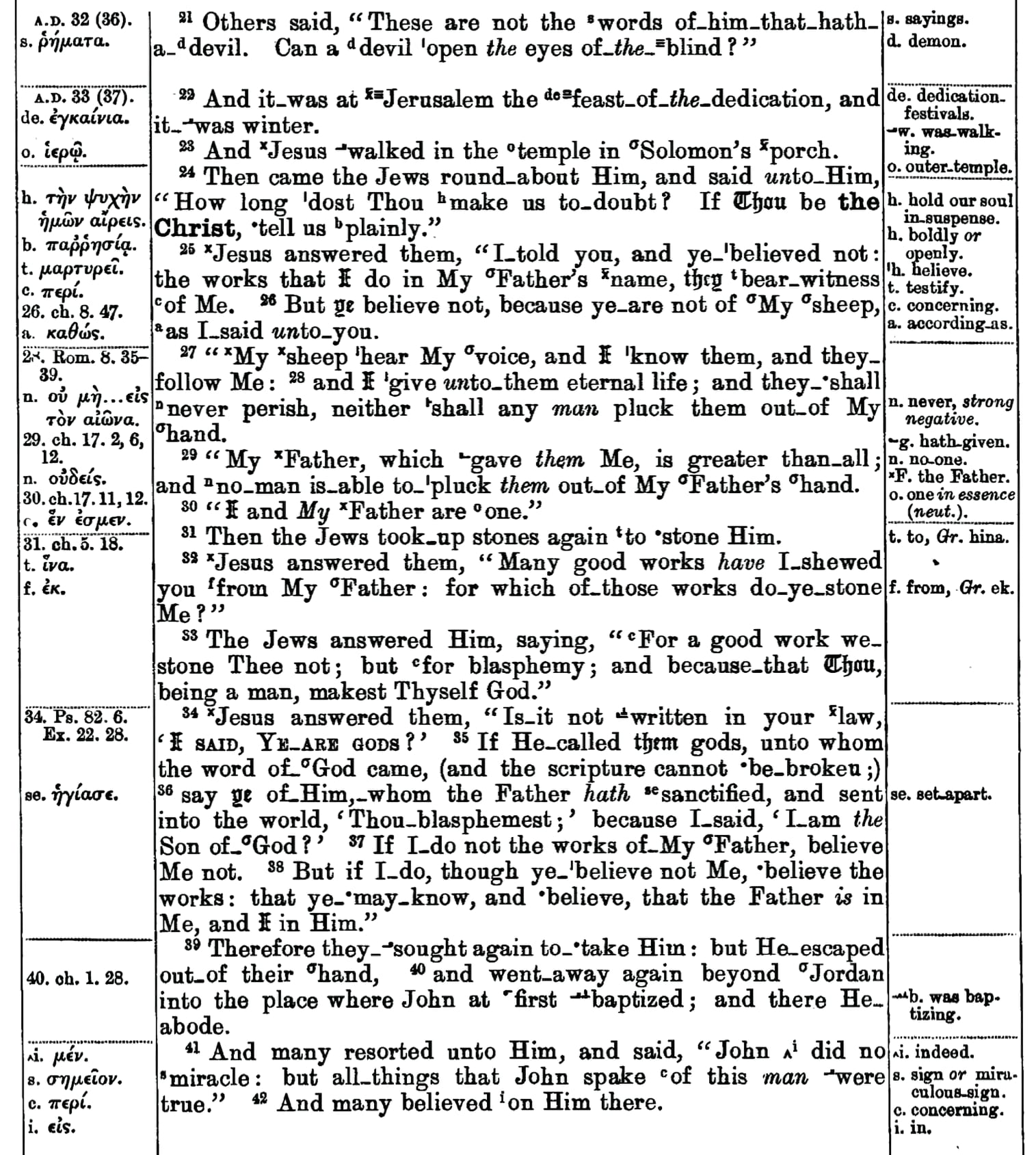
- KJV Bible reading John chapter 11
- HD movie John chapter 11
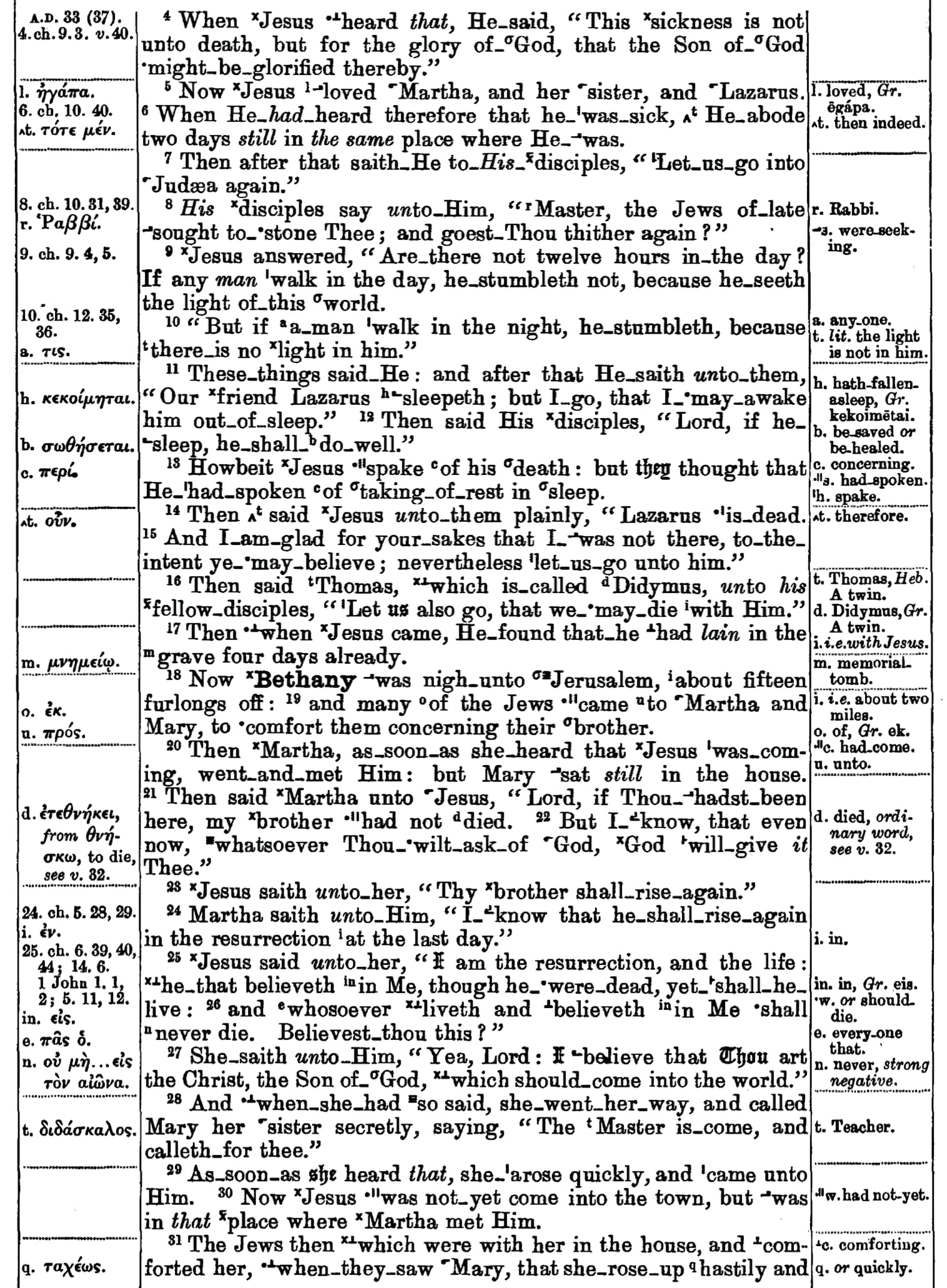
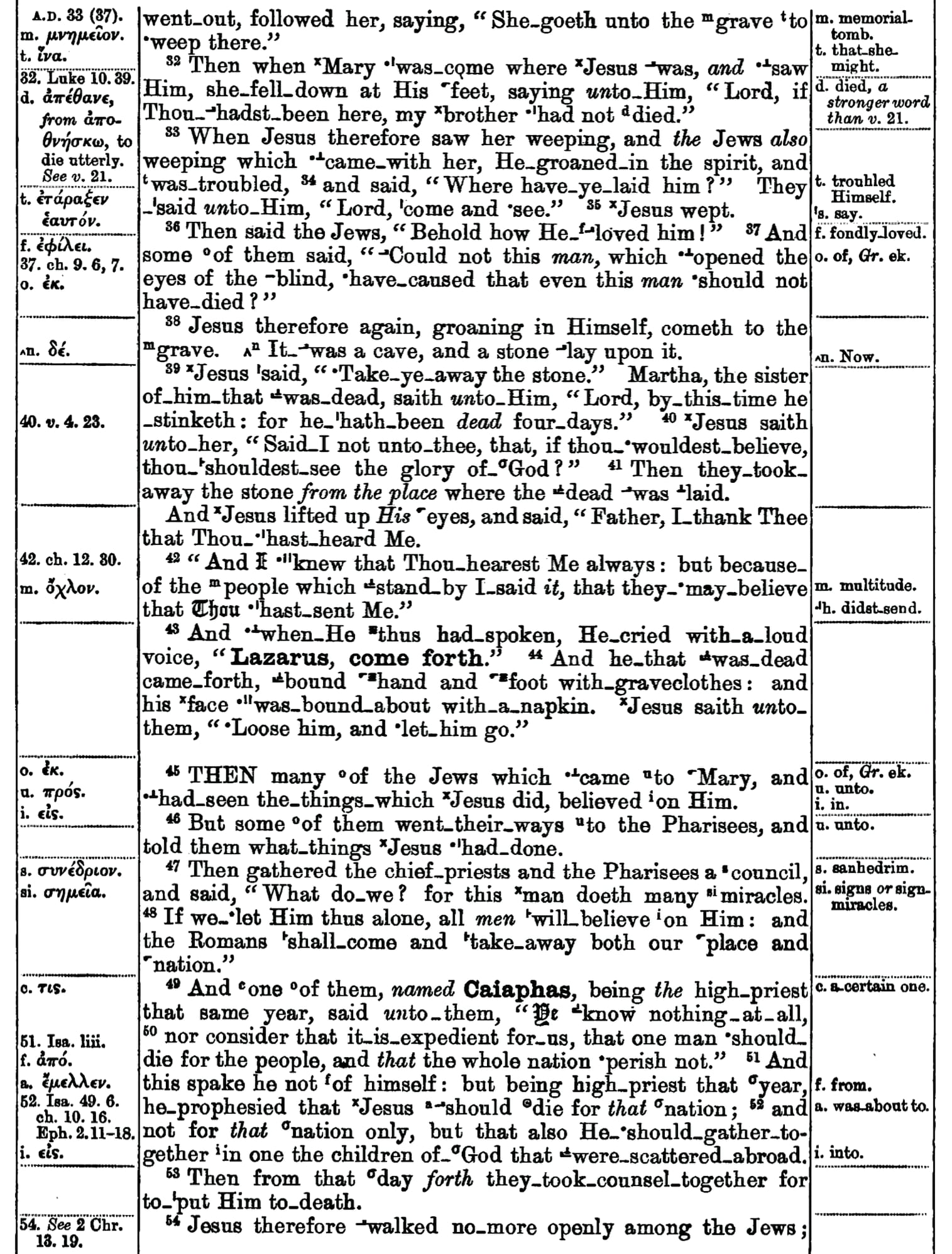
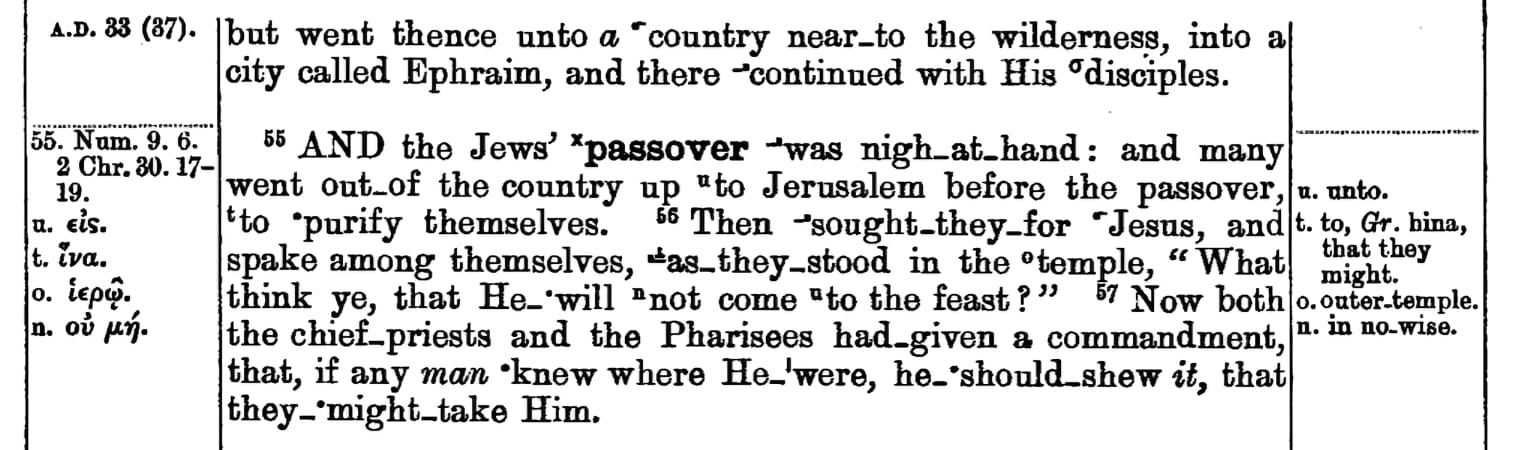
- KJV Bible reading John chapter 12
- HD movie John chapter 12
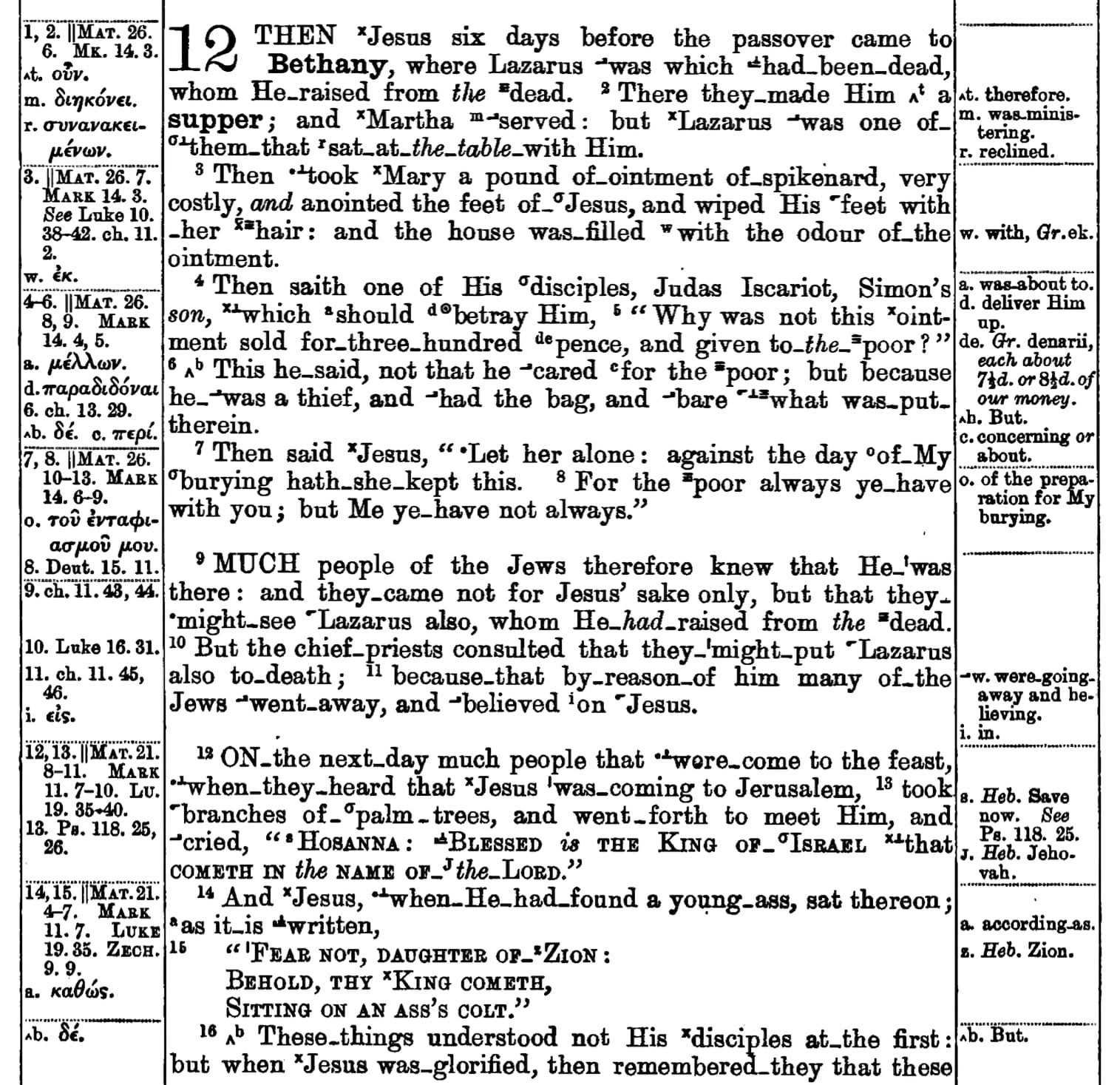
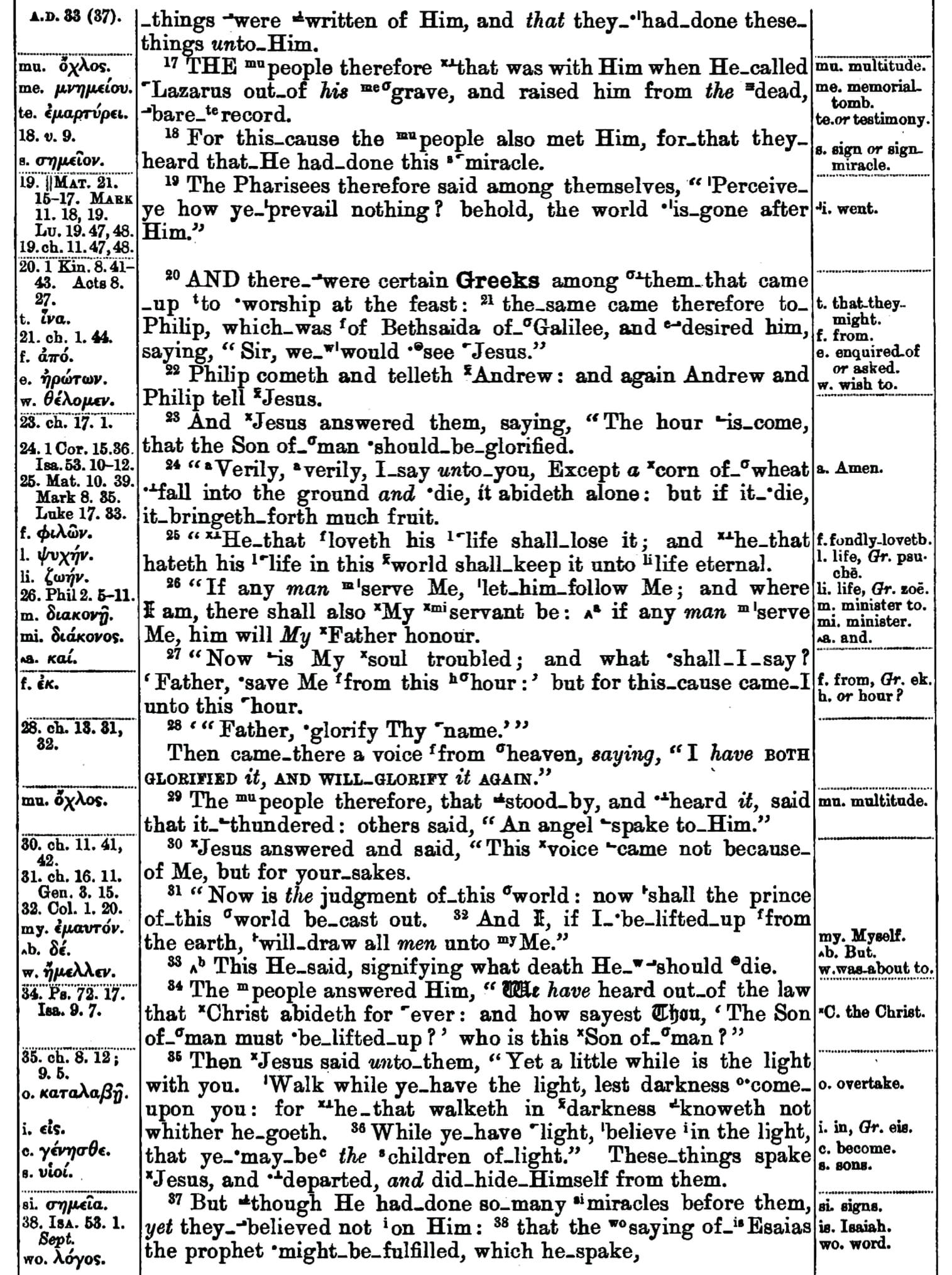
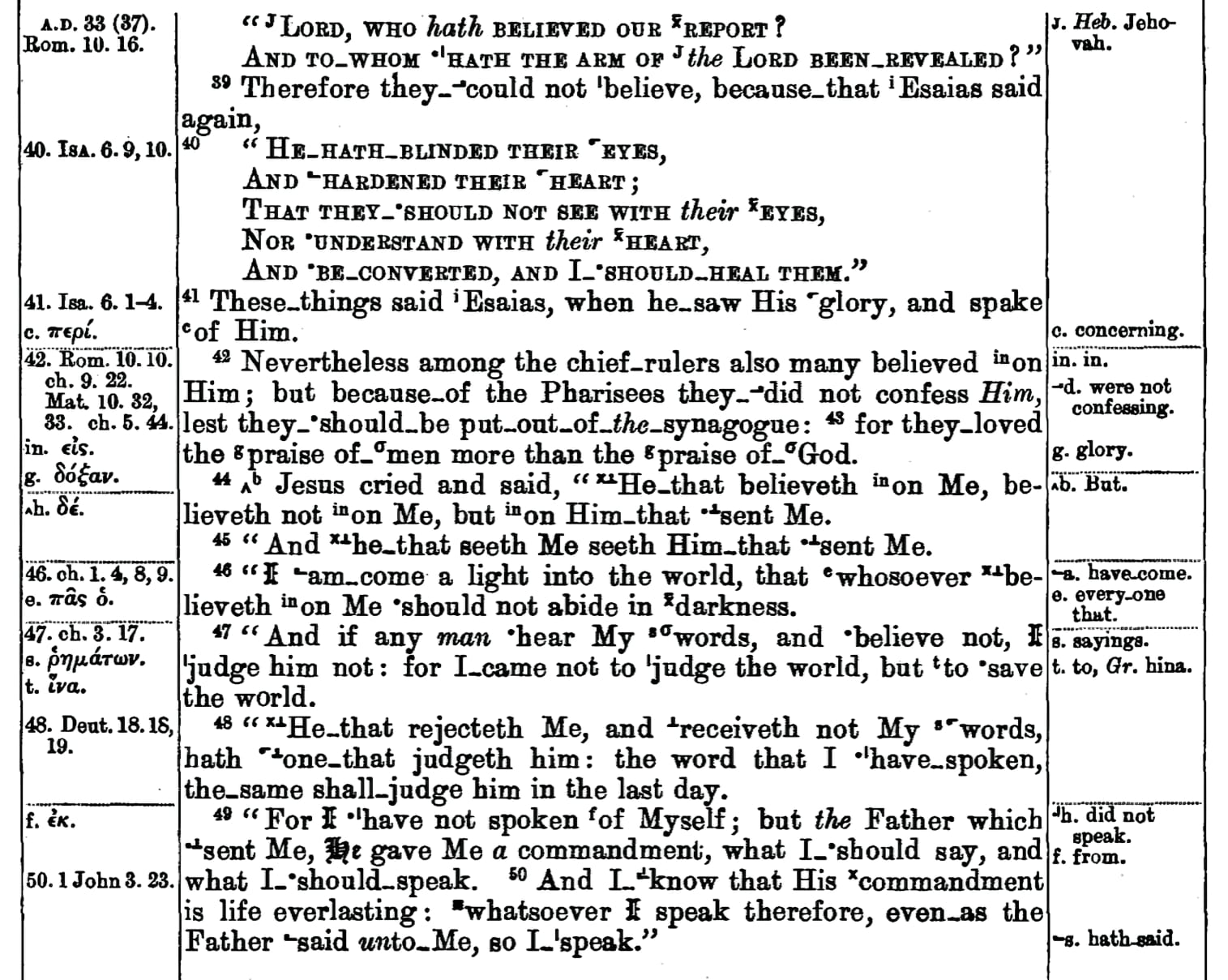
- KJV Bible reading John chapter 13
- HD movie John chapter 13
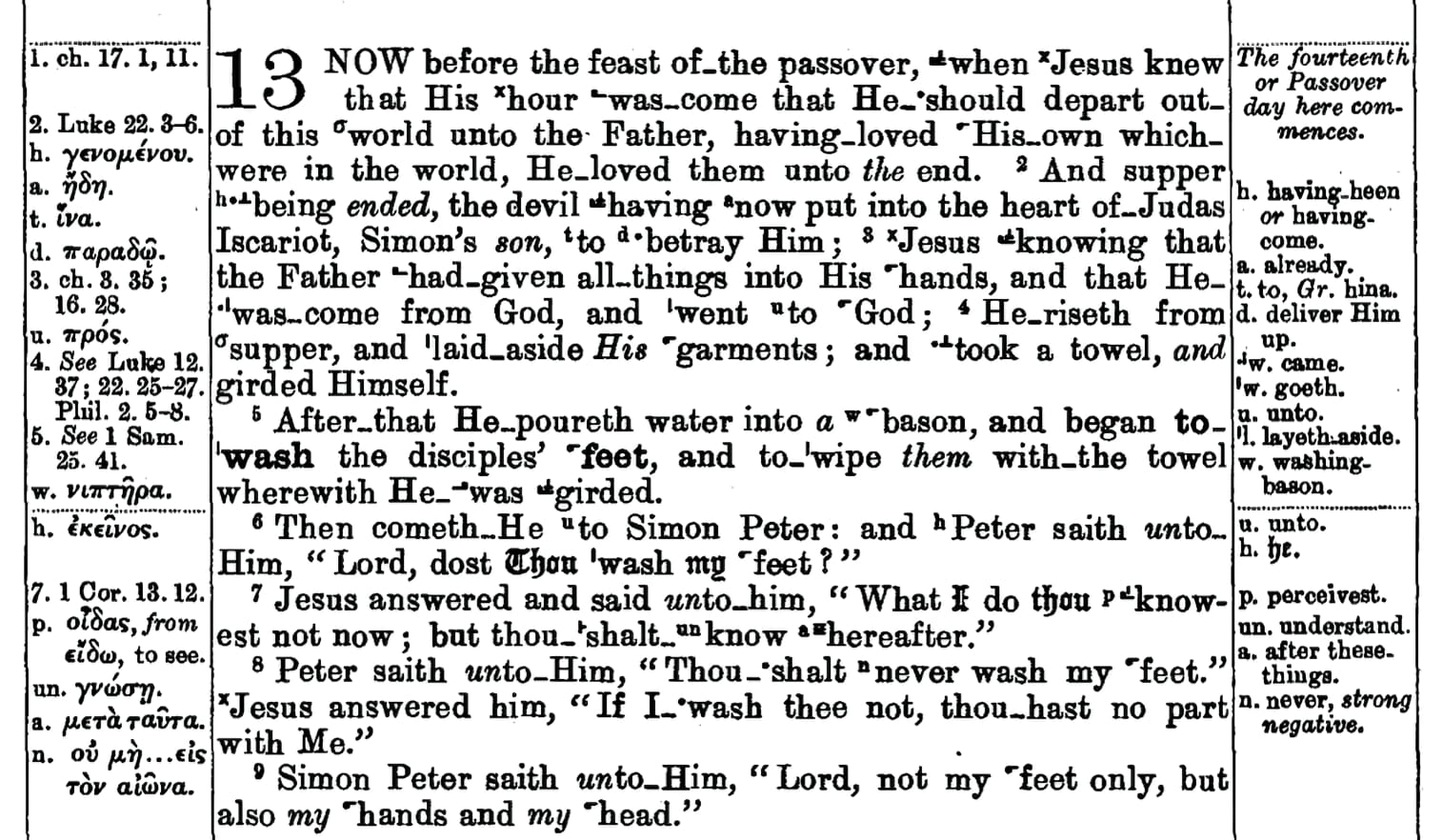
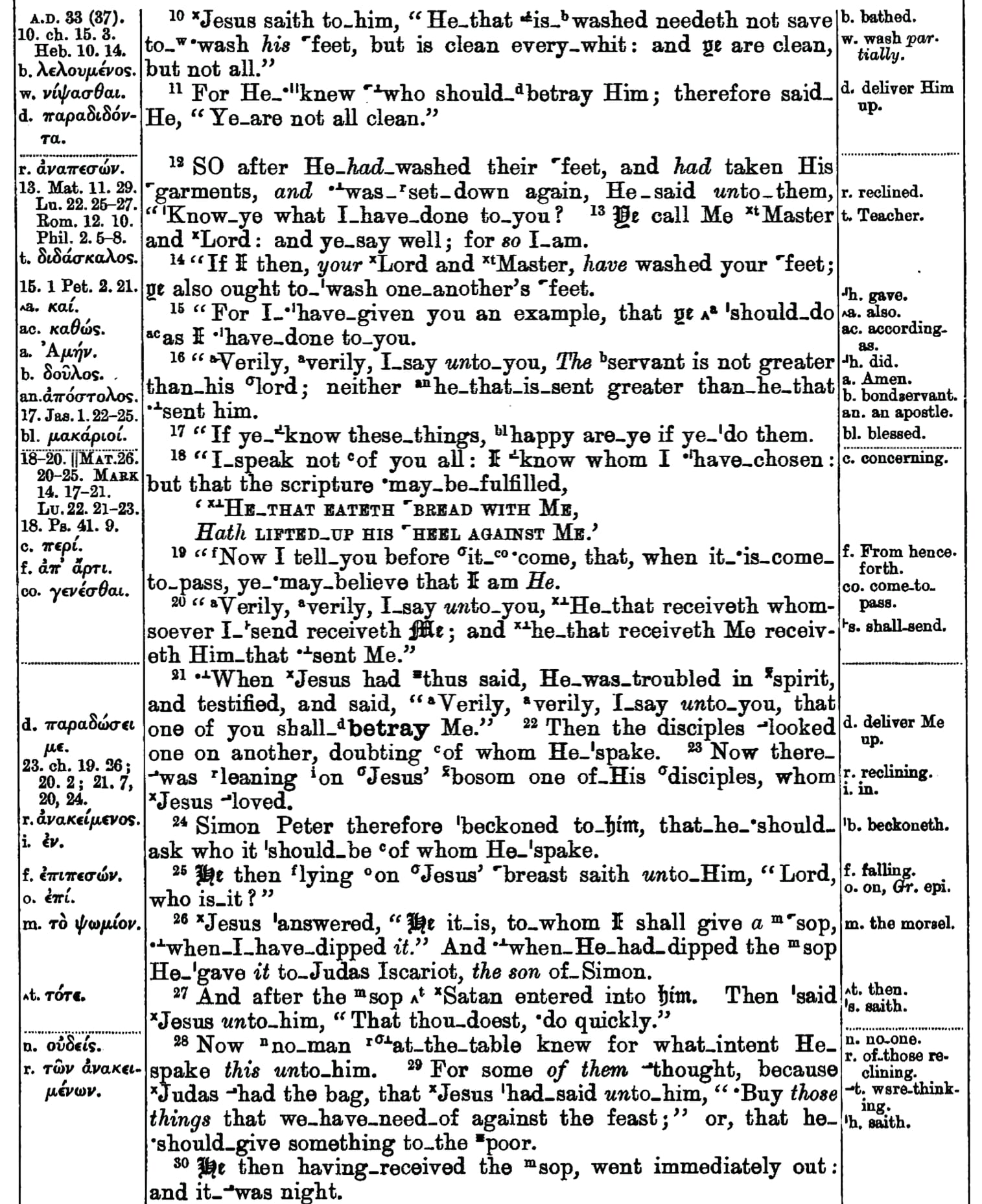
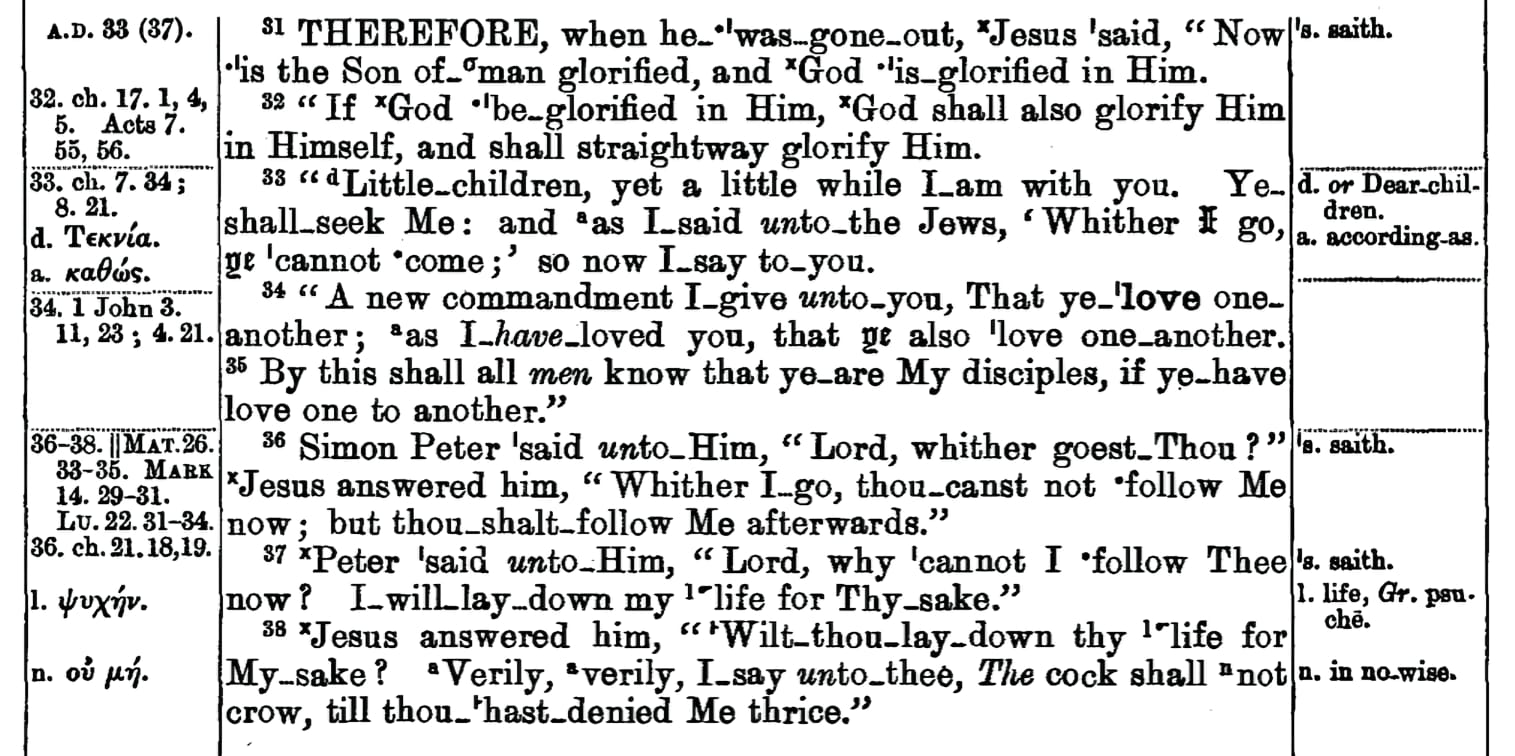
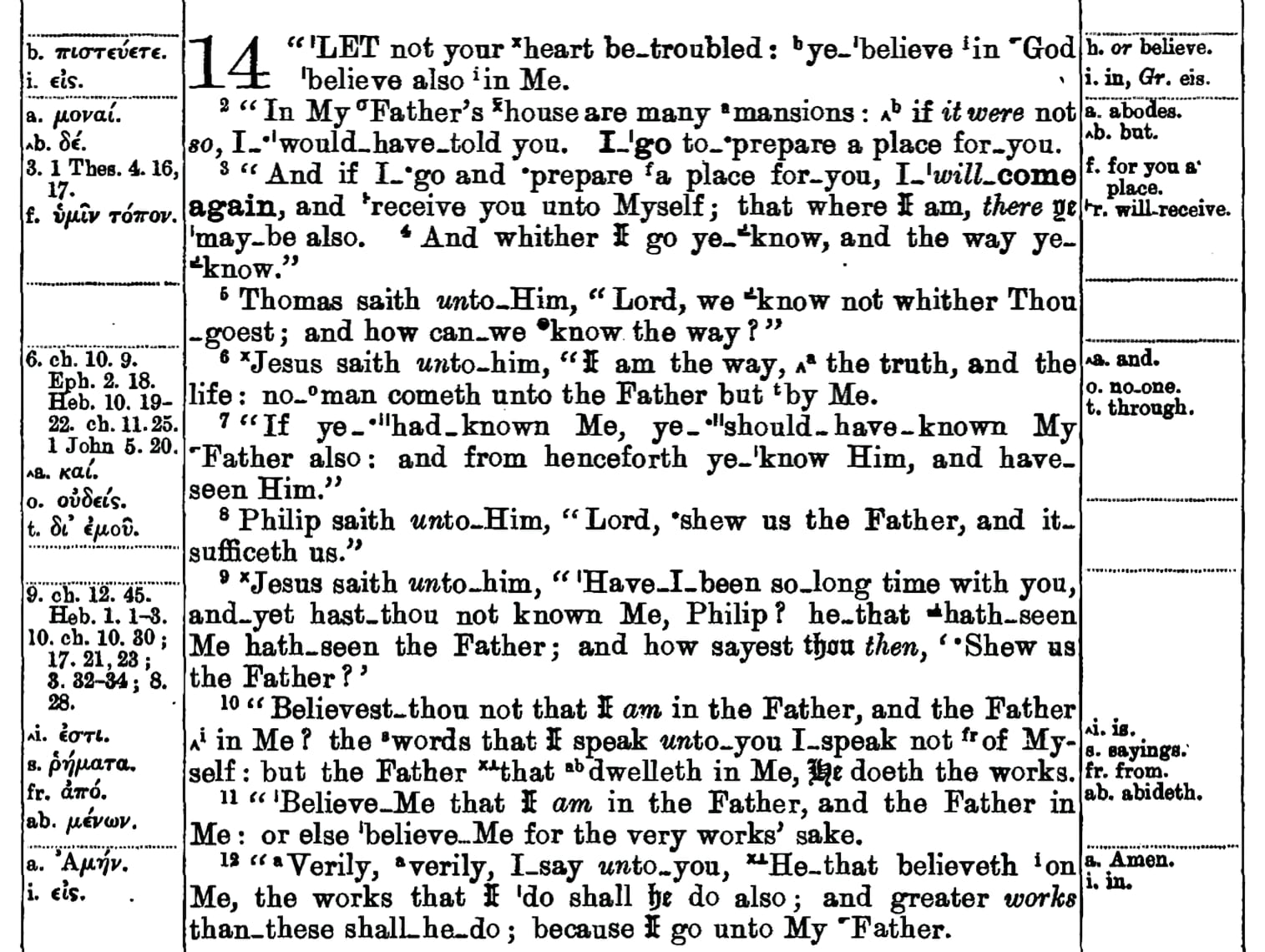
- KJV Bible reading John chapter 14
- HD movie John chapter 14
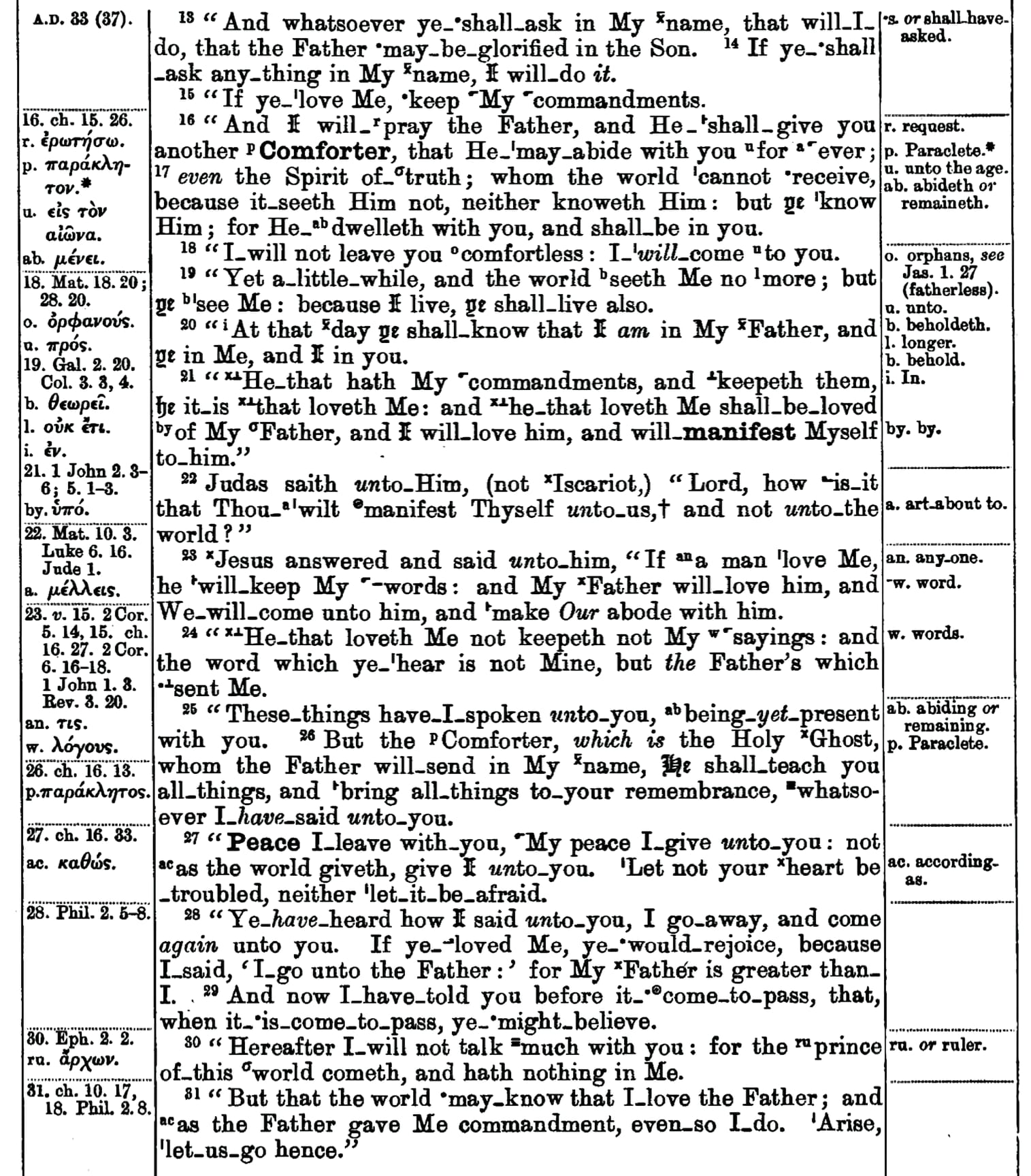
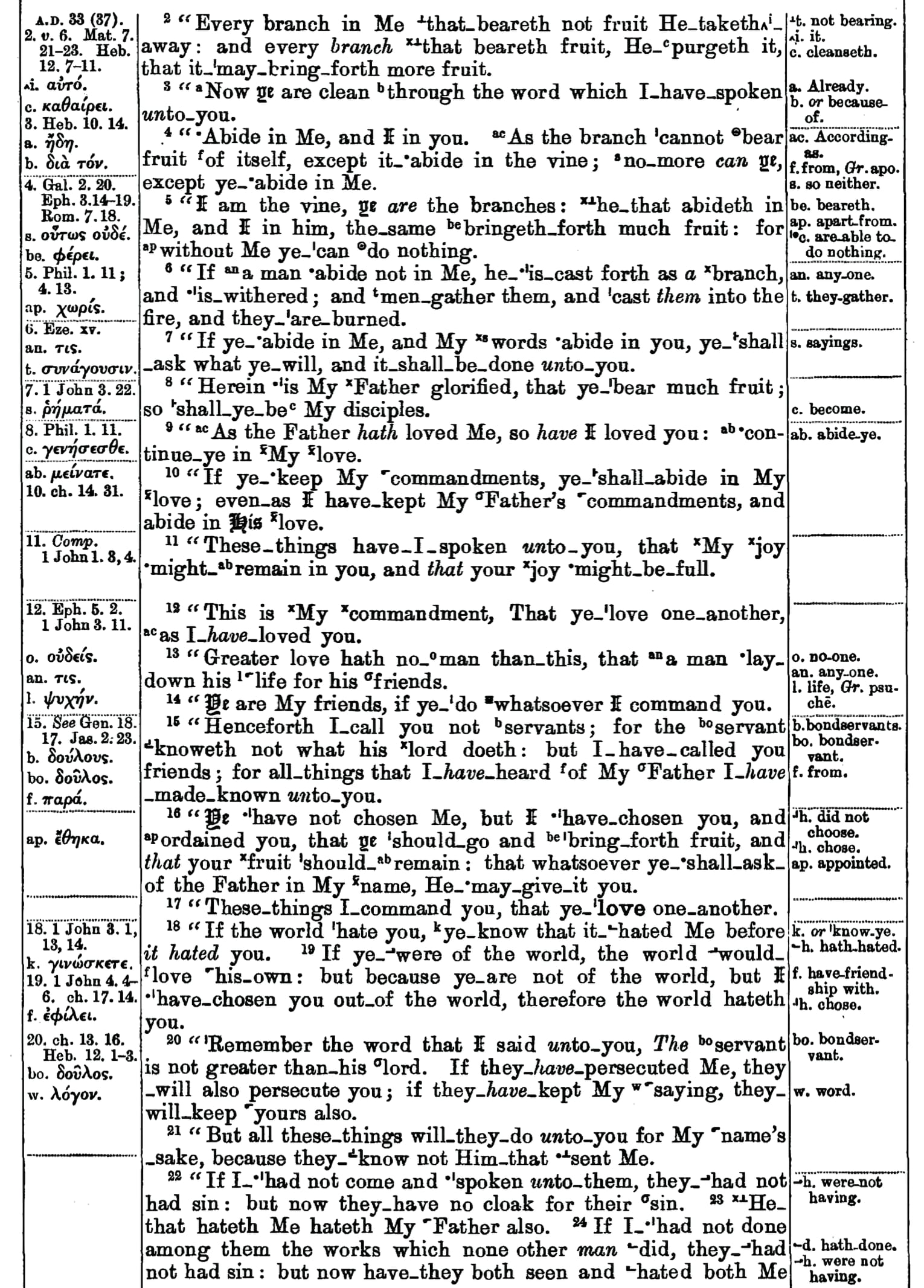
- KJV Bible reading John chapter 15
- HD movie John chapter 15


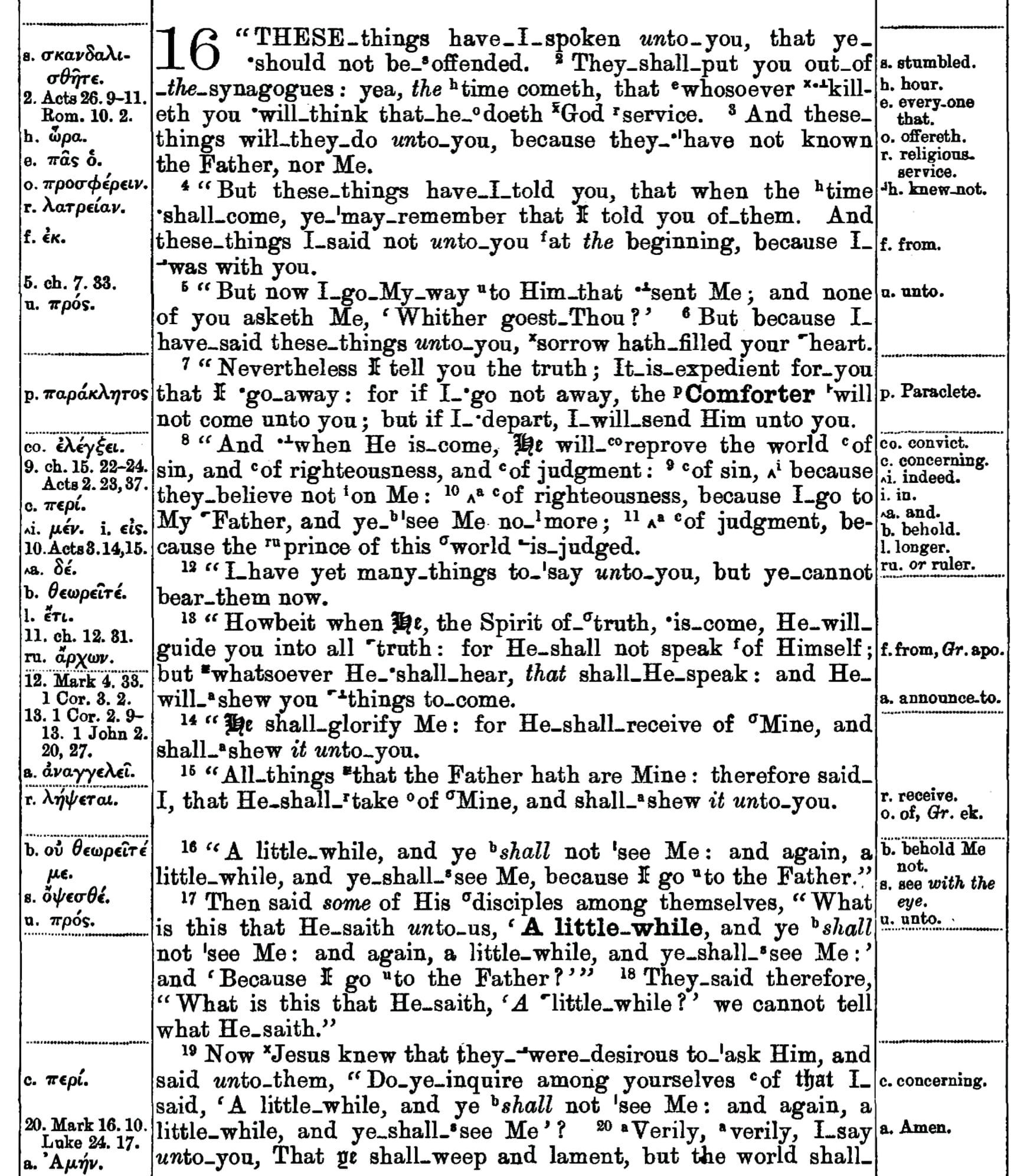
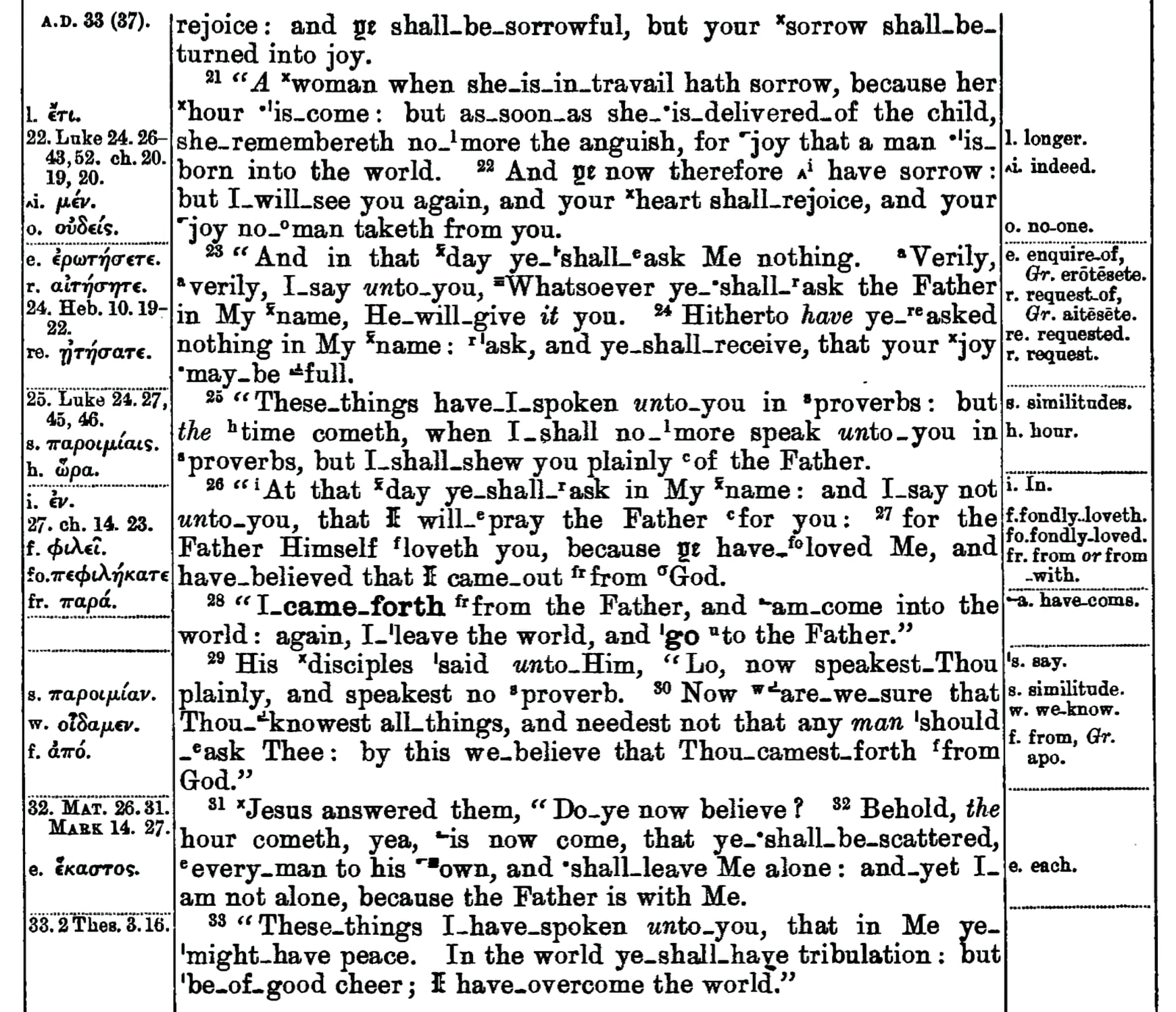
- KJV Bible reading John chapter 16
- HD movie John chapter 16
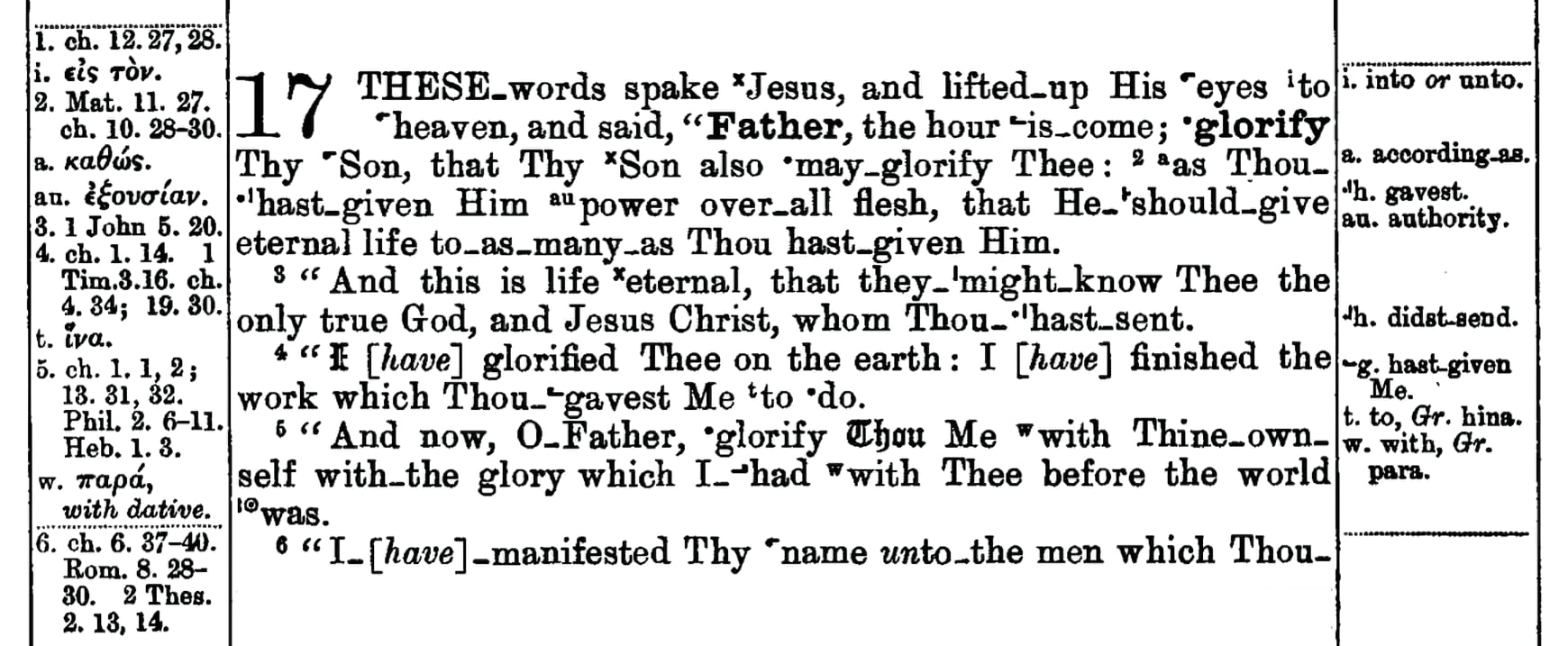
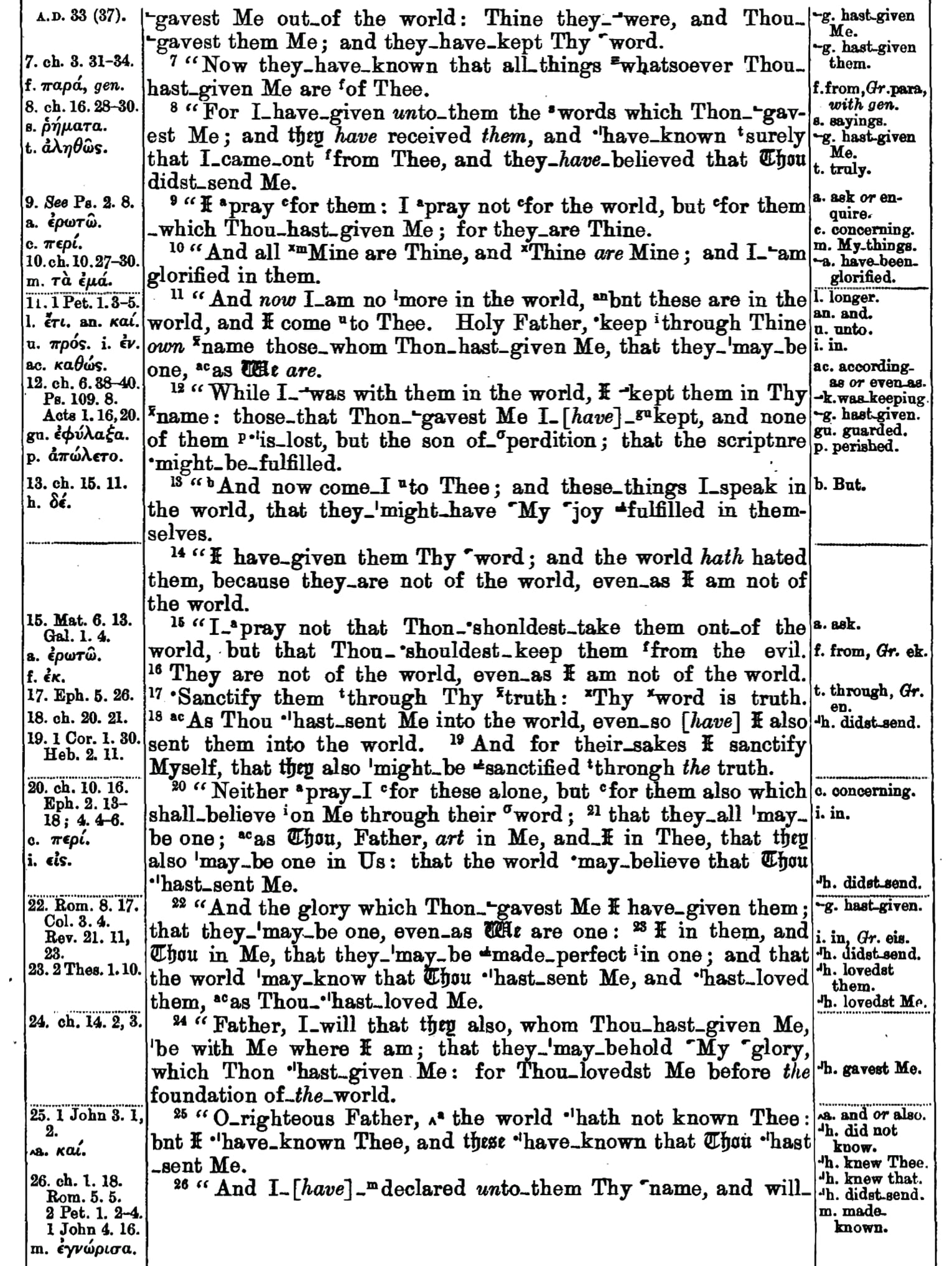
- KJV Bible reading John chapter 17
- HD movie John chapter 17

- KJV Bible reading John chapter 18
- HD movie John chapter 18 Scenes may be unsuitable for some, especialy children.
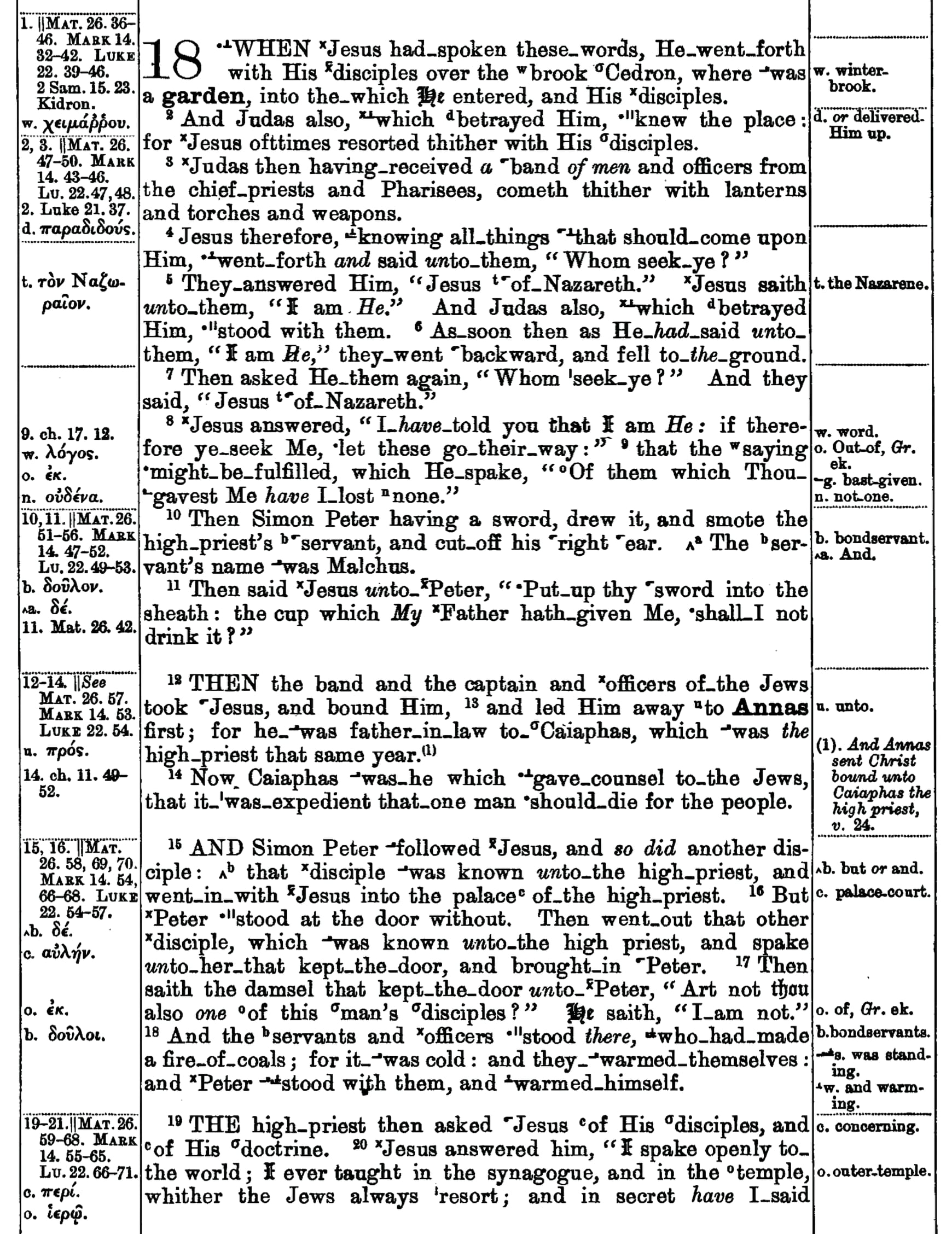
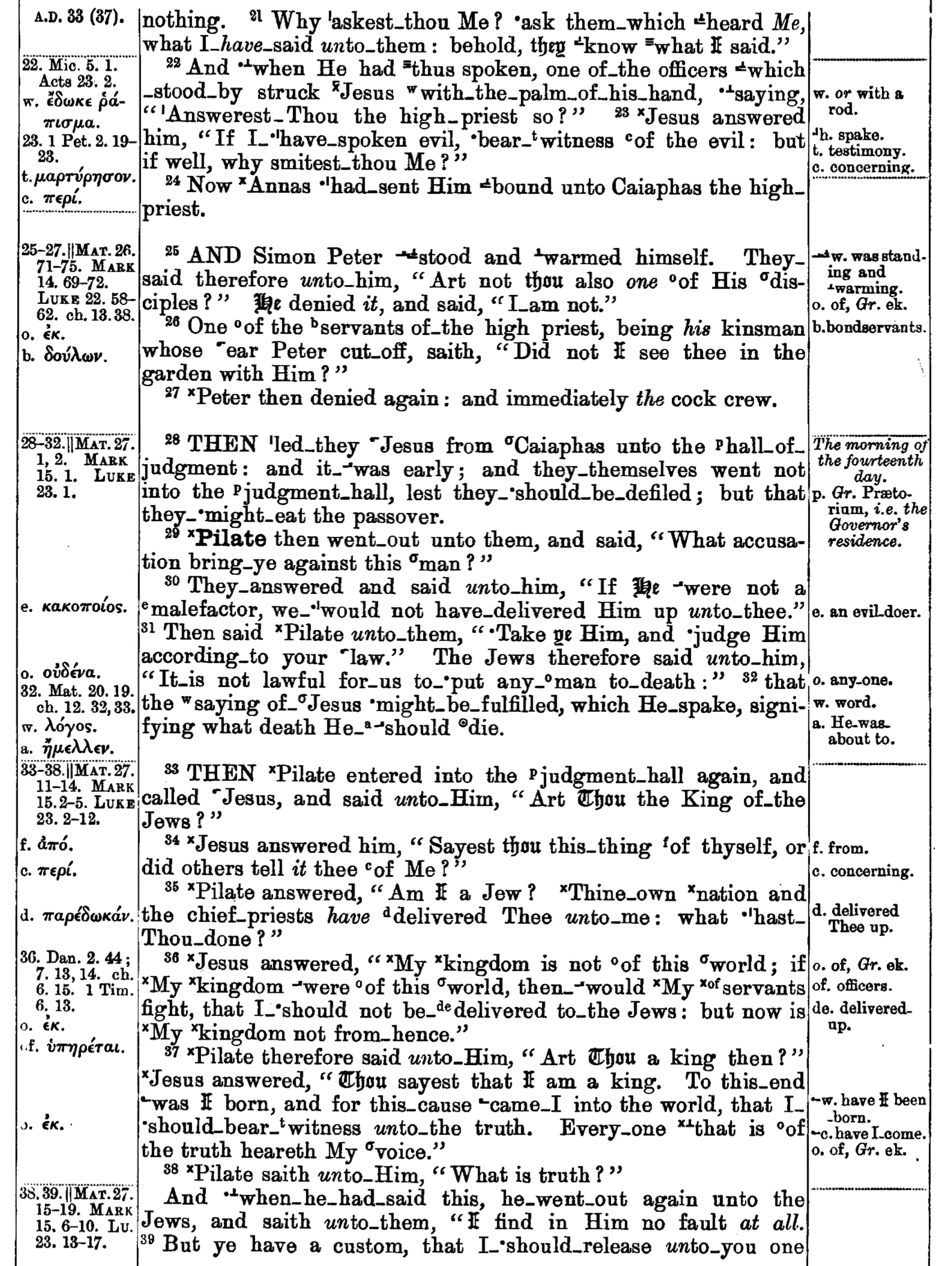

- KJV Bible reading John chapter 19
- HD movie John chapter 19 Scenes may be unsuitable for some, especialy children.
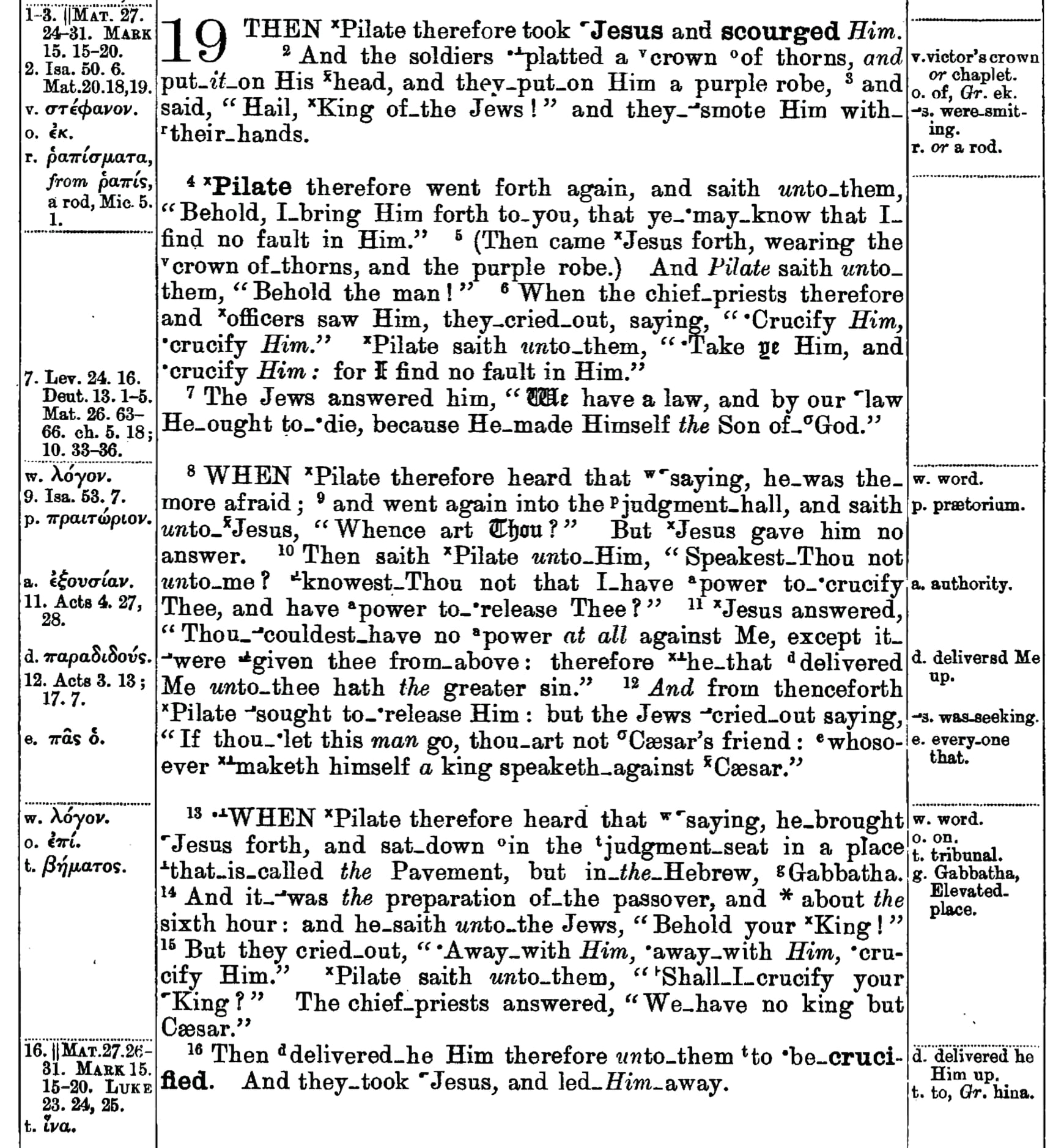
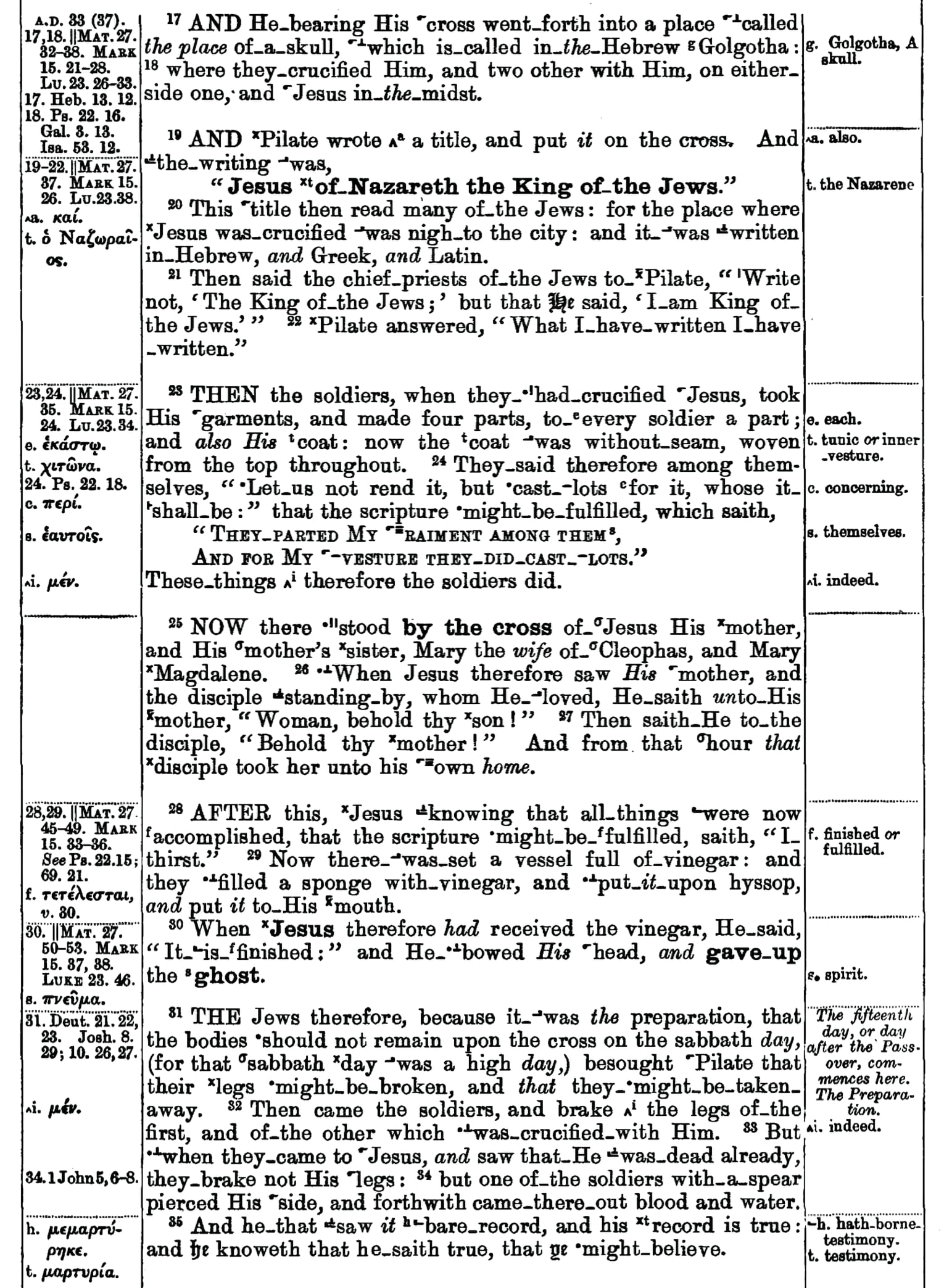
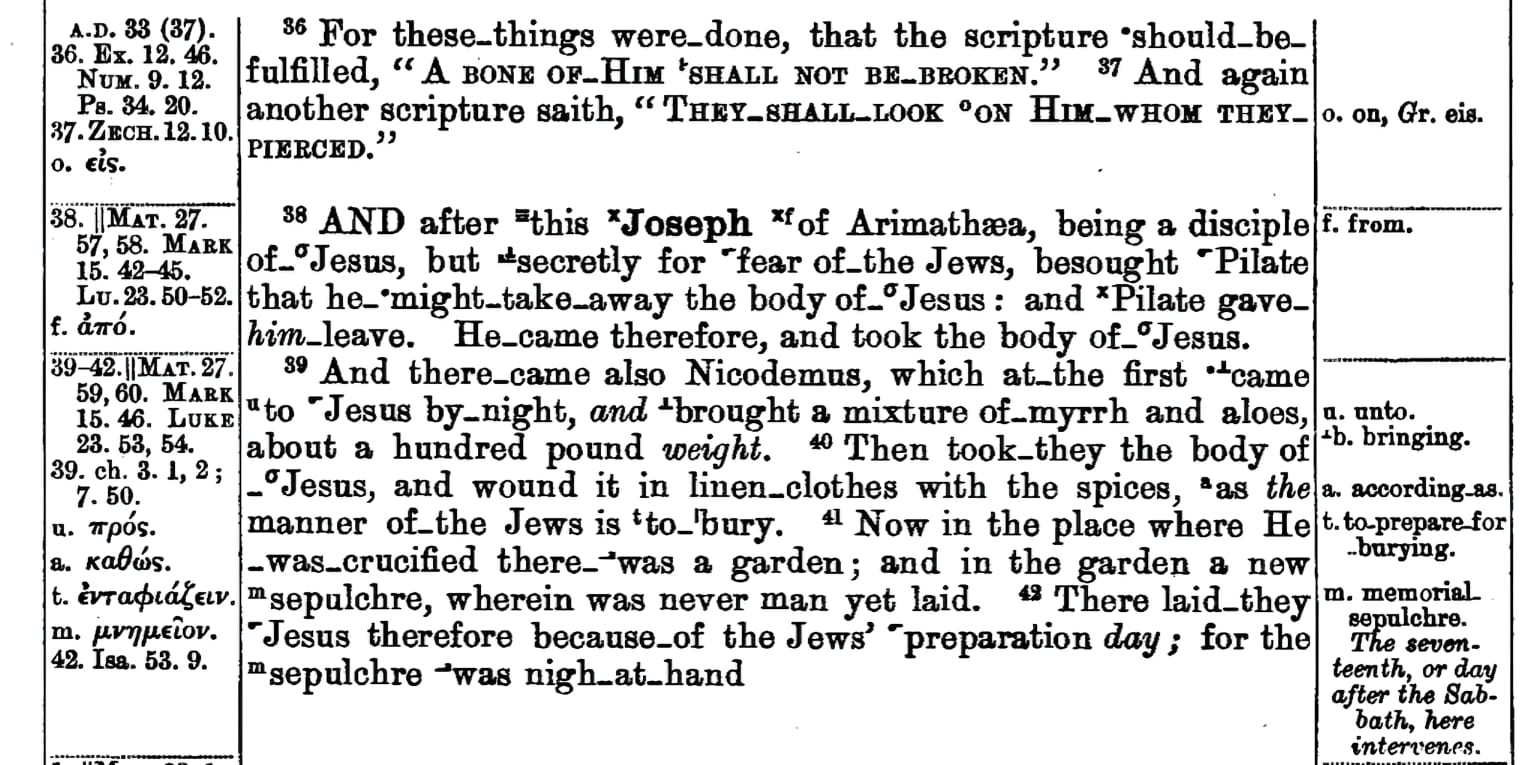
- KJV Bible reading John chapter 20
- HD movie John chapter 20
- KJV Bible reading John chapter 21
- HD movie John chapter 21